

With the ongoing microchip crisis, vinyl is not only popular once again because of its physical appeal and nostalgic feel, but also because of the lack of standalone DJ Players on the market. Some beginner DJs also feel that they need to earn the title by going down the hardest path, by learning to mix with vinyl, and it is also a kind of barrier that limits access to some music releases. Sometimes the only chance to play a hot track is if you own it on vinyl and know how to spin it properly of course.
Whatever your reason is for looking for a set of turntables, by committing to vinyl you will not only invest financially, but also with a lot of time and effort with your practice sessions. You will also have to look for good solutions to organize your records, as they require a little more attention than their digital counterparts. You have to keep them clean if you want to avoid pops, crackles and other awkward sounds when you are mixing. As you progress and get gigs, you will also need proper vinyl bags or boxes to carry around your records, and they can get heavier than 10 kgs when loaded.
However, if you can handle all the hassle and learn to beatmatch on vinyl, we can promise that it is one of the most rewarding feelings a DJ can get, and hate it or love it, mixing with vinyl is still very stylish and it usually grabs the attention of the public.
DJ-ing with turntables will challenge your ears and hands as well, so getting the right turntables can influence your overall learning curve, although the amount of practice will have a much bigger impact. You should make sure though, that you buy a turntable designed for DJs and not only for playback, and that you are spending mostly on features that you will actually use.
The motor
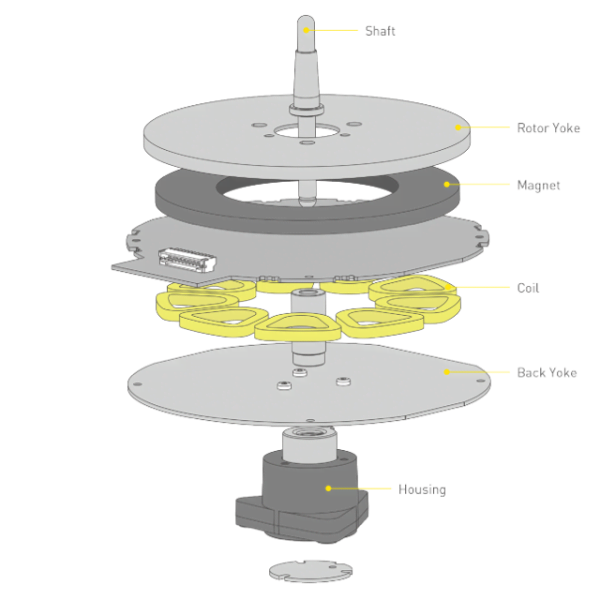
Thankfully there are plenty of options today for direct-drive turntables, as you may already know that belt-drive turntables are aimed at Hi-Fi users and they should never be used for DJ purposes.
One of the most important aspects of direct-drive turntables is torque, as this is mostly responsible for how much force you will need to speed up or slow down playback, as for doing scratches and backspins.
The bigger the better?
Not necessarily, but you should never settle for anything less than 1.5 kg/cm. Anything less will probably cause playback to slip or skip when you nudge the platter or the record, so the golden standard lies between 1.5 and 4.5 kg/cm. Scratch DJs will usually benefit from the higher end of the range, as when you push the record back and forth, the platter rotation should remain constant. For instance, the Technics SL-1200 MK2 which has been the industry standard for decades has 1.5 kg/cm of torque, however some scratch DJs find the higher torque (4.5 kg/cm) Pioneer PLX-1000 more suitable for their workflow.
Build quality and isolation
This is one of the things that most DJs worry about, and for a good reason, as if there is too much vibration coming from speakers or from people dancing and walking, it can cause some unwanted low-end and mid-range feedback and even skipping of the stylus.
Most DJ turntables offer at least some kind of isolation against these inconveniences, usually some rubber on the base or below the platter, which does pretty well in home environments, but if you intend to use them at loud events, and in places where there is constant vibration, you should really consider some form of additional isolation, such as the Luke ASB-1. This applies to all entry-level turntables, and even some higher-end models, such as the Pioneer PLX-1000 or the Technics SL-1210 MK7.
Cartridge and stylus
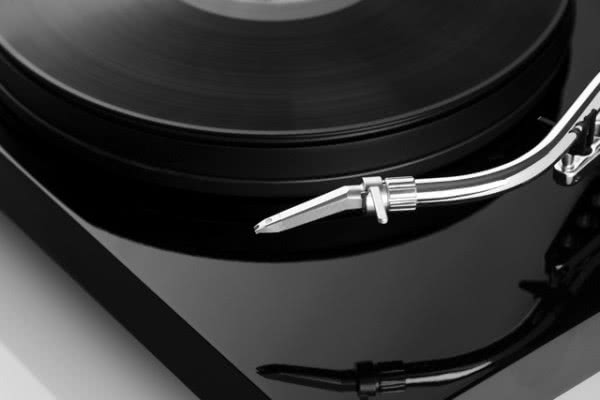
Pro-Ject Pick it S2 C DJ cartridge and styules
When you shop for turntables, consider that in some cases you will have to pay a little extra for the cartridge. Some turntables, (usually the lower-end ones) come with some kind of entry-level Hi-Fi cartridge which is just enough for starting out, however in the long run you may want to invest in some kind of specific DJ Cartridge, which can handle backspins, cue-ing or scratching.
Design and specifications
On most DJ turntables you will find many similarities both in terms of design and specifications, as the vast majority of direct drive DJ turntables (with the exception of Technics and a few others) are made by Hanpin, a Taiwanese electronics manufacturer (founded in 1965), specialized in DJ gear and Hi Fi. They have several platforms for building turntables, and sometimes they make minor tweaks to their design before it gets sold under a certain brand. The internals usually remain the same, most turntables come with either the >1.0 kg/cm, >1.6kg/cm, >2.2 kg/cm or the >4.5 kg/cm (Super OEM) direct drive motor.
Hanpin turntables a very reliable, as the company has decades of experience in manufacturing turntables, and lots of highly respected DJ brands use their platforms, such as Pioneer DJ, Omnitronic, etc.
Technics still follows its own path and hasn’t changed too much on the original MK2 in terms of design and internals, although the MK7 is a little different from the past models (read more below).
Entry-level (200-350€)
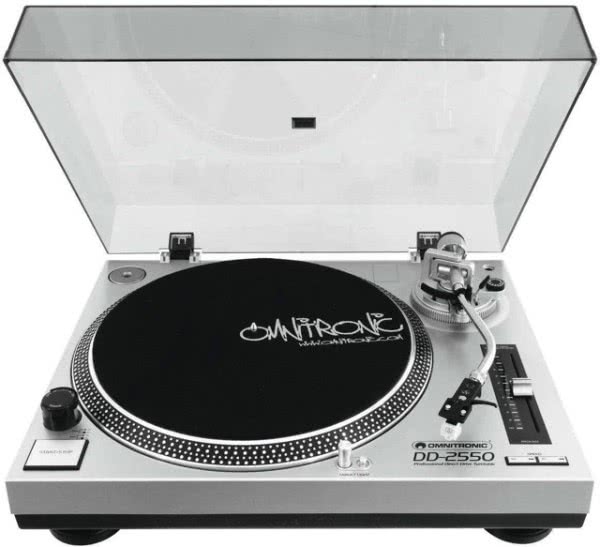
Its starting torque (>1.0 kg/cm) is a little off-range from a DJ perspective, however we can still recommend it, as it is great value if you are curious about DJ-ing with vinyl, or just want to spin casually.
It will probably require a little more patience to get used to the handling of the platter, but it has a sleek design, similar to the Technics SL-1200, comes with a cartridge, and it is not a huge investment, so you won’t have regrets in case you find that DJ-ing with vinyl is just not your playground.
It can also be a good starting point for an analogue + digital setup as when you mix one track from the turntable, and the other from a DJ player, you can do the beatmatching with the jogwheel, so you won’t have to rely too much on the platter.
Thanks to its USB-port, you can also use it to digitize your records, and it has a built-in phono preamp as well.
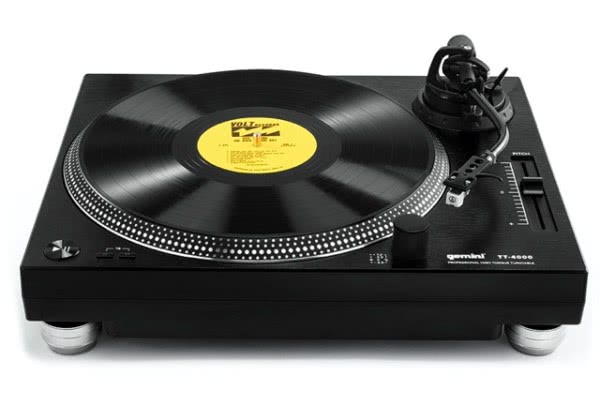
With a little extra-investment, you can get some cool DJ benefits, such as the high-torque, rubber damped feet, and a more stable aluminium die-cast platter. The Gemini TT-4000 offers outstanding value when it comes to the price/quality ratio, and it comes with a stylish black finish.
In terms of build quality, it is one of the lightest direct-drive turntables on the market, with only 6.35 kg, so it will be easier to carry it around if you consider bringing it to gigs, but for the same reason, you will probably have to be careful, as it is not made from heavy-duty materials such as some of the more expensive counterparts.
For home use, it can be a great piece of gear, and it can help you master the art of spinning records. When it comes to price/quality ratio, it can be a safe bet.
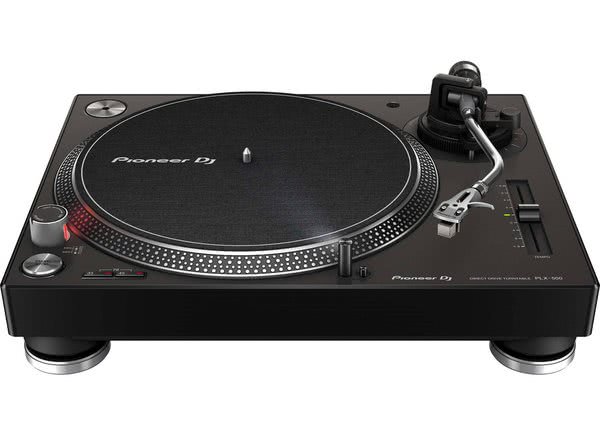
The PLX-500 is certainly not a professional-grade turntable, as it is all plastic, and although pretty heavy, it easily picks up vibrations, even some accidental touches on the chassis can feedback on your output, and when tested at louder volumes, it has some noticeable hum.
Don’t let this scare you though if you are looking for a nice turntable for home use. The PLX-500 offers a nice 1.6 kg/cm torque which feels very similar to the Technics SL-1200. It is not the best option for scratching (for that you might want to get the Gemini TT-4000 or the Omnitronic DD-5220L for a similar price), but it can handle backspins, cueing, and nudges very well, and the pitch fader is nice and responsive, so it can be a great beginner turntable for learning how to beatmatch on with vinyl, or for DVS applications.
It comes with a headshell, cartridge, dust cover, and you can rip your vinyl via its USB port, so it offers great value, as long as you avoid live applications.
Mid-range (350-500€)
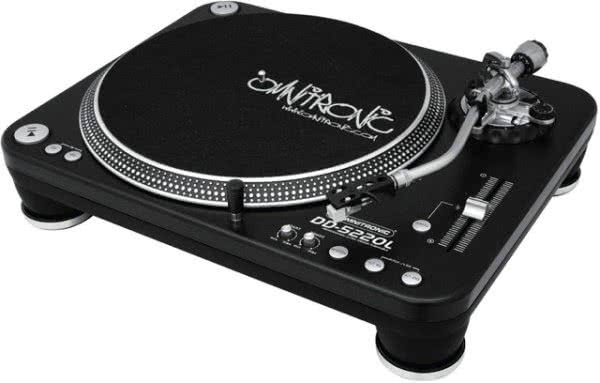
For a modest price tag, the DD-5220L has some serious specs. It has a solid metallic chassis, starting torque of 4.5 kg/cm, variable pitch range - up to 50%, reverse function, adjustable start and braking speed for the platter, shock-absorbing and adjustable feet. Although it is still not as well isolated as the SL-1200, but if set up properly with some external isolation, it can certainly handle live applications.
It has a switchableLine/Phono output, and it is internally grounded, so you can save some hassle when connecting to your mixer.
It is a wonderful all-purpose turntable, which can serve your needs even in the long run. Scratch DJs will especially like it, due to the adjustable start/brake speeds, the two Start/Stop buttons which come very handy in battle mode, and of course the high torque.
While it does come with a headshell, the cartridge is not included, so you will have to add one, or swap the headshell for a Concorde type DJ cartridge.
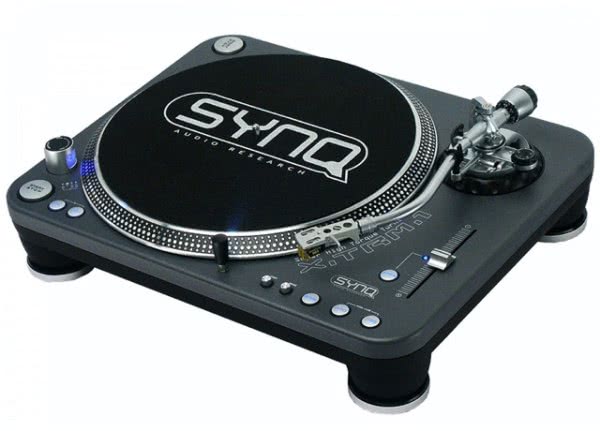
It has exactly the same specifications as the Omnitronic DD-5220L, the only difference is the colour and the branding. Both turntables are based on the same platform and have very high ratings from our users.
High-end (>650€)
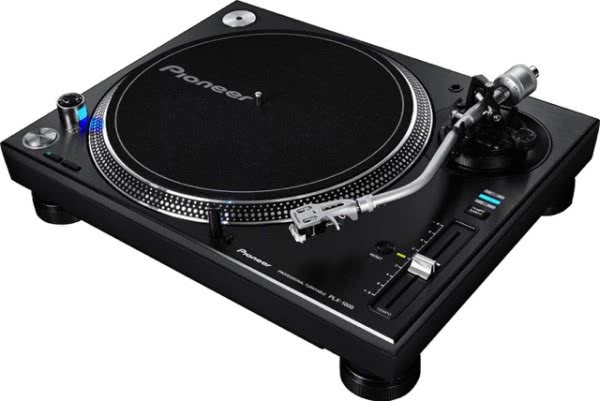
The launch of the PLX-1000 in 2014 was somewhat of an opportunistic response to Technics, as the world’s leading DJ turntable manufacturer stopped producing the SL-1200/SL-1210 between 2010-2019. They left users without an option to buy a new high-end turntable, so the PLX-1000 while still a Hanpin turntable, based on the Super-OEM platform, was carefully adjusted by Pioneer, to make it resemble with their own CDJ line-up and to make it a perfect fit for the club booth.
It is amongst the very few turntables (besides Technics) that actually appear in some club DJ booths, and while not as well isolated as the old-school Technics, on a good platform it can stand up to the task. Scratch DJs particularly like it because of the high torque, and it also offers variable pitch range. It is clearly aimed for DJ use, as it has no built-in phono preamp, the standard pitch range is the same as on the Technics (± 8%), and although it has a much higher torque, the platter has a very similar feel.
If you are strictly interested in specs, and don’t bother too much about the brand or the design, you can get kind of the same value from the above-mentioned Omnitronic DD-5220L or the SYNQ X-TRM1. If you also care about the brand’s reputation and want more sophisticated-looking gear in your booth, the PLX-1000 is a solid option, and let’s face it, Pioneer DJ has done a great job over the last decades on becoming synonymous with highly reliable DJ gear, so the name in itself may also give you some extra confidence.
Technics SL-1210 MK7 / SL-1200 MK7 / SL-1200 M7L (MK7 Limited)
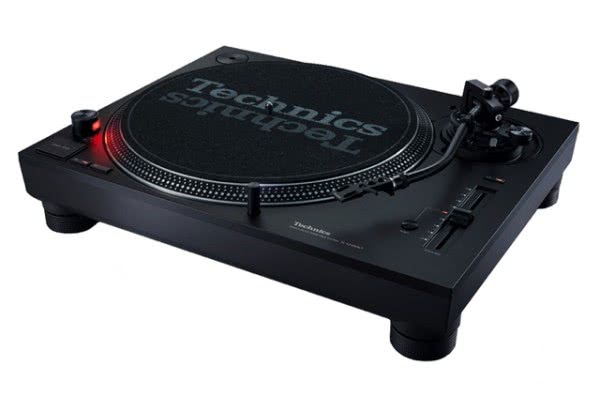
If you got to this point, we assume that you already know quite enough about the king of DJ turntables, the Technics SL-1200 and SL-1210 (the 1200 stands for the silver, while the 1210 for the black finish). You may wonder however if it is as good as the old-school Technics (models built from 1979 to 2010, from the MK2 to M5G), or if you can get away with something cheaper.
On its release, the MK7 did receive some criticism, as it is indeed not as robustly built as the older models. The chassis is built from aluminum, but it is somewhat lighter, the rubber isolation covers only a smaller surface on the bottom, and the buttons and pop-up light just don’t feel as good as on its predecessors.
While most of the complaints are on point, from a marketing perspective, it is obvious that materials and labor cost more than they did a few decades ago, so for a turntable that is similar in quality to the MK2, we would probably have to pay the price of the Grand Class models. Add to that the redundancy of turntables in clubs, and the growing number of bedroom DJs who don’t need the same tank-like build quality, and it becomes comprehensive that they built a premium turntable for home use and smaller applications, that resembles perfectly the feel of the older generations, rather than a super-robust piece of gear that withstands the most demanding environments.
Having said that, it is still a Technics, and it is an absolute pleasure to spin records on it, as it has probably the most precise pitch fader amongst all the other current turntables and the handling of the platter is at least as good as the MK2, it actually has a slightly higher torque of 1.8 kg/cm. Ever since its release, it has been the turntable for DMC championships, so no matter what type of DJ you are, if you are out for that perfect Technics-feel, it is without any doubt the best that you can get below 1000€.
Currently the M7L version is available as well, in some limited edition finishes, which is a perfect way to custumoize your DJ booth.
Technics SL-1200 GR / SL-1210 GR
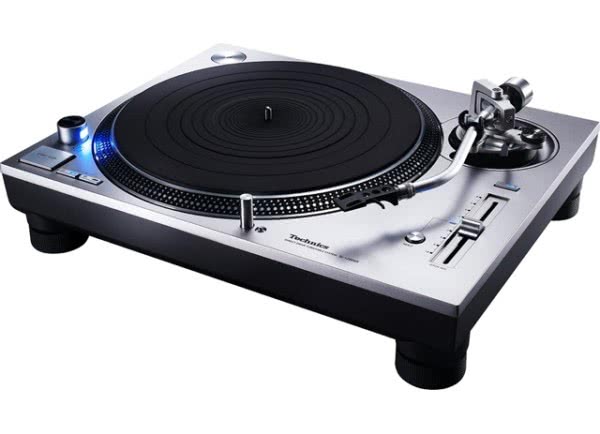
Although it was mainly designed for Hi Fi use, the Grand Class series Technics are the closest you can get to the original SL-1200/1210 MK2.
It has a redesigned direct drive motor that eliminates the phenomenon called “cogging” which is said to be present on older models, and it is a condition that can affect smooth playback. It is worth mentioning that unless you are an audiophile and you can actually measure it with tools, it is highly unlikely that this will be audible for you on any turntable.
If you are looking for absolute peace of mind, and want the best of the best, with massive rubber isolation on the base that withstands club environments, this may be your only option in case you are searching for a new Technics turntable.
Keep in mind though that it is not exactly a pure DJ turntable. It is marketed as an audiophile turntable that retains most of the features loved by DJs. That being said, there is still some compromise left for DJs, as the feet are very wobbly. This is a good feature when it comes to isolation as it absorbs some vibration, but during serious scratch sessions or back-cueing, it can shake the whole unit, so DJs are not going to benefit from this. This is not a huge issue, as you can replace the feet with some original MK2 feet, or anything that fits and is more DJ friendly, but it is still not the perfect solution out of the box.
If budget is no issue, you need something that will serve you even in the wildest environments, you want absolute peace of mind with a brand new Technics turntable, and you can find some replacement feet, the 1200 and 1210 GR are the absolute winner.
Conclusion
Summing it up, it can be confusing to choose your first pair of DJ turntables. As they are mostly a “feel thing” it is hard to decide just by reading the specifications. It would take at least a couple of hours of practice on each one to make the perfect decision. This is why our advice is to buy something that fits comfortably within your budget, and don’t worry too much about their technical background, just make sure it is a direct-drive turntable and it has enough torque.
The hours of practice you put into learning will have a much greater impact on your record spinning skills than the gear you are using, and this rule can be generally applied for almost any DJ equipment.
Just make sure you are not wasting all your time on endless research, and reading too many pro and contra arguments. Go easier on the decision, according to your budget and your own impressions about a product, and start spinning!