
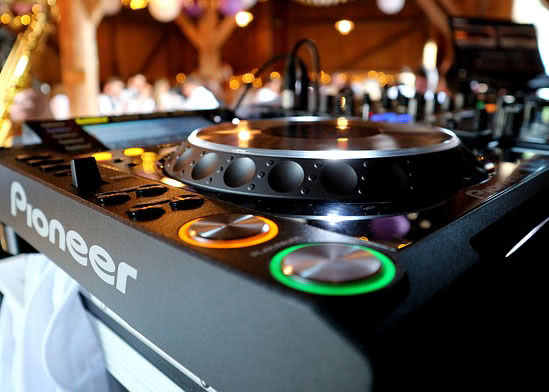
Als der CDJ-500 1994 erstmals auf den Markt kam, standen Plattenspieler im Mittelpunkt. Da es sich an Vinyl-DJs richtete, die in den digitalen Bereich einsteigen, konzentrierte sich das Design auf die Emulation des klassischen Plattenspielers. Zum Beispiel wurde das Jog-Wheel eingeführt, um DJs die Möglichkeit zu geben, die Spur hin und her zu "schubsen".... ähnlich dem, was man beim Berühren einer Platte tun könnte.
Der CDJ-1000 war das Modell, das die Pioneer Player als Industriestandard im DJ Setup etablierte, insbesondere nach der Einführung des MK2-Modells im Jahr 2003. Heute ist der CDJ-2000NXS2 der König der Branche. Große Festivals und Clubs auf der ganzen Welt halten eine Reihe von "Nexus" oder "Nexus Two" Spielern fest für ihre DJs bereit.
Dieser Ratgeber soll die vollständigste und genaueste Datenquelle sein, die für alle Pioneer CDJ, XDJ und andere Multiplayer verfügbar ist, damit du eine Entscheidung treffen kannst, welcher CDJ-Player am besten für dich geeignet ist. Los Gehts!
Pioneer Begriffe & Kürzel
CDJ - eine Reihe von Media-Playern, die die Steuerung und Manipulation von CDs (oder anderen digitalen Audioformaten) über eine emulierte Vinyl-Plattenspieleroberfläche ermöglichen.
XDJ - eine Reihe von Media-Playern ähnlich wie CDJs, aber ohne Steckplatz für CDs. Diese Geräte spielen Musik von einem USB-Stick oder anderen digitalen Medien ab. Wir werden den Begriff CDJ hier austauschbar verwenden, sofern nicht anders angegeben.
Master Tempo - eine Funktion, die es dem DJ ermöglicht, die Wiedergabegeschwindigkeit eines Tracks zu ändern, ohne seine Tonhöhe zu beeinflussen. Einige Software bezeichnen dies als Key Lock.
Jog Wheel - eine Funktion aller CDJs, bei denen ein Rad (auch bekannt als Jog Dial) das skippen von Musik, das Biegen von Tonhöhen und/oder das Scratchen ermöglicht. Das erste Jog-Wheel war 1986 tatsächlich auf dem Technics SL-P1200 vorhanden.
Slip-Modus - eine Funktion, mit der man Audio manipulieren kann (z.B. Scratchen oder Looping), während der Song weiterhin "darunter" abgespielt wird. Wenn Sie aufhören, das Audiosignal zu "manipulieren", wird die Wiedergabe an dem Punkt fortgesetzt, an dem sie stattgefunden hätte, wenn Sie sie nicht berührt hätten.
Pro DJ Link - eine LAN-(Netzwerk-)Verbindung, mit der Sie eine Musikquelle über mehrere Player teilen können. In Kombination mit Rekordbox können Sie auf vorbereitete Loops, Cues, Sync/Quantize und mehr zugreifen.
HID-Modus - eine Art Verbindung über USB, mit der Ihre CDJs "als Controller" in der DJ-Software verwendet werden können. Der HID-Modus ist eine genauere und höher aufgelöste Methode als herkömmliches MIDI.
Rekordbox - eine kostenlose Pioneer-Anwendung zur Verwaltung von Musik, die auf kompatiblen Playern wiedergegeben werden kann. Bibliotheken können vorbereitet und exportiert werden (z.B. auf einen USB-Stick), so dass Sie alle Funktionen des Players nutzen können. Rekordbox DJ ist auch als komplette Software-Suite für DJ-Performance erhältlich, so dass Sie direkt von Ihrem Laptop aus spielen können.
Häufig gestellte Fragen zu CDJs
Welche CDJs haben eine USB-Wiedergabe?
Alle aktuellen CDJ- und XDJ-Modelle verfügen über eine USB-Wiedergabe (3000, 2000NXS2, 900NXS, XDJ-1000MK2 und XDJ-700).
Mehrere ausgelaufene Modelle spielen auch von USB-Medien ab: CDJ2000NXS, XDJ-1000, CDJ-2000, CDJ-850, CDJ-900, CDJ-350 und CDJ-400.
Welche CDJs haben Sync?
Alle aktuellen CDJ- und XDJ-Modelle verfügen über die Sync-Funktion (3000, 2000NXS2, 900NXS, XDJ-1000MK2 und XDJ-700), ebenso wie die inzwischen ausgelaufenen CDJ-2000NXS und XDJ-1000.
Welche CDJs unterstützen Rekordbox?
Alle aktuellen CDJ- und XDJ-Modelle sind Rekordbox-kompatibel (3000, 2000NXS2, 900NXS, XDJ-1000MK2 und XDJ-700).
Mehrere Auslaufmodelle boten auch ein gewisses Maß an Rekordbox-Unterstützung: CDJ-2000NXS, CDJ-2000, CDJ-900, CDJ-850 und CDJ-350.
Welche CDJs funktionieren mit Traktor (oder Serato/djay PRO)?
Die folgenden Geräte sind in der Lage, DJ-Software "als Controller" (im HID-Modus) zu verwenden:
Traktor: CDJ-3000, CDJ-TOUR1, CDJ-2000NXS2, CDJ-900NXS, CDJ-2000NXS, CDJ-2000, CDJ-900, XDJ-1000
Serato: CDJ-3000, CDJ-TOUR1, CDJ-2000NXS2, CDJ-900NXS, CDJ-2000NXS, CDJ-2000, CDJ-900, CDJ-850, XDJ-1000, XDJ-1000MK2
djay PRO: CDJ-3000, CDJ-TOUR1, CDJ-2000NXS2, CDJ-2000NXS2, CDJ-2000NXS
Sind CDJs besser als Controller? Sind sie das Geld wert?
Nun.... das ist subjektiv, und die Antwort wird zwischen den DJs variieren. Controller können in der Tat ein besseres Preis-Leistungs-Verhältnis bieten, insbesondere beim Vergleich von Onboard-Features und Preispunkten.
CDJs existieren, um eine gemeinsame Standard-Plattform für DJs zu schaffen. Viele Veranstaltungsorte haben sie bereits, und sie sind der erwartete Standard für jede große Show. Aber das ist nicht relevant für alle Arten von DJs, und wie alle Dinge.... es kommt auf eine Frage der Präferenz an. CDJs und XDJs ermöglichen es, den Laptop aus dem Setup zu entfernen, was für einige Personen wichtig ist und natürlich auch der Stabilität dient.
Was ist der beste Pioneer CDJ?
Dies kann nur von Fall zu Fall beantwortet werden. Bei einem engeren Budget macht der XDJ-700 (oder ein älterer, nicht mehr erhältlicher Spieler) am meisten Sinn. Wenn Sie ein Event-Promoter sind und technische Standards erfüllen müssen, wollen Sie den CDJ-2000NXS2 ohne Frage. Wenn Sie zufällig die größten Festivals der Welt veranstalten, ist der TOUR1 der Aufgabe gewachsen.
Dieser Leitfaden kann helfen, festzustellen, welche Player am sinnvollsten für den jeweiligen Einsatz sind.
Welche sind die besten CDJ-Alternativen?
Pioneer CDJ-Setups sind nicht für jeden geeignet. Folgende Alternativen stehen zur Verfügung:
- Der beeindruckende Denon DJ SC6000M Prime
- Für ein sehr knappes Budget ist die Gemini MDJ-Serie geeignet
- Ein Controller-basiertes Setup
- Gute altmodische Vinyl-Schallplatten mit Turntables
Aktuelle Modelle in der Vorstellung
Pioneer CDJ-3000
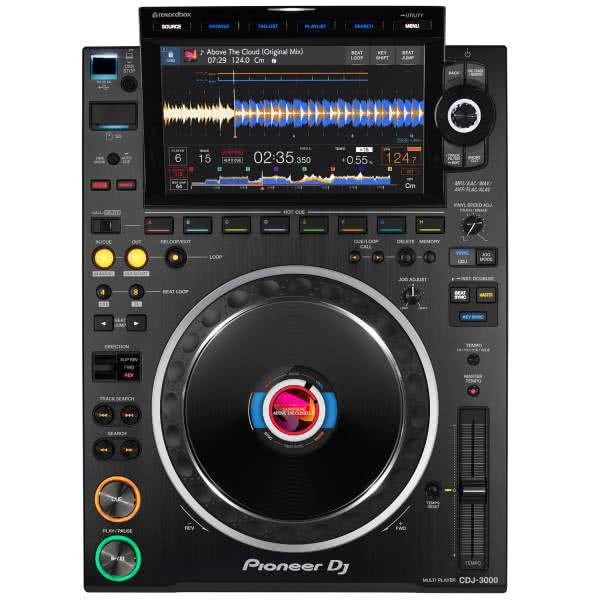
Erscheinungsdatum: September 2020
Der CDJ-3000 verfügt über eine MPU-Einheit mit leistungsstarken Rechenfunktionen - das erste Mal, dass sie in einem Pioneer CDJ verbaut wurde - damit das System schneller läuft und die neuen Funktionen reibungslos funktionieren.
Die interne Audioberechnung des CDJ-3000 wurde auf 96 kHz/32-Bit erhöht und ist mit allen Audioformaten nutzbar. Die aktualisierte Technologie bietet auch eine neue Key-Shift-Funktion, variable Wiedergabegeschwindigkeit und Master-Tempo-Steuerung.
Brandneu ist der große 9 Zoll Touchscreen, der alle Informationen noch übersichtlicher darstellt. Das Display verbesserte die maximale Helligkeit um über 150 %, so dass Sie es in jeder Beleuchtungssituation sehen können.
Die hochwertige Aluminium-Oberfläche und die neu gestalteten Play-, Cue- und Hot Cue-Tasten sind stärker als je zuvor. Außerdem schützt das verriegelbare V-Lock-Netzkabel vor versehentlichem Herausziehen.Sie können sogar Ihr iPhone über ein USB-Kabel an den CDJ-3000 anschließen und Musik direkt von der neuesten iOS-Version von rekordbox mixen, die verlustfreie Dateitypen wie WAV, FLAC, ALAC und AIFF sowie MP3 und AAC unterstützt.
Features CDJ-3000
- Leistungsstarker DJ-Media-Player mit umfangreichen Bedienelementen und Formatunterstützung
- Hochmoderne Mikroprozessoreinheit für hervorragende Soundqualität und Ausfallsicherheit des Systems
- 9" Multicolor-Touchscreen vereinfacht Browsing und DJing
- Bis zu 150 % helleres Display als bei früheren CDJ-Modellen für verbesserte Lesbarkeit
- Ultra-niedrige Touch-Latenz für ein flüssiges Benutzererlebnis
- Hochwertiges Vinyl-Jogwheel mit Reaktionskontrolle und 3-Wege-Richtungssteuerung
- 8 Hot-Cue-Tasten bieten eine breite Palette an Performance-Optionen
- Hardware-Tasten für Beat-Jump- und Key-Sync-Funktionen für noch mehr kreative Performance-Optionen
- Laden von ALAC-, AAC-, AIFF-, FLAC-, MP3- und WAV-Dateien von Festplatten oder SD-Karten
- Einrichten von Tracks und ganzen Playlists in der rekordbox-App
- Unterstützt iOS rekordbox-App für Musikwiedergabe
- Verbindung mit anderen Pioneer DJ-Einheiten über das ProDJ Link-Netzwerk
- Hochwertiger analoger und digitaler S/PDIF-Audioausgang an Bord
Spezifikationen
- Unterstützte Formate:
- WAV, AIFF, FLAC, ALAC (Samplingrate: 44.1/48/88.2/96 kHz, Bit depth: 16/24 bit)
- MP3 (Samplingrate: 44.1/48 kHz, Bit depth: 16 bit)
- AAC (Samplingrate: 44.1/48 kHz, Bit depth: 16 bit)
- Unterstützte Dateisysteme: FAT, FAT32, HFS+
- Jogwheel: 206 mm
- Soundkarte: 24-Bit/48 kHz
- Frequenzgang: 4 - 40.000 Hz
- Signal/Rauschabstand: 115 dB oder mehr
- Klirrfaktor: < 0,0018 %
- Gewicht: 5.5 kg
- Abmessungen (L x B x H): 453 x 329 x 118 mm
Pioneer XDJ-1000MK2
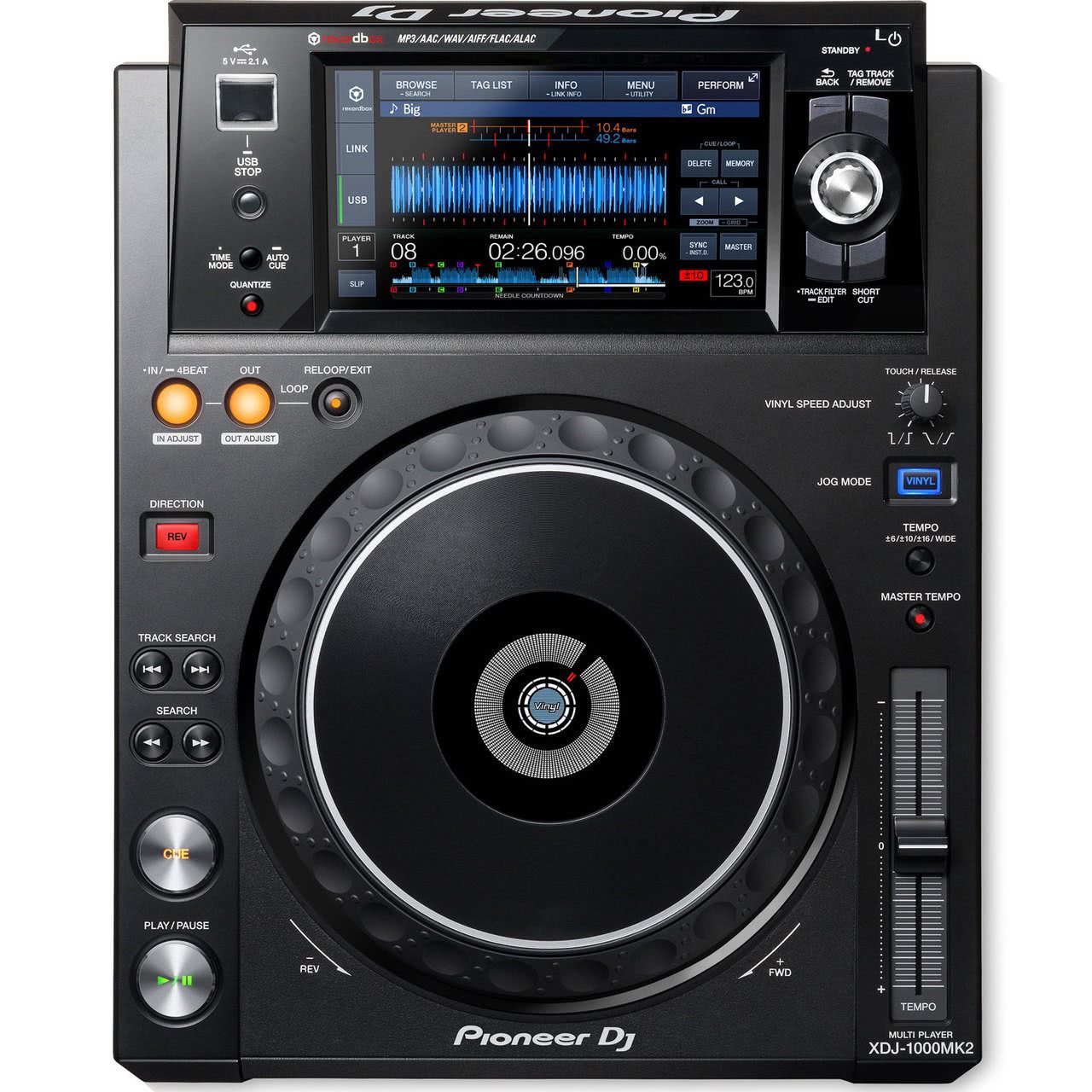 Erscheinungsdatum: September 2016
Dieser Player übernimmt das Jog-Wheel, den 7-Zoll-Touchscreen und andere großartige Funktionen vom Spitzenmodell CDJ-2000NXS2.
Tatsächlich ist der XDJ-1000MK2, abgesehen vom Fehlen eines CD-Slots, eher dem CDJ-2000NXS2 ähnlich als dem 900NXS. Mit den 8 Hot Cues, FLAC- und ALAC-Unterstützung (verlustfreie Wiedergabe), Digitalausgang, einem farbcodierten USB-Anschluss und Qwertz-Suche als Features, ist dieser Player durchaus eine Alernative zum großen Bruder.
Dieses Gerät ist eine gute Wahl für jeden, der ein Rekordbox-Erlebnis wünscht, das dem 2000NXS2 sehr ähnlich ist, aber etwa die Hälfte des Preises ausmacht.
Features Pioneer XDJ-1000MK2
- 48kHz/24-Bit-Soundkarte und Digital-Out-Anschlüsse bieten Pro-Level-Sound.
- FLAC- und ALAC-Unterstützung bedeutet, dass Sie verlustfreie Musik abspielen können.
- Ein separates Netzteil reduziert das Rauschen
- Die Qwerty-Tastaturanzeige ermöglicht es Ihnen, nach Tracks nach Rekordbox-Informationen wie Name, BPM oder Key zu suchen oder zu filtern.
- Vollständiges mehrfarbiges Wellenform-Display mit Zoom
- 8 farbkodierte Hot Cues
DDJ-SP1-Kompatibilität: Add-On-Controller mit sofortigem Zugriff auf weitere Hot Cues, Loops, Slip-Modus und das Browsen auf bis zu vier Playern. - Synchronisation und verbesserte Quantisierung. Quantisierter Beat Jump ermöglicht es Ihnen, von der aktuellen Position aus 1,2 oder 4 Beats vorwärts oder rückwärts zu springen.
- Schließen Sie mehrere Player oder Laptops an und teilen Sie eine einzelne Musikquelle.
- Greifen Sie auf gespeicherte Loops und Cues zu, synchronisieren Sie den Beat und andere Rekordbox-Funktionen auf jedem CDJ Player zu.
- HID-Unterstützung: Verwenden Sie Ihre CDJs "als Controller" in der Rekordbox DJ-Software.
- RGB-USB-Anschluss: Wählen Sie eine Farbe für ein bestimmtes Gerät aus (z.B. grün für Drum-n-Bass, lila für Trance, etc.) und es leuchtet diese Farbe, wenn es angeschlossen ist.
- "Meine Einstellungen" ermöglicht es Ihnen, Ihre Präferenzen auf Reisen mitzunehmen. Ihre persönlichen Einstellungen werden aktiviert, sobald Sie Tracks laden.
- Die Tastenkombination ermöglicht den direkten Zugriff auf den Brwose-Modus oder "Meine Einstellungen"
Spezifikationen
- Musikformate: MP3, WAV, AIFF, AAC, FLAC, ALAC
- Audioquellen: USB-Speicher (FAT, FAT32, HFS+), iOS oder Android, Mac oder Windows PC
- Ports: 1 USB A, 1 USB B, 1 digitaler (koaxialer) Ausgang, 2 analoge RCA, 1 LAN (100Base-TX Ethernet)
- Soundkarte: 48kHz/24-bit
- Frequenzbereich: 4 - 20.000 Hz
- 115 dB Signal-Rausch-Verhältnis
- Ausgangspegel: 2,0Vrms
- Verzerrung: < 0,003%
- Stromverbrauch: 30W
Pioneer XDJ-700
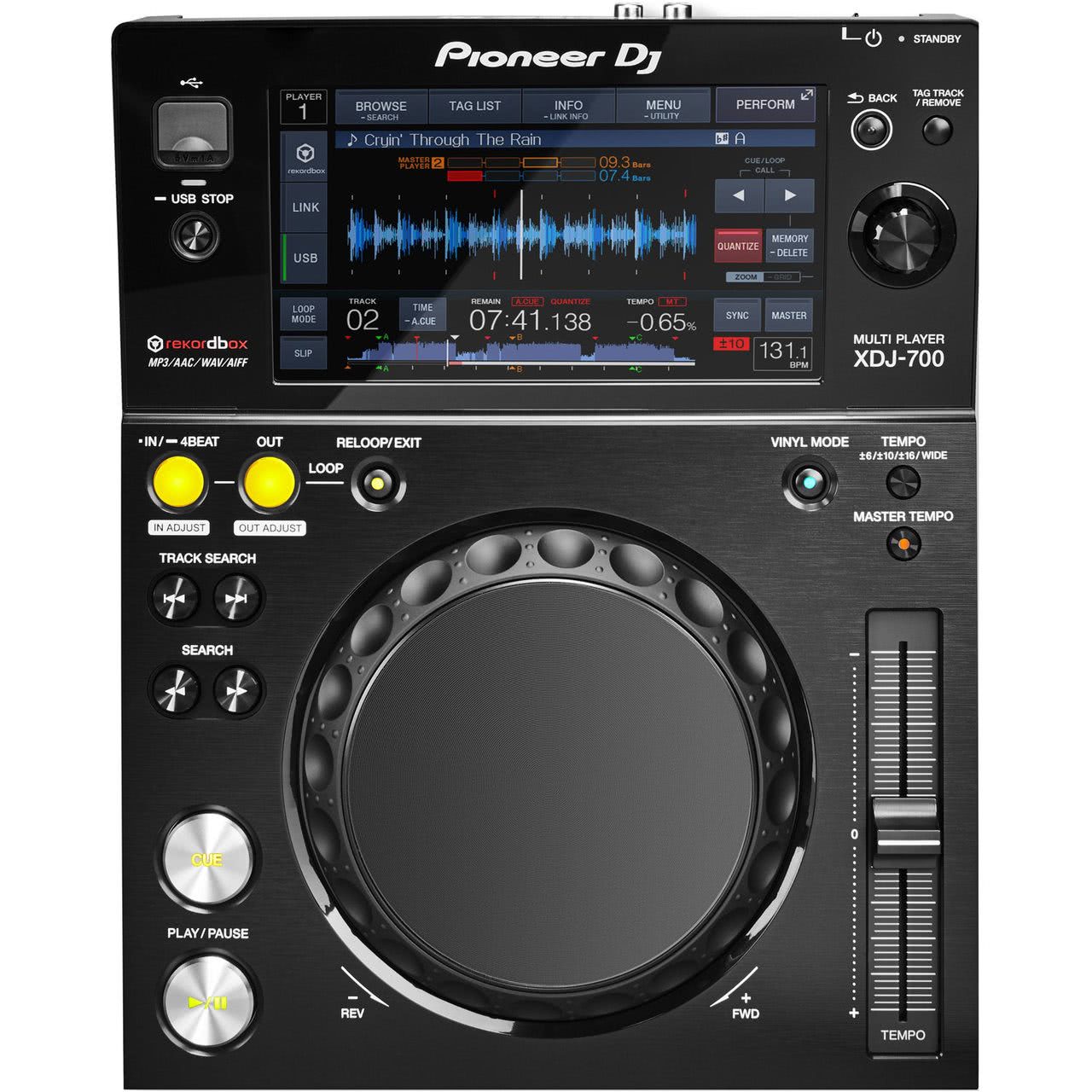 Release: Dezember 2015
Pioneer bietet diese preisgünstigere Alternative zur CDJ/XDJ-Linie. Obwohl das Layout relativ simpel ist, enthält der Player eine überraschend gute Reihe von Funktionen.
Der XDJ-700 ist ein viel kompakterer Player und wird mit einem abnehmbaren Ständer geliefert. Dies ermöglicht eine Vielzahl von Einstellmöglichkeiten, auch in kleineren DJ-Setups.
Obwohl es ein kleineres Deck ist, verfügt es dennoch über einen großen 7" Touchscreen, der einen großartigen Zugang zum Track-Browsing (mit einer Qwertz-Tastatur), zu Hot Cues, Loops und Vollfarben-Wellenformen bietet.
Features Pioneer XDJ-700
- Die Qwertz-Tastaturanzeige ermöglicht es Ihnen, nach Tracks nach Rekordbox-Informationen wie Name, BPM oder Keys zu suchen oder zu filtern.
- Vollständiges mehrfarbiges Display mit Wellenform-Zoom
- Schließen Sie mehrere Player oder Laptops an und teilen Sie eine einzelne Musikquelle.
- Greifen Sie auf gespeicherte Loops und Cues zu, synchronisieren Sie den Beat und andere Rekordbox-Funktionen auf jedem CDJ Player zu.
- Sehr geringes Gewicht und kompakte Ausmaße
- Inklusive abnehmbarem Ständer
- Slip-Modus, Sync und Quantisierung
- HID-Steuerung von Rekordbox DJ (Wiedergabe vom Laptop)
- "Meine Einstellungen" ermöglicht es Ihnen, Ihre Präferenzen auf Reisen mitzunehmen. Ihre persönlichen Einstellungen werden aktiviert, sobald Sie Tracks laden.
Spezifikationen
- Musikformate: MP3, WAV, AIFF, AAC
- Audioquellen: USB-Speicher (FAT, FAT32, HFS+), iOS oder Android, Mac oder Windows PC
- Ports: 1 USB A, 1 USB B, 2 analoge RCA, 1 LAN (100Base-TX Ethernet)
- Soundkarte: 48kHz/24-bit
- Frequenzbereich: 4 - 20.000 Hz
- 115 dB Signal-Rausch-Verhältnis
- Ausgangspegel: 2,0Vrms
- Verzerrung: < 0,003%
- Stromverbrauch: 14.4W
Pioneer DJS-1000
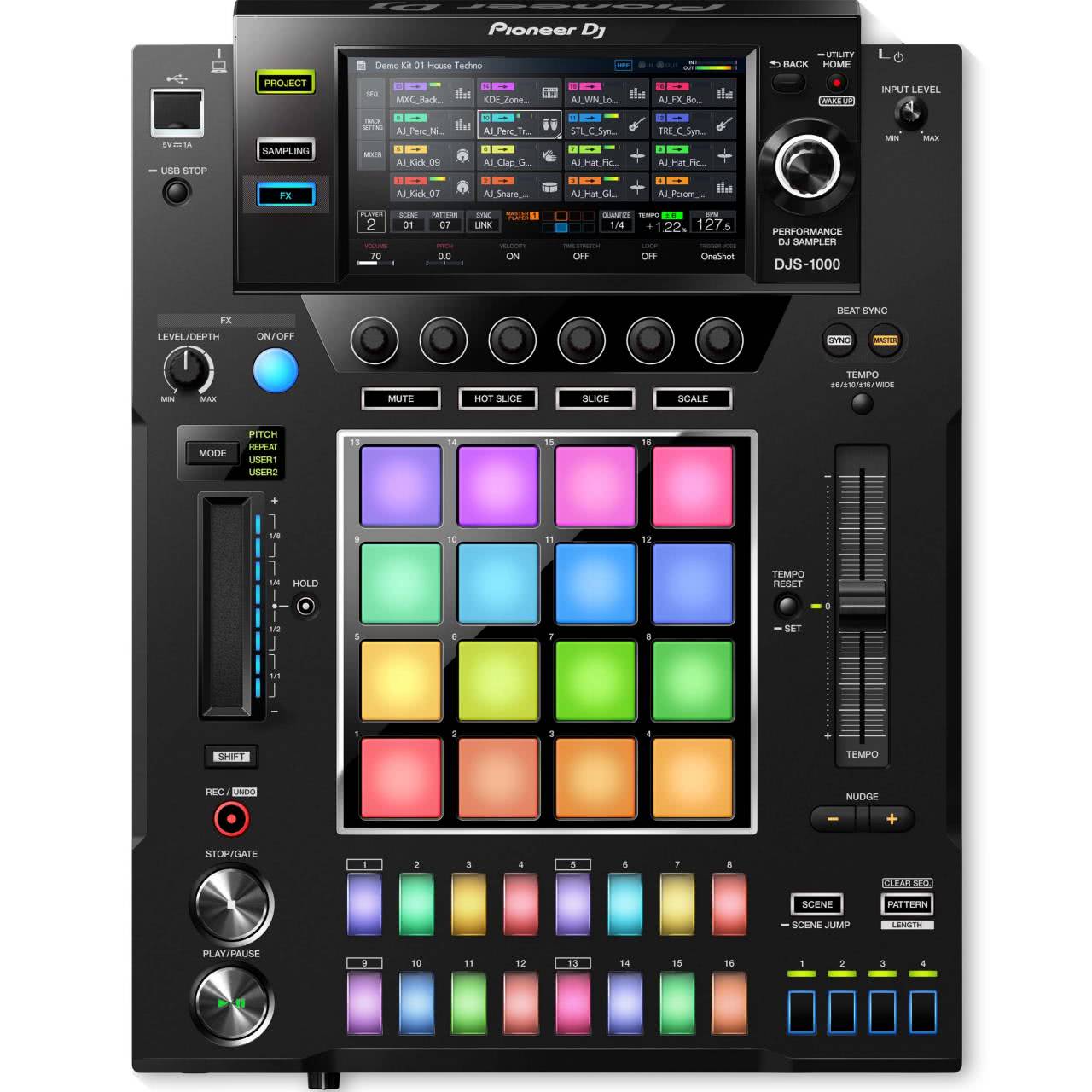 Erscheinungsdatum: Oktober 2017
Das DJS-1000 ist ein Performance-Deck, das dem DJ zusätzliche kreative Möglichkeiten bietet. Anstatt volle Songs zu spielen, wird dieses Deck zum Sampling, Sequenzieren und Loopen von Sounds auf verschiedene Weise verwendet.... und fügt dem Set etwas mehr "live"-Elemente hinzu.
Mit einem ähnlichen Formfaktor wie der CDJ-2000NXS2 und der Möglichkeit, über Pro DJ Link mit einem Pioneer-System zu synchronisieren, passt sich der DJS-1000 an und spielt gut mit dem Rest des Gears zusammen.
Samplen Sie Eingangssounds und synchronisieren Sie sie automatisch mit der aktuellen Sequenz. Spielen Sie sie in einem Loop ab oder sequenzieren Sie sie zu einem eigenen Beat. Die Möglichkeiten des Live-Remixes sind endlos.
Features Pioneer DJS-1000
- Verwenden Sie die 16 mehrfarbigen Step-Tasten, um neue Grooves "on the fly" zu programmieren
- Die Tasten ändern die Farbe, um eine visuelle Rückmeldung zu geben
- Große Gummipads mit Velocity-Empfindlichkeit ermöglichen es, Sounds oder Drums präzise zu spielen
- Samplen Sie Sounds und synchronisieren Sie sie sofort mit der aktiven Sequenz.
- Tippen Sie auf den großen 7" Touchscreen, um sofort auf einen von drei Bildschirmen zuzugreifen: Home, Sequence und Mixer.
- Verwenden Sie den Touch Strip, um die Tonhöhe einzustellen, einen automatisierten Drum-Roll zu spielen oder einen benutzerdefinierten Parameter zu aktivieren.
- Wird mit einer Bibliothek von Loopmaster-Samples geliefert.
- Voll kompatibel mit Projekten, die mit DJS-TSP Project Creator oder dem TORAIZ SP-16 erstellt wurden.
- Synchronisieren Sie mit einem bestehenden CDJ/XDJ-Setup über Pro DJ Link
Spezifikationen
- Musikformate: WAV und AIFF
- Audioquellen: USB-Speicher (FAT, FAT32, HFS+)
- Frequenzbereich: 20 - 20.000 Hz
- Verzerrung: < 0,003%.
- Leistungsaufnahme: 26 W
Ausgelaufene und nicht mehr erhältliche CDJ-Modelle
Pioneer CDJ-350
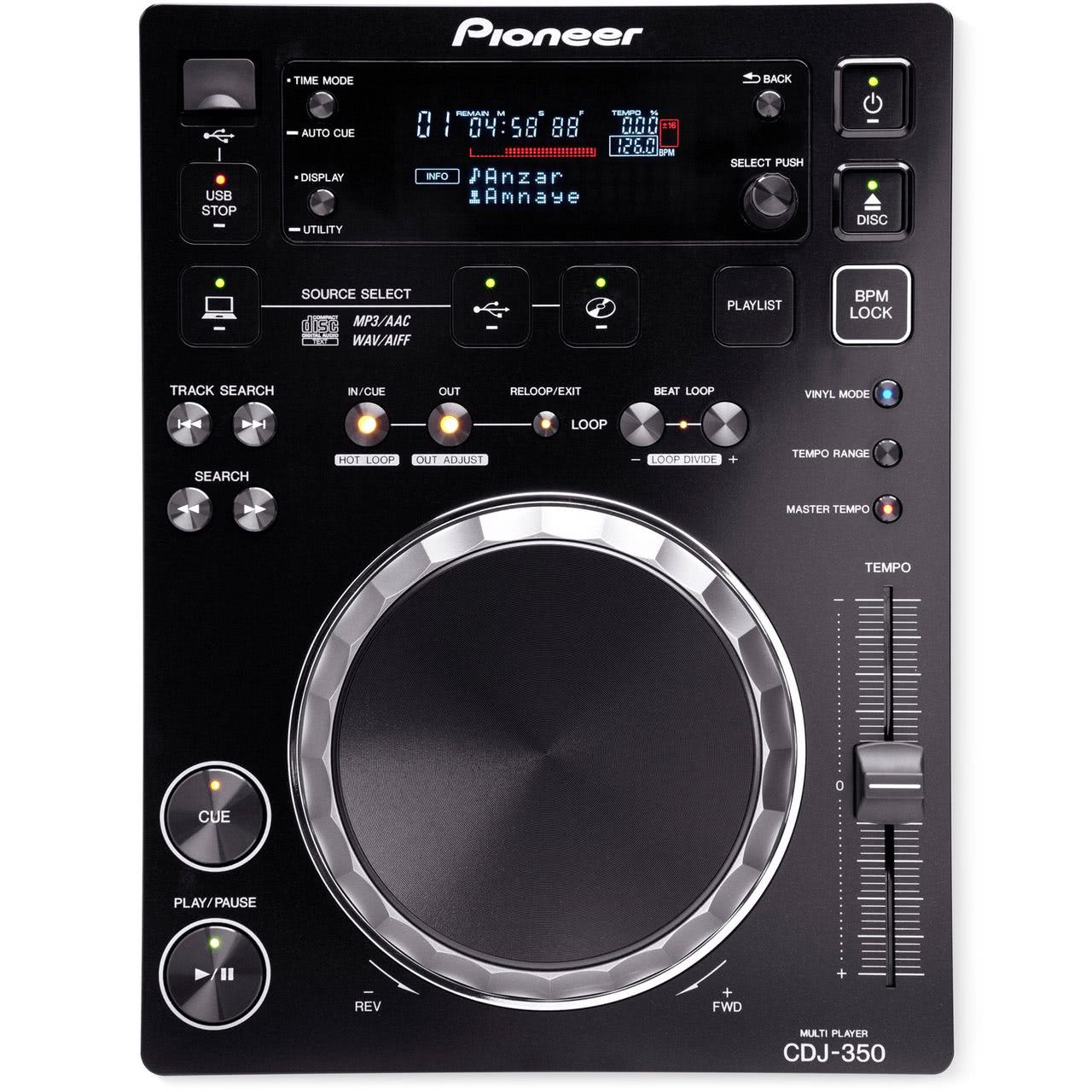 Der CDJ-350 bietet einen sehr günstigen Einstieg in das Rekordbox-Ökosystem zu einem erschwinglichen Preis.
Der Zweck dieses Players war es, Einstiegsausrüstung auf einem standardisierten Setup bereitzustellen, mit einigen Profi-Features inklusive, zu einem Preis, den man sich leisten konnte.
Es ist ein robuster, aber schnörkelloser Player.... ein CDJ-200, der in modernere Zeiten gebracht wurde.
Eine interessante Funktion ist die BPM-Sperre: Halten Sie die Taste gedrückt und wählen Sie ein Master-Tempo für Ihren Mix. Jeder Track, der geladen wird (von jedem Medium), wird automatisch auf dieses Tempo eingestellt. Nicht dasselbe wie Synchronisieren, nur eine zeitsparende Funktion.
Pioneer CDJ-500
Veröffentlicht: 1994
Das Modell, mit dem alles begann! Dies war der erste CDJ und bot eine Reihe von Branchenneuheiten.
Das Top-Loading, Flat-Top-Design war gut geeignet für DJs, die aus der Welt des Vinyls umsteigen wollten. Er wurde für die sofortige Wiedergabe ohne Latenzzeit (für präzises Cueing) entwickelt und war der erste Pioneer CD-Player mit einem Jog-Dial.
Diese frühen Player verfügen sogar über Fader-Start (eine Funktion, mit der Sie die Musikwiedergabe mit dem Crossfader oder einem Kanalfader auf einem kompatiblen DJM-Modellmixer starten können), Looping und "Master Tempo" (Tastensperre). Pioneer hat ihren Namen wirklich verdient, indem sie dieses Stück Geschichte konzipiert hat.
 Pioneer CDJ-500II
Veröffentlicht: 1996
Tatsächlich enthielt das Mark-2-Modell des Originals, der CDJ-500II (und der ähnliche CDJ-500ii Limited) nur kleinere Verbesserungen.
Seine Leistung war etwas schneller, er hatte einen einstellbaren "Loop-Out"-Punkt (eine weitere Branchenneuheit), und die maximale Loop-Länge wurde auf zehn Minuten erhöht.
 Pioneer CDJ-500S & CDJ-700S
Veröffentlicht: 1997
Der CDJ-500S (Europa) wurde als CDJ-700S in den Vereinigten Staaten veröffentlicht, weshalb sie hier gemeinsam aufgeführt sind.
Das "S" in 500S steht für "small". Pioneer hatte seit der Einführung des CDJ im Jahr 1994 ein paar Dinge gelernt.... wie z.B. die Tatsache, dass der Platz in DJ-Setups oft begrenzt war! Diese Player hatten auch eine vorgefertigte Montagehalterung, mit der sie über traditionellen Plattenspielern installiert werden konnten.... und zwei Side-by-Side Player konnten in einem Standard 19″ Rack montiert werden.
Pioneer verbesserte auch die Zuverlässigkeit und führte das ölgedämpfte Dämpfungssystem ein, das noch immer von modernen CDJs verwendet wird.
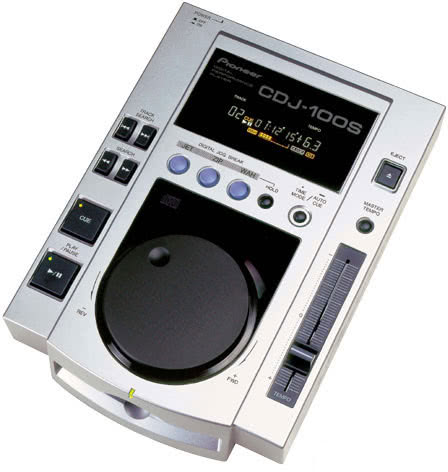 Pioneer CDJ-100S
Veröffentlicht: 1998
1998 stellte Pioneer das erste "Bedroom-DJ-Modell" der CDJ-Linie vor. Der 100S (diesmal steht das "S" für "Silver") hat das von oben geladene CD-Tray für einen Front-Loading-Slot weggeworfen.... ein Designmerkmal, das auch in den nächsten Jahren Bestand haben wird.
Der 100S führte drei integrierte Soundeffekte ein (Jet, Zip und Wah). Abgesehen davon war der 100S ein sehr einfaches und preiswertes Modell, das für den Heimgebrauch bestimmt war.
Dieses Modell wurde schließlich durch den CDJ-200 als Low-End-Modell abgelöst.
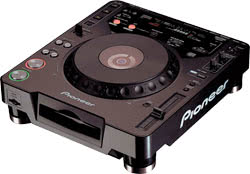 Pioneer CDJ-1000
Veröffentlicht: 2001
Der legendäre Pioneer CDJ-1000 war der erste DJ-CD-Player, der in der Lage war, den bewährten Vinyl-Plattenspieler nachzubilden. Zu diesen Features gehörte auch die Möglichkeit, zum ersten Mal so zu scratchen, wie man eine Platte scratchen würde. Dank dem schönen, neuen, 7″ Jog Wheel Design, das die Grundlage für alle hochwertigen Pioneer CDJs bilden würde.
In der Mitte des Jog-Rades wurde eine Anzeige eingeführt, die Positionsinformationen weitergab.... ein praktisches Werkzeug für präzises Cueing. Erstmals wurde ein (sehr einfaches) Wellenform-Display eingeführt, und man kann sogar die Wiedergabe umkehren oder einen Plattenspieler-Start/Stopp simulieren. Mann kann bis zu 3 Cue-Points pro CD speichern und auf einer MMC-Karte speichern.
Kurz nach der Jahrtausendwende wurde die Idee des Musikdownloads und des Brennens eigener CDs zu einer bekannten, machbaren Idee. DJs mussten keine original versiegelten CDs mehr öffnen, um exklusive/rare Tracks zu spielen (die nach mehreren Spielen abgenutzt waren).... jetzt konnten sie es auf eine CD brennen und das Orignal unangetastet lassen.. Nicht nur das, sondern DJs konnten die Spuren nun genauso formen, wie sie es mit einem echten Plattenspieler konnten.
Der CDJ-1000 war ein echter Gamechanger!
Pioneer CD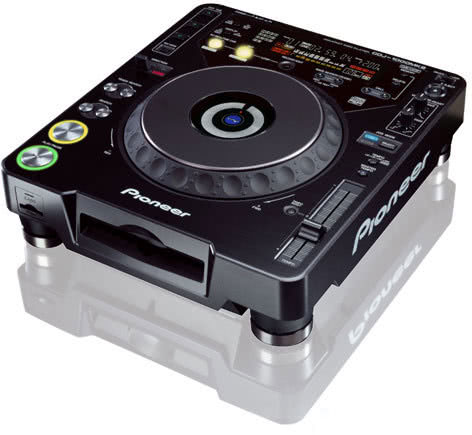 J-1000MK2
Veröffentlicht: Juli 2003
Diese Version unterschied sich nicht drastisch vom Original, hatte aber ein paar Optimierungen: ein verbessertes Jog-Rad, einen +/- 100% Pitch-Bereich und eine schnellere Reaktionszeit. Sie können nun auch den Digitalausgang für das eigentliche DJing verwenden (im Original können Sie ihn nur für die normale CD-Wiedergabe und nicht für die Manipulation des Tracks verwenden).
Der MK2 hatte einen silbernen Zierring um das Jog Wheel herum.... eine subtile, aber stilvolle Designänderung.
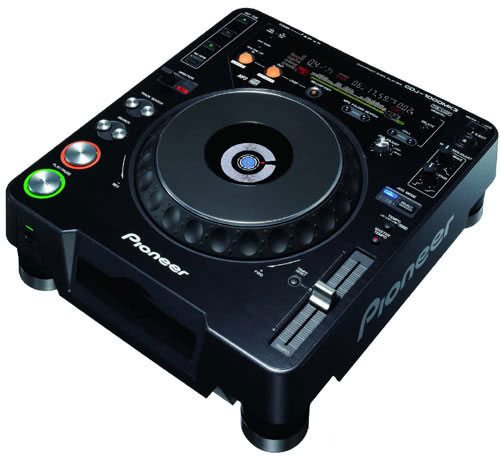 Pioneer CDJ-1000MK3
Veröffentlicht: März 2006
Der MK3 war ein viel größerer Wurf, da er die Möglichkeit der MP3-Wiedergabe von CD-R und CD-RW-Medien einführte.
Weitere Verbesserungen waren eine größere, hellere 100-Punkte-Wellenformanzeige (anstelle der früheren 50-Punkte-Wellenform) und die Möglichkeit, Loops in Hot Cue-Slots aufzunehmen, anstatt nur Cue-Punkte.
Der Widerstand des Jogwheels wurde an die verschiedenen Handhabungsarten angepasst. Außerdem wurde die Einheit so geändert, dass sie SD-Kartenmedien (zum Speichern von Cues und Loops) im Gegensatz zum früheren MMC-Format verarbeitet.
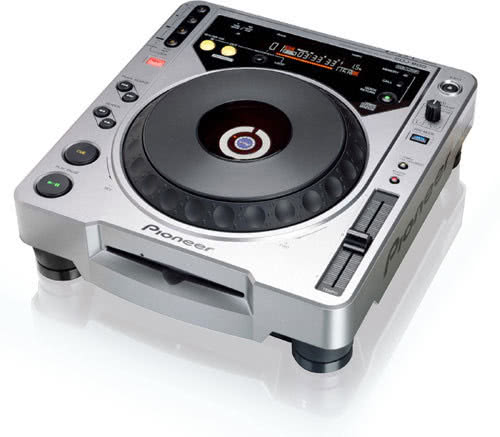 Pioneer CDJ-800
Veröffentlicht: November 2002
Dieser Player half, die Lücke zwischen dem "Profi"-Clubspieler und dem CDJ-100S Hobby DJ zu schließen. Obwohl das Gerät ähnlich wie der 1000er ausgelegt war und ähnlich funktionierte, war der Formfaktor etwas anders und es kam in einer silbernen Ausführung. Im Gegensatz zu seinem großen Bruder konnte er nur einen einzigen Cue-Point und Loop auf einmal speichern.
Weitere Unterschiede sind eine Mittelrastung für die Neigungssteuerung bei absolutem Nullpunkt (im Gegensatz zur Override-Taste der 1000er), eine Auto-Beat-Funktion und ein etwas anderes Jog-Whell. Der CDJ-800 verfügt über eine "schnelle Rückführung", die (wenn sie aktiviert ist) dazu führen würde, dass die Wiedergabe stoppt und zum Cue-Punkt zurückkehrt, wenn die Oberseite des Jog-Rads gedrückt wird.
Dieser Spieler ermöglichte es DJs, ein ziemlich normales Club-Setup zu einem viel günstigeren Preis zu bekommen.
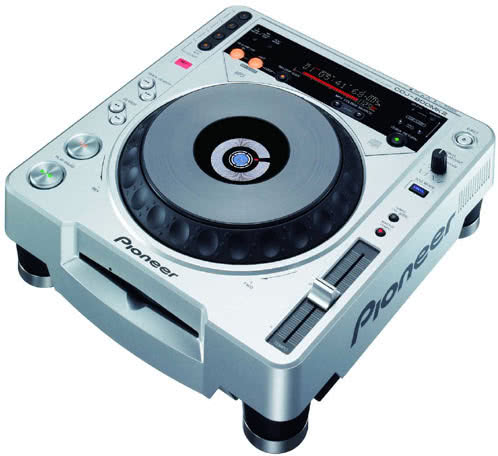 Pioneer CDJ-800MK2
Veröffentlicht: Februar 2006
Dieses Modell, das zeitgleich mit der MK3-Version des CDJ-1000 veröffentlicht wurde, war ein kleines Update, um die Dinge mit der Zeit in Einklang zu bringen. Vor allem die mp3-Wiedergabe war nun auf dem CDJ-800 möglich.
Dieses Modell enthielt ein verbessertes Jog Wheel (vom CDJ-1000 MK2), leicht verbesserte Displays, Unterstützung für CD-Text, einen etwas größeren Puffer und (natürlich) eine MP3-Wiedergabe.
Dies unterschied sich auch dadurch vom Original, dass Sie beim Hin- und Herbewegen einer Aufnahme die Play-Taste drücken müssen, um die Wiedergabe fortzusetzen und nicht zum Cue-Punkt zurückzukehren. Aus diesem Grund bevorzugen einige Leute tatsächlich den MK1, bei dem Sie das Jog Wheel einfach loslassen mussten, um die Wiedergabe fortzusetzen (was sich eher nach Plattenspieler-Verhalten anfühlte).
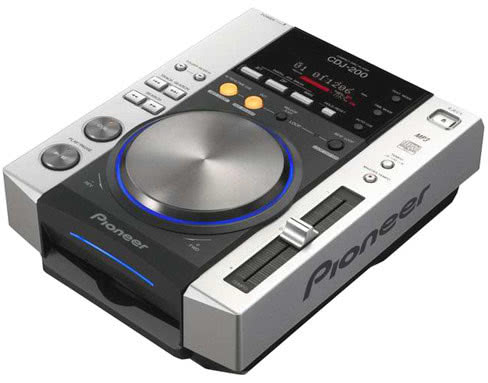 Pioneer CDJ-200
Erschienen: 2004
Pioneer begann wahrscheinlich zu erkennen, dass sie, obwohl sie auf dem Clubmarkt etabliert waren, seit 1998 keinen echten Budget CDJ für den Heimgebrauch mehr herausgebracht hatten. So entstand der CDJ-200.
Dieser ersetzte den CDJ-100s und war in vielerlei Hinsicht sehr ähnlich. Es hatte noch drei eingebaute Soundeffekte: Jet, Wah und Zip, obwohl die Klangqualität dieser Effekte verbessert wurde. Und wie sein Vorgänger unterstützte der 200er die Vinyl-Emulation nicht. Dies ist das erste Mal, dass Pioneer einen CDJ produziert hat, an dem man seit 1998 nicht mehr scratchen konnte.
Aus diesem Grund wurde der CDJ-200 sehr beliebt bei Dance/Electronic-DJs, die mehr an einem reibungslosen Mixen von Tracks interessiert waren. Dies wurde durch die Tatsache begünstigt, dass sie nun über die gleiche Auflösung von 0,02% Pitch verfügte, die auf dem High-End-Markt verfügbar war.
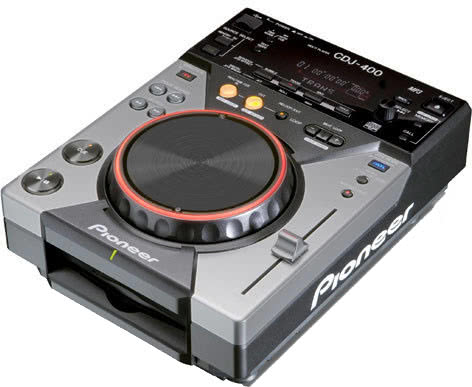 Pioneer CDJ-400
Erschienen: 2007
Dieses kurzlebige Experiment von Pioneer war vollgepackt mit schönen und überraschend modernen Features.
Der CDJ-400 war das erste Modell von Pioneer, das ohne Timecode als MIDI- oder nativer (HID-)Controller für DJ-Software wie Traktor oder Serato verwendet werden konnte. Man konnte auch vom Controller in den CDJ-Modus wechseln, ohne die Musik zu unterbrechen.
Es scheint möglich zu sein, dass dies beabsichtigt war, den CDJ-200 durch eine scratch-freundliche Einheit zu ersetzen (beachten Sie die drei gleichen Effekte... Jet, Roll und Wah) und ihn ein wenig zu modernisieren, aber Pioneer hatte andere Pläne für seine Aufstellung.... (wie z.B. Rekordbox-Unterstützung).
Der 400er führte eine Reihe von Funktionen ein. Er war der erste, der die Wiedergabe von einem USB-Stick ermöglichte, der erste, der eine native Softwaresteuerung ohne Timecode ermöglichte und der erste, der eine integrierte Soundkarte enthielt. Es war auch der erste Player, der einen Drehrichtungsanzeiger zeigte, ohne die mittlere Jog-Anzeige zu verwenden (stattdessen wurde ein äußerer Jog-Ring gewählt).
Außerdem wurde ein limitiertes Modell herausgebracht, das die orangefarbene Beleuchtung durch Kobaltblau ersetzt.
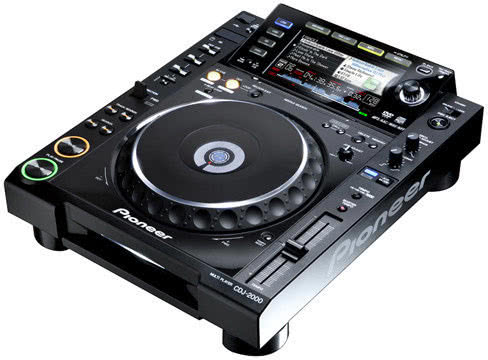 Pioneer CDJ-2000
Erschienen: September 2009
Der CDJ-1000 hatte einen tollen Lauf, aber Pioneer musste Schritt halten.... speziell alle Funktionen, die immer mehr über Laptops und Controller zugänglich wurden.
So entstand ein neuer Nachtclub-Standard.... der CDJ-2000. Als "Professioneller Multiplayer" kann der 2000 CDs, CD-Rs, DVD-Rs, MP3/AAC/WAV/AIFF auf CD/DVD, USB-Stick oder SD-Karte abspielen und unterstützt auch die native (und MIDI-) Software-Steuerung von Standard-DJ-Software ohne Verwendung von Timecode.
Jede Einheit hat ihre eigene eingebaute Soundkarte. Der CDJ-200 verfügt über ein großes WQVGA 6,1-Zoll-Vollfarb-LCD-Panel mit 480 x 234 Pixeln zur Anzeige von Songtiteln sowie detaillierte Track-Informationen, damit DJs Songs auf einen Blick auswählen können. Der Player unterstützte die damals neue Rekordbox-Software und brachte sie in die moderne Ära des Musikmanagements.
Die 2000er beinhalteten auch die Needle-Search Funktion und eine integrierte Quantisierungsfunktion, die sicherstellt, dass Cue-Punkte präzise und automatisch gesetzt werden.
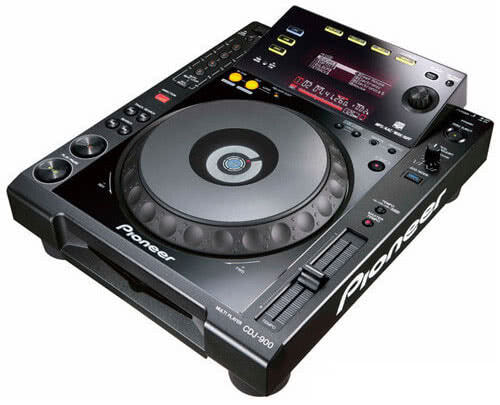 Pioneer CDJ-900
Veröffentlicht: September 2009
Der 900 wurde als Nachfolger der CDJ-800-Serie eingeführt, war aber eher ein etwas preiswerterer CDJ-2000 (der zeitgleich herausgebracht wurde).
Die 900 weisen einige der Features der 2000er auf: DVD+/-R-Wiedergabe, SD-Kartenwiedergabe, der LCD-Bildschirm (statt dessen mit 4 Zeilen Text), Hot Cue, Needle Drop/Search, Loop Cutting, Jog Wheel Tension Adjustment, Decksperre, beleuchtete Cue- und Play-Tasten und der beleuchtete Jog Wheel Ring. Der CDJ-900 lässt auch die Hot Loop-Tasten zugunsten einer Auto-Beat-Funktion verschwinden, obwohl diese Funktionalität dem 2000 als späteres Firmware-Update hinzugefügt wurde.
Der CDJ 900 war der erste, der Pioneer-Anwender in den "Slip Mode" einführte, der im CDJ-2000 nicht einmal vorhanden war.
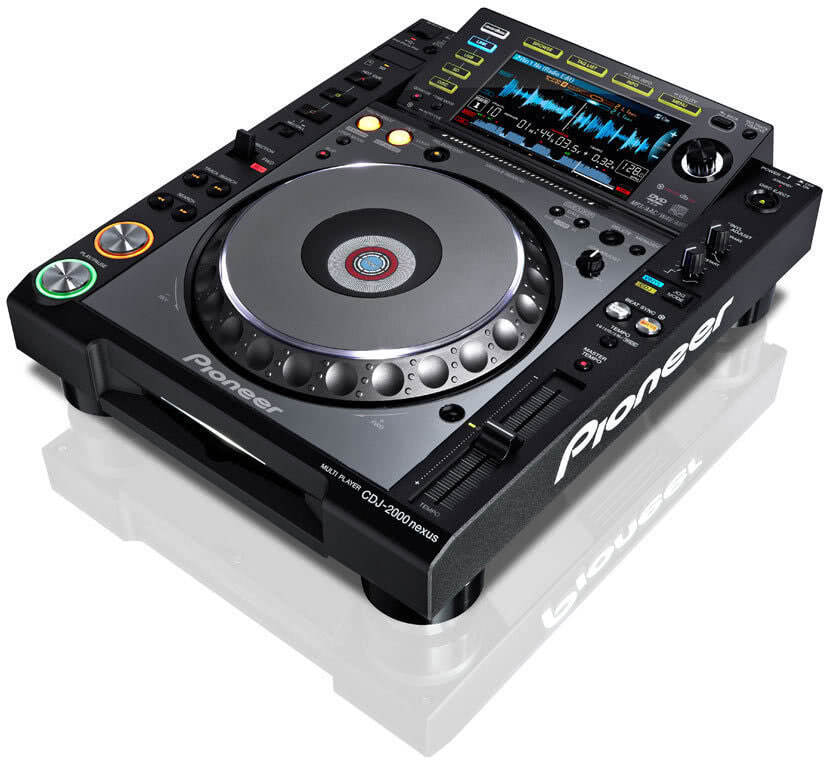 Pioneer CDJ-2000NXS
Veröffentlicht: September 2012
Die "Nexus"-Version des CDJ-2000 ersetzte das Original im Jahr 2012 und fügte einige Funktionen hinzu.
Diese Version des enthält einige Verbesserungen, wie z.B. WAVE ZOOM (mit dem Sie die Wellenformanzeige erweitern/verkürzen können). Weiterhin dabei ist ein verbesserten 6.1″ Vollfarb-LCD-Display, das eine Art von GUI-Funktionen bietet, die zuvor für Laptop-DJs vorbehalten waren. Jetzt können Sie nicht nur Ihre Wellenform und die Liste der Tracks sehen, sondern auch die Wellenform, die Taktanzahl, das Phase Meter usw. zoomen. Außerdem leuchtet das Display Tracks auf, die sich in einer kompatiblen Tonart befinden.
In einem damals umstrittenen Zug enthielt das neue Flaggschiff den Sync-Button, mit dem der DJ die Möglichkeiten des Multi-Deck-Mixings und des Slip-Modus von Rekordbox voll ausschöpfen konnte.
Außerdem wurden das Master Tempo, die neue My Settings-Funktion und die Möglichkeit, Musik, die in Tablets, Smartphones und Laptops gespeichert ist, über Wi-Fi wiederzugeben, drastisch verbessert.
Pioneer CDJ-850
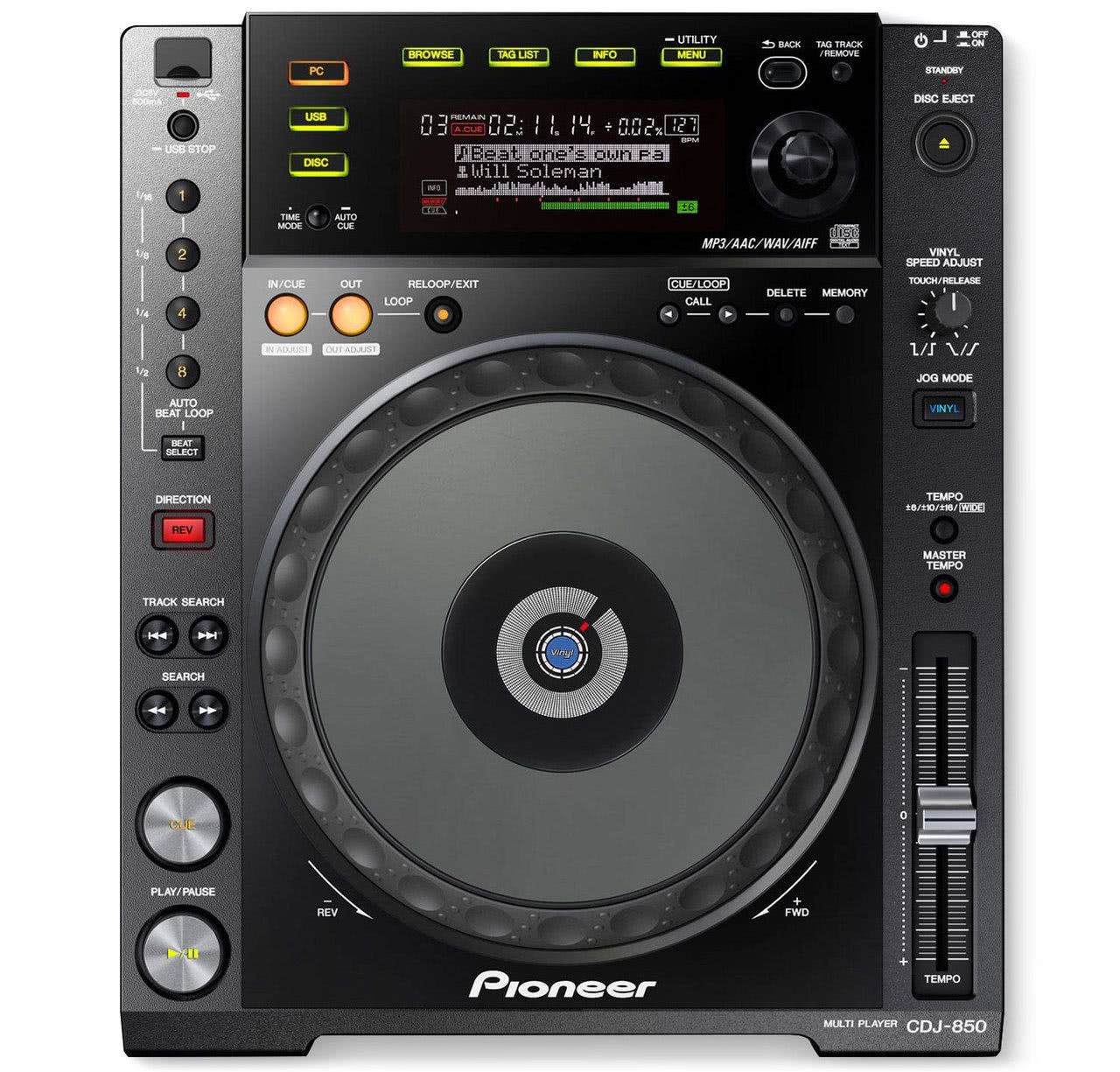 Erscheinungsdatum: August 2010
Diese soliden Player sind spirituelle Nachfolger des CDJ-800mk2, mit vielen Funktionen, die von den 900er Geräten übernommen wurden. Mit Blick auf den Bedroom/Heimgebrauch ist der obere Teil wie ein CDJ-900 ausgelegt, nur dass der Bildschirm flach statt abgewinkelt ist. Es hat volle Rekordbox-Unterstützung, die exzellente .02% Pitch-Auflösung des 900 (im Gegensatz zu den .05% des 800) und Unterstützung für USB-Wiedergabe.
Es ist jedoch erwähnenswert, dass er Pro DJ Link nicht unterstützt. Das bedeutet, dass man im Gegensatz zu den großen Brüdern 900 und 2000 für jeden Player einen separaten USB-Stick haben muss. Das Gerät enthält auch nicht die in den oberen Modellen verfügbare On-Deck-Synchronisation oder Quantisierung....und unterstützt natürlich keine On-Screen-Wellenformen.
Ansonsten funktioniert der CDJ-850 ähnlich wie die großen Nexus-Systeme, jedoch ohne den hohen Preis.
Features Pioneer CDJ-850-K
- Verwalten Sie Ihre Tracks und sorgen Sie für einen reibungslosen Ablauf, indem Sie Ihre Musik in Rekordbox vorbereiten.
- Der CDJ-850 spielt MP3-, WAV-, AAC- und AIFF-Dateien auf USB-Geräten ab.
- Verwenden Sie den CDJ-850 "als Controller", um die volle Kontrolle über Ihre Lieblings-DJ-Software zu erlangen.
- Verwenden Sie den HID-Modus in Traktor, Serato oder der eigenen Rekordbox DJ-Software von Pioneer.
- Drücken Sie die Tasten Auto Beat Loop, um 1, 2, 4 oder 8 Beat-Loops einzustellen, die präzise auf das Beat-Raster der Recordbox eingerastet werden.
Spezifikationen
- Musikformate: MP3, WAV, AIFF, AIFF, AAC
- Audioquellen: USB-Speicher (FAT, FAT32, HFS+), iOS oder Android, Mac oder Windows PC
- Ports: 1 USB A, 1 USB B, 2 analoge RCA, 1 Control (Mini-Buchse)
- Frequenzbereich: 4 - 20.000 Hz
- 115 dB Signal-Rausch-Verhältnis
- Ausgangspegel: 2,0Vrms
- Verzerrung: < 0,003%
- Leistungsaufnahme: 21 W
Pioneer CDJ-Tour1
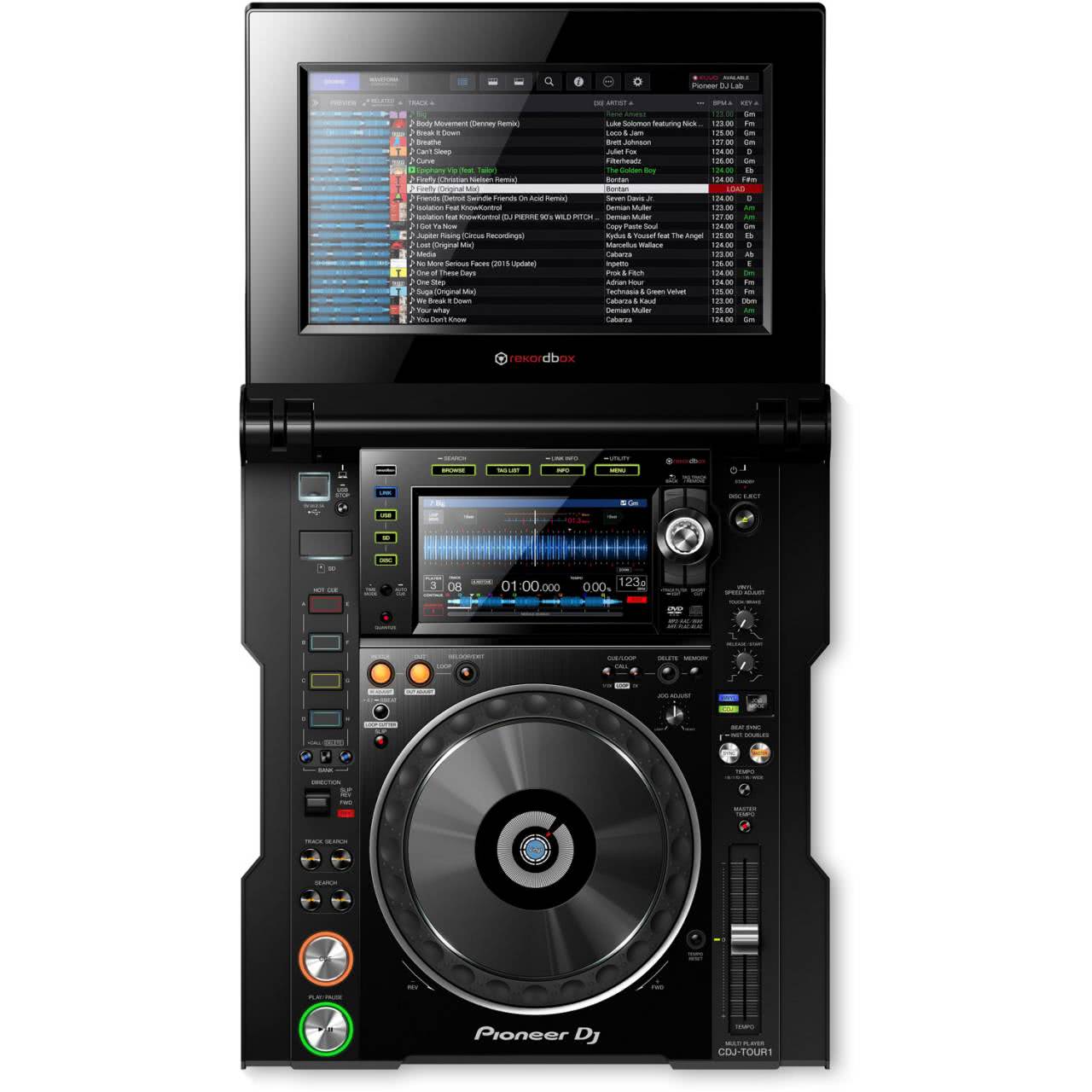 Erscheinungsdatum: Mai 2016
Das ultimative Flagschiff der CDJs, das auf Großserienproduktion und nicht auf Heimanwender oder Nachtclubs ausgerichtet ist. Es teilt das Layout und die Funktionen des CDJ-2000NXS2, enthält aber einige aufgewertete Audiokomponenten und einen großen ausklappbaren Bildschirm.
Zusätzlich zum integrierten 7-Zoll-Touchscreen erhalten Sie einen weiteren ausklappbaren 13-Zoll-Touchscreen. Dies gibt dem DJ "mehr Kontrolle" über Dinge wie das Track-Browsing und ermöglicht es, Wellenformen von bis zu 4 CDJs gleichzeitig zu sehen. Er ist mit Neigungsverstellungen und Sonnenblenden für den Außenbereich ausgestattet.
Der CDJ-TOUR1 verfügt außerdem über einen High-End-D/A-Wandler von ESS Technologies (für unglaublich geringe Verzerrungen/Rauschpegel bei wahnsinnigen Lautstärken), verstärkte Seitenteile, Isolatorfüße und verriegelbare LAN-Anschlüsse. Kombinieren Sie dies mit einem DJM-TOUR1 Mixer, für das ultimative (teure) Festival- oder Arena-Setup.
Features Pioneer CDJ-TOUR1
- 96kHz/24-bit Soundkarte und ein spezieller 32-bit D/A-Wandler von ESS Technologies ermöglichen eine verzerrungsfreie Ausgabe bei hohen Lautstärken.
- Eine separate Stromversorgung trägt dazu bei, Störungen weiter zu reduzieren.
- FLAC- und ALAC-Unterstützung (für verlustfreie Wiedergabe)
- Die Qwerty-Tastaturanzeige ermöglicht es, nach Tracks nach Rekordbox-Informationen wie Name, BPM oder Keys zu suchen oder zu filtern.
- Vollständiges mehrfarbiges Display mit Wellenform-Zoom
- Neigen Sie den 13"-Bildschirm nach Ihren Wünschen oder befestigen Sie den Schirm für den Außeneinsatz.
- Isolatorfüße für Stabilität auf jeder Oberfläche
- Verstärkte Seiten
- NEUTRIK etherCON® Steckverbinder für verriegelte LAN-Ports
- Teilen Sie eine Musikquelle auf vier Playern und aktivieren Sie Synchronisation, Countdown und andere Transportfunktionen.
- Betrachten Sie parallele Wellenformen von bis zu vier Playern auf einem gemeinsamen Bildschirm.
- HID-Unterstützung: Verwenden Sie Ihre CDJs "als Controller" in Traktor, Serato, djay PRO oder Rekordbox DJ.
- RGB-USB-Anschluss: Wählen Sie eine Farbe für ein bestimmtes Gerät aus (z.B. grün für Drum-n-Bass, lila für Trance, etc.) und es leuchtet diese Farbe, wenn es angeschlossen ist.
- "Meine Einstellungen" ermöglicht es Ihnen, Ihre Präferenzen auf Reisen mitzunehmen. Ihre persönlichen Einstellungen werden aktiviert, sobald Sie Tracks laden.
- 8 farbcodierte Hot Cues und neue Memory Cues, mit denen Sie Ihre Cue-Punkte benennen und farbcodieren können.
- DDJ-SP1-Kompatibilität: Add-On-Controller mit sofortigem Zugriff auf mehr Hot Cues, Loops oder Slip-Modus
- Synchronisation und verbesserte Quantisierung (wählen Sie zwischen ⅛, ¼ und ½ Beat Quantize). Quantisierter Beat Jump ermöglicht es, von der aktuellen Position aus 1 Beat vor- oder zurückzuspringen
Spezifikationen
- Musikformate: MP3, WAV, AIFF, AAC, FLAC, ALAC
- Audioquellen: USB-Speicher (FAT, FAT32, HFS+), SD-Karte, iOS oder Android, Mac oder Windows-PC, optisches Laufwerk (CD, CD-R/RW,DVD±R/RW/RW/R-DL)
- Ports: 1 USB A, 1 USB B, 1 digitaler (koaxialer) Ausgang, 2 analoge RCA, 1 LAN (100Base-TX Ethernet)
- Abmessungen (obere Anzeige geschlossen): 385 x 451 x 178 mm
- Abmessungen (obere Anzeige stehend): 385 x 457,2 x 418 mm
- Abmessungen (obere Anzeige vollständig geöffnet): 385 x 693,9 x 203,1 mm
- Soundkarte: 24-bit/96kHz mit einem 32-bit ESS Technologies DAC
- Frequenzbereich: 4 - 40.000 Hz
- 115 dB Signal-Rausch-Verhältnis
- Ausgangspegel: 2,0Vrms
- Verzerrung: < 0,0018%.
- Stromverbrauch: 51 W
Pioneer CDJ-2000NXS2
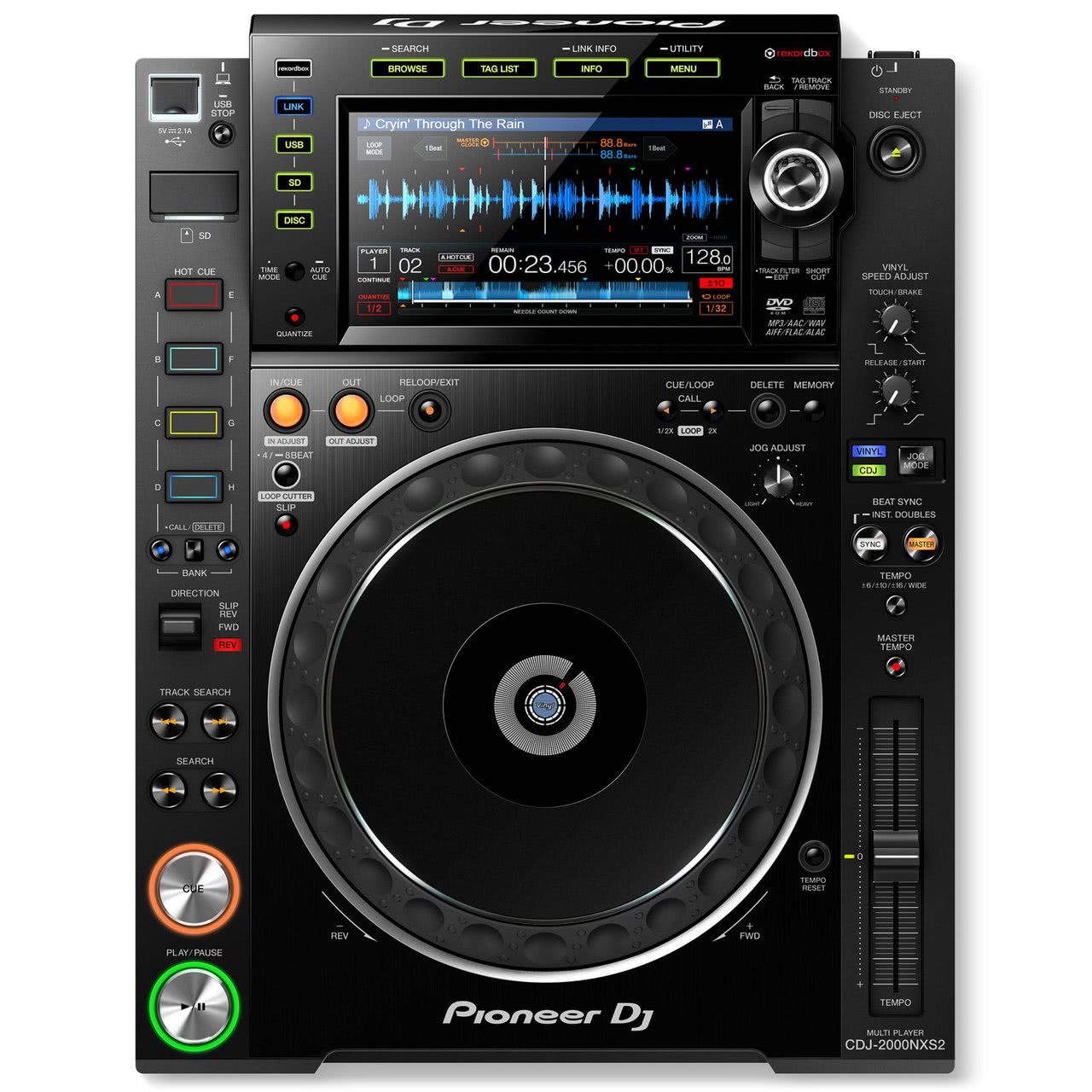
Erscheinungsdatum: Februar 2016
Das Maximum der letzen Jahre ist der CDJ-2000NXS2 und buchstäblich der Standard, den andere Player erreichen müssen. Diese Neuauflage des Original-CDJ-2000NXS hat moderne Funktionen hinzugefügt und legt großen Wert auf die Klangqualität.
Mit einer 96kHz/24-Bit-Soundkarte, FLAC/ALAC-Unterstützung (verlustfreie Musik), einem verbesserten Digitalausgang, einem 32-Bit-D/A-Wandler und einem separaten analogen Netzteil.... ist die Audiowiedergabe so detailiert wie nur möglich.
Während der Preis den Player für viele außer Reichweite bringt.... zeigen das robuste Design, das professionelle Design, die fortschrittlichen Funktionen und der Fokus auf die Klangqualität, warum es wirklich der Standard-Player der Branche ist.
Features CDJ-2000NXS2
- 96kHz/24-Bit-Soundkarte und 32-Bit-D/A-Wandler ermöglichen eine hochauflösende Ausgabe und eliminieren Verzerrungen/Rauschen.
- Ein verbesserter digitaler Ausgang und ein separates Netzteil tragen dazu bei, Störungen weiter zu reduzieren
- FLAC- und ALAC-Unterstützung (für verlustfreie Wiedergabe).
- Die Qwertz-Tastaturanzeige ermöglicht es Ihnen, nach Tracks nach Rekordbox-Informationen wie Name, BPM oder Keys zu suchen oder zu filtern.
- Vollständiges mehrfarbiges Wellenanzeige-Display mit Wellenform-Zoom
- Needle Countdown ermöglicht es, einen Punkt in der Spur zu berühren, um zu sehen, wie viele Beats er entfernt ist.
- 8 farbcodierte Hot Cues und neue Memory Cues, mit denen Sie Ihre Cue-Punkte benennen und farbcodieren können.
- DDJ-SP1-Kompatibilität: Add-On-Controller mit sofortigem Zugriff auf mehr Hot Cues, Loops, Slip-Modus und das Browsen auf bis zu vier CDJ-2000NXS2s.
- Synchronisation und verbesserte Quantisierung (wählen Sie zwischen ⅛, ¼ und ½ Beat Quantize). Quantisierter Beat Jump ermöglicht es, von der aktuellen Position aus 1 Beat vor- oder zurückzuspringen.
- Teilen Sie eine Musikquelle auf 4 Playern und aktivieren Sie Synchronisation, Countdown und andere Transportfunktionen.
- Beat-Raster, die mikrosekundengenau arbeiten
- HID-Unterstützung: Verwenden Sie Ihre CDJs "als Controller" in Traktor, Serato, djay PRO oder Rekordbox DJ.
- RGB-USB-Anschluss: Wählen Sie eine Farbe für ein bestimmtes Gerät aus (z.B. grün für Drum-n-Bass, lila für Trance, etc.) und es leuchtet diese Farbe, wenn es angeschlossen ist.
- "Meine Einstellungen" ermöglicht es Ihnen, Ihre Präferenzen auf Reisen mitzunehmen. Ihre persönlichen Einstellungen werden aktiviert, sobald Sie Tracks laden.
- Die Tastenkombination ermöglicht den direkten Zugriff auf den Browse Modus oder "Meine Einstellungen"
- Wi-Fi-Musik: Spielen Sie Musik von Ihrem Smartphone, Tablet, PC oder Mac drahtlos über Rekordbox ab
Spezifikationen
- Musikformate: MP3, WAV, AIFF, AAC, FLAC, ALAC
- Audioquellen: USB-Speicher (FAT, FAT32, HFS+), SD-Karte, iOS oder Android, Mac oder Windows-PC, optisches Laufwerk (CD, CD-R/RW, DVD±R/RW/RW/R-DL)
- Ports: 1 USB A, 1 USB B, 1 digitaler (koaxialer) Ausgang, 2 analoge RCA, 1 LAN (100Base-TX Ethernet), 1 Control (Mini-Buchse)
- Soundkarte: 24-bit/96kHz mit einem 32-bit Asahi Kasei DAC
- Frequenzbereich: 4 - 40.000 Hz
- 115 dB Signal-Rausch-Verhältnis
- Ausgangspegel: 2,0Vrms
- Verzerrung: < 0,0018%
- Stromverbrauch: 41W
Pioneer CDJ-900NXS
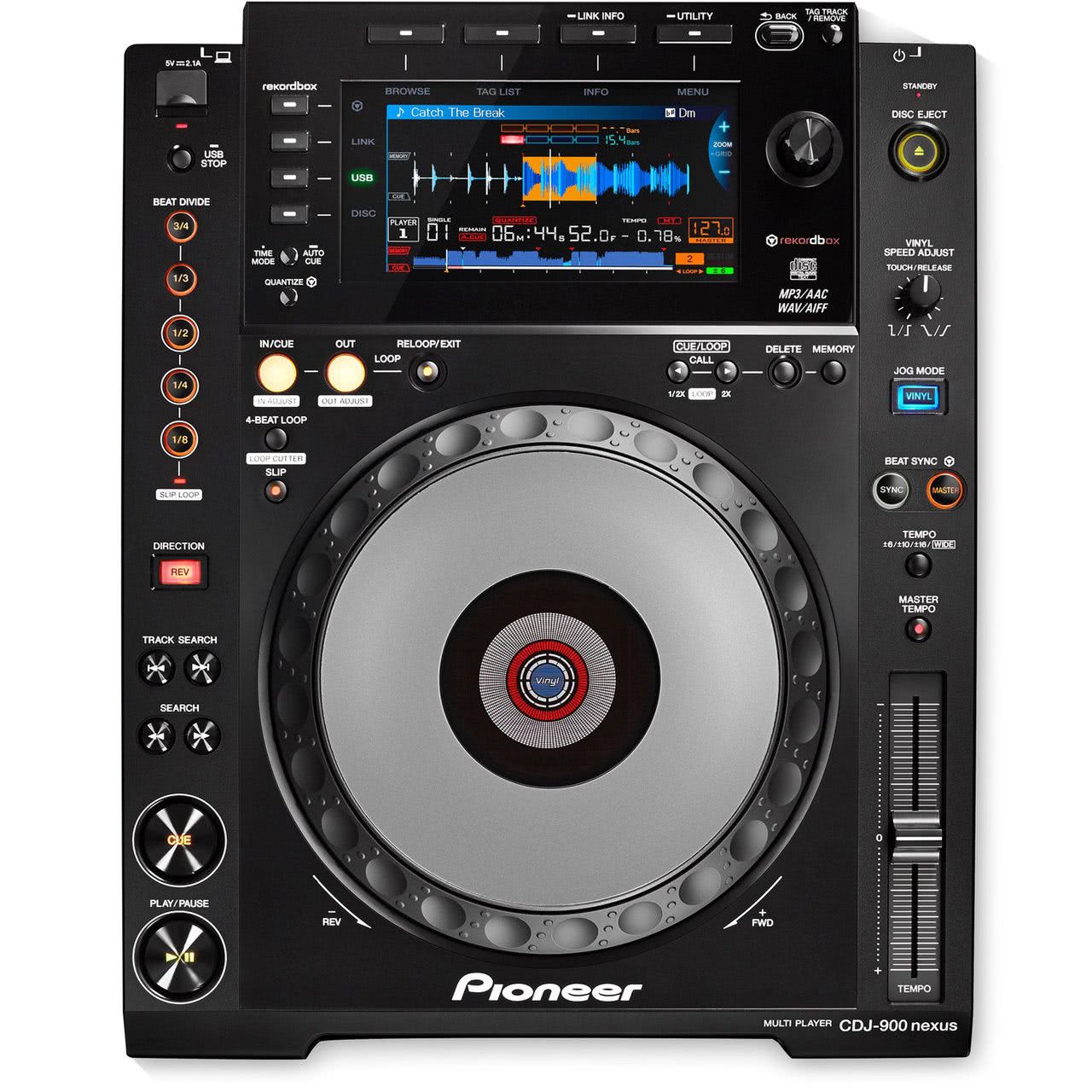 Veröffentlichungsdatum: Dezember 2013
Als Nachfolger des ursprünglichen CDJ-900, trat die NXS-Versio in eine modernere Rekordbox-Ära ein.
Der CDJ-900NXS bietet ein umfassenderes Pioneer Rekordbox-Erlebnis als sein Vorgänger, einschließlich eines Vollfarb-LCD-Displays mit zoombaren Wellenformen, Beat-Countdown, Phase-Levels usw. Er unterstützt auch Beat-Sync, Quantisierung, Slip-Modus und Beat-Roll-Effekte über die Beat-Divide-Schalter.
Durch den Wegfall einiger Funktionen, die viele DJs zu Hause nicht nutzen werden, können Sie eine ähnliche Erfahrung wie mit dem Flaggschiff 2000NXS2 machen, aber etwa 800 € sparen.
Features CDJ-900NXS
- 48kHz/24-Bit-Soundkarte und S/PDIF-Koaxialanschlüsse sorgen für Pro-Level-Sound.
- Vollständiges mehrfarbiges Wellenform-Display mit Wellenform-Zoom
- Enthält Beat-Countdown, Phasemeter
- Anzeigen und Bearbeiten von Rekordbox-Beatgrids
- Steuern Sie die Rekordbox DJ-Software und schalten Sie Leistungsmerkmale wie Hot Cues, Sampling, Color FX und mehr frei.
- Schließen Sie mehrere Player oder Laptops an und teilen Sie eine einzelne Musikquelle.
- Greifen Sie auf gespeicherte Loops und Cues zu, synchronisieren Sie den Beat und andere Rekordbox-Funktionen auf jedem CDJ Player zu.
- HID-Unterstützung: Verwenden Sie Ihre CDJs "als Controller" in Traktor, Serato, djay PRO oder Rekordbox DJ.
- Wi-Fi-Musik: Spielen Sie Musik von Ihrem Smartphone, Tablet, PC oder Mac drahtlos über die Rekordbox ab
- Active Loop: Setzen Sie automatische Loops über Rekordbox, so dass Sie am Ende eines Tracks nie unvorbereitet erwischt werden.
Spezifikationen
- Musikformate: MP3, WAV, AIFF, AAC
- Audioquellen: USB-Speicher (FAT, FAT32, HFS+), iOS oder Android, Mac oder Windows PC, optisches Laufwerk (CD, CD-R/RW)
- Ports: 1 USB A, 1 USB B, 1 digitaler (koaxialer) Ausgang, 2 analoge RCA, 1 LAN (100Base-TX Ethernet), 1 Control (Mini-Buchse)
- Soundkarte: 48kHz/24-bit mit Wolfson DAC Prozessor
- Frequenzbereich: 4 - 20.000 Hz
- 115 dB Signal-Rausch-Verhältnis
- Ausgangspegel: 2,0Vrms
- Verzerrung: < 0,003%
- Stromverbrauch: 33W
Andere DJ Player von Pioneer in der Übersicht
 CMX-5000 und CMX-3000
Der Pioneer CMX-5000 war ein 19" Rack Doppel-CD-Player und war der erste Versuch von Pioneer in diesem Marktsegment. Es bestand aus einem 2U-Abschnitt mit 2 Slot-Laufwerken und einem 3U "Controller"-Abschnitt mit Jog-Dials und anderen Bedienelementen.
Kurz nach der Markteinführung des CDJ-1000 wurde der CMX-3000 als neue Option für die Rackmontage freigegeben. Obwohl es nicht ganz den gleichen Funktionsumfang wie der 1000er hatte, war er viel moderner (Er hatte eine Vinyl-Emulation, was bedeutet, dass man damit "scratchen" konnte, obwohl er nicht besonders für diese Aufgabe geeignet war).
Aufgrund der besseren Preisgestaltung fanden viele CMX-3000er ihren Weg in mobile DJ-Setups und als Backup in Nachtclubs.
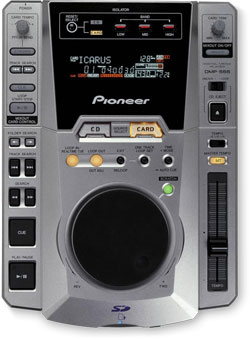 Pioneer DMP-555
Veröffentlicht: April 2002
Der DMP-555 war ein Single-Deck-CD-Player mit mehreren Innovationen, wie z.B. der Wiedergabe von SD-Karten und der MP3-Wiedergabe von Speicherkarten oder CDs.
Das Gerät war sogar in der Lage, von der gleichen Medienquelle zu cuen und zu spielen, so dass es möglich war, zwei Tracks von einem einzigen Gerät aus zu bearbeiten.
Trotz dieser beeindruckenden Eigenschaften wurde der Erfolg in vielerlei Hinsicht behindert. Das Produkt war von einem Mangel an Updates und Support geplagt, die SD-Karte hatte ein Limit von 2 GB, und MP3s konnten nicht direkt auf die Karte geschrieben werden.
Ein spezieller Pioneer-Autor wurde benötigt, um die Musik zu übertragen, um die Bedenken wegen Urheberrechtsverletzungen durch Musiklabels auszuräumen.
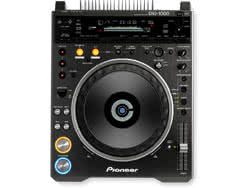 DVJ-X1 und DVJ-1000
Erschienen: 2004, 2006
Der DVJ-X1 war ein DVD-basierter "CDJ", mit dem VJs Videos wie eine Vinylplatte scratchen und mischen konnten. Es bot Echtzeit-Scratching, Looping und Hot-Cueing von Videos und konnte Audio-/Videostreams miteinander synchronisieren. Er spielte auch Audio-CDs ab, mit ähnlichen Funktionen wie der CDJ-1000.
Im Jahr 2006 wurde der DVJ-1000 als Nachfolger des ursprünglichen DVJ-Gerätes vorgestellt. Im Gegensatz zum größeren X1 hatte er ungefähr die gleiche Größe wie die Pioneer CDJ-1000-Decks und konnte in die gleichen Gehäuse passen.
Die verbesserte Einheit verfügt über hellere Displays, Loop-Einstellungen, Auto-Looping und mehrere neue Ausgänge (S/PDIF, Composite, Vorschau-Video und Control).


