Average rating of 4.85 out of 5 stars
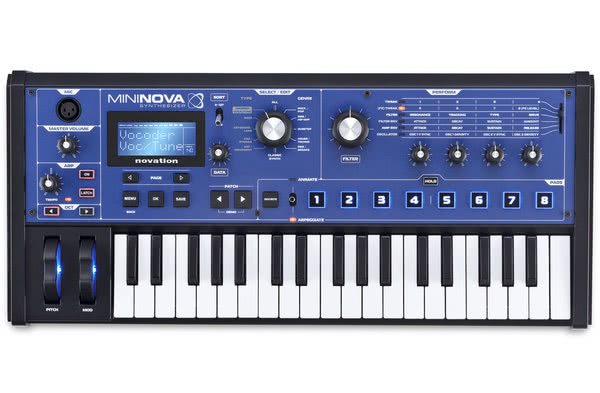
The Novation MiniNova is a powerful and professional performance synthesizer from Novation, whose 300 factory sounds can be edited and changed with five performance knobs or the eight Animate buttons. Per voice, five effects are available for further sound manipulation. Since the MiniNova synthesizer can be connected to a laptop, desktop computer, keyboard or sound module via USB connection and MIDI in and out and has excellent sound characteristics, it offers ideal conditions for the use in electronic music, rock-pop and mainstream. In addition to the strong vocoder, the unit also has strong vocal tune effects, which can either add the finishing touches to vocal signals or create completely new effects. This creates classic vocoder vocal sounds as known from hip hop and urban productions. Guitars and other signals can also be processed with the vocoder and the effects section with reverb, distortion, chorus/phase, gator, compressor and EQ. The synthesizer not only provides 300 factory sounds, but also space for 128 of your own sounds. Its practical search function contains search criteria such as genre (techno, hip hop etc.) or sound type (bass, lead etc.) and makes navigation much easier. The fifth controller is a large filter cutoff knob for delicate interventions or radical cuts, while the other four performance controllers allow you to edit strong sounds in real time. The MiniNova also comes with a strong arpeggiator, which allows you to jam with arpeggios in real time via the eight Animate buttons. To store more sounds on a computer, for example, a free patch management software is included in the delivery. The MiniNova Editor is a plug-in for DAWs or music software and provides full access to the MiniNova hardware. Features Novation MiniNova Very powerful mini-synth with the sound engine from UltraNova Brand new VocalTune and classic vocoder effects Change and warp sounds in real time 300 impressive factory sounds with direct access search function Up to five effects per voice Editing software and patch management software included Guitars and other instruments can be edited with the vocoder and effects Free sound packs available including vintage synth and bass synth sounds 37-key controller keyboard with MIDI I/O Technical data Up to 512 patches can be stored Polyphony: 18 Mono-Timbral Audio input via 6.3 mm jack Line outputs via 2x 6.3 mm jack (Stereo L/R) MIDI input and output USB Headphone output XLR mic input for dynamic microphones Weight: 2,52 kg Dimensions (W x H x D): 560 x 75 x 250 mm Scope of delivery Novation MiniNova Power supply unit Gooseneck microphone Xcite+ - Software Bundle
Average rating of 4.7 out of 5 stars
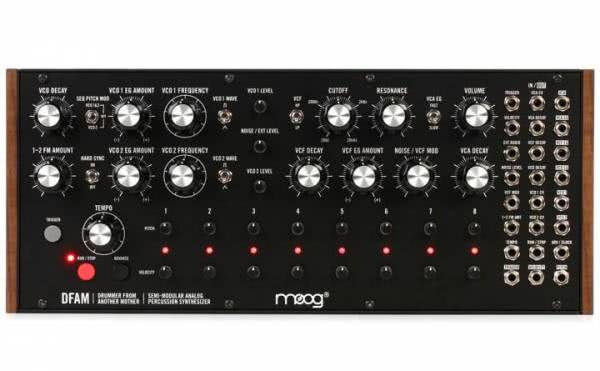
The Moog DFAM is a unique semi-modular analog percussion synthesizer that enhances your music production with characteristic Moog sounds. This synthesizer allows you to create powerful analog rhythms without the need for patch cables. Thanks to its flexible patchbay system, the DFAM opens up a wide range of creative possibilities. Two oscillators and a noise generator provide a broad palette of timbres, from deep basses to sharp, percussive sounds. With selectable filters – lowpass and highpass – you can shape your sounds precisely to your liking. The heart of the DFAM is its dynamic 8-step sequencer. Each step of the sequencer has its own controls for pitch and velocity, allowing you to adjust the sequences in real time. This lets you create not only typical percussion elements but also impressive basslines and complex rhythms. The ability to connect the sequences with other modules expands the possibilities, making the DFAM a versatile tool in your setup. Whether used alone or in combination with other Eurorack modules, the Moog DFAM easily integrates into any existing system. With 24 CV inputs and outputs, it offers numerous connection options and an almost unlimited number of sound design possibilities. You can even remove it from its case and install it into an Eurorack case to gain even more flexibility. The Moog DFAM is the ideal companion for musicians and producers looking for a unique and intuitive drum synthesizer that delivers impressive results both in the studio and on stage. Features Moog DFAM 100% analog percussion synthesizer with dynamic 8-step sequencer Legendary analog Moog sound Semi-modular design – no cable connections required, but creative expansion options via patchbay 24 patch points for extensive sound design possibilities Two oscillators and a noise generator for a wide range of percussive sounds (kicks, snares, hi-hats, and more) Selectable lowpass and highpass filters for precise sound shaping Step sequencer with controls for pitch and velocity at each step External audio input for processing audio from other synthesizers or Eurorack modules Fully compatible with Eurorack setups and can be integrated into an Eurorack case Perfect complement to the Moog Mother-32 synthesizer module and fits into 2- and 3-tier Mother-32 racks Technical Specifications Polyphony: Monophonic Oscillators: 2 x oscillators, 1 x white noise generator Waveforms: Triangle, Square Noise Generator: Yes Envelope Generators: VCO/VCF/VCA Filters: Lowpass/Highpass 4-pole transistor ladder filter Sequencer: 8-step sequencer with controls for pitch and velocity Analog Outputs: 1 x 6.35 mm (Line/Headphones) Other Inputs and Outputs: 24 x 3.5 mm patchbay points Power Supply: 12V DC, 1200mA power adapter (included) Power Consumption: 230 mA Weight: 1.59 kg Dimensions (W x D x H): 319 x 133 x 107 mm
Average rating of 4.52 out of 5 stars
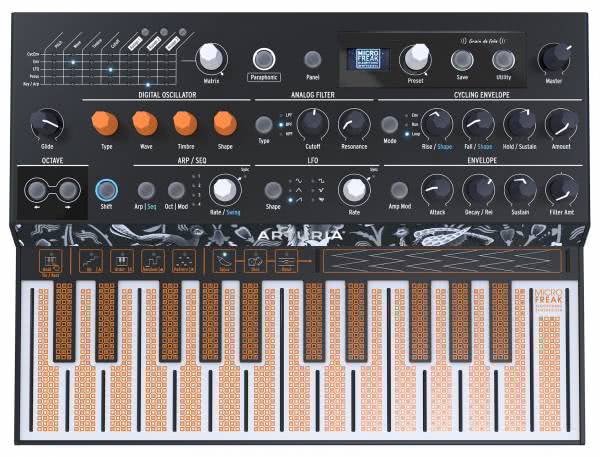
Arturia MicroFreak is a compact hybrid synthesizer that combines digital sound generation with an analogue filter. The instrument is aimed at everyone who wants more from sound design than classic standards. 21 oscillator modes, a resonant multimode filter, an unusual touch interface and strong performance features provide direct access to experimental, musical and anytime transformable sounds. Despite its compact build, the synthesizer feels remarkably open, flexible and full of connectivity potential. Sound without a fixed drawer At its core there is a digital oscillator with 21 modes. These include wavetable, granular, karplus-strong, superwave, vocoder and other engines from the Mutable Instruments ecosystem, as well as Noise Engineering. This covers a wide range: from fine, moving pads to harsh, angular textures and percussive impulses.The sound generation is rounded off by an analogue multimode filter with low-pass, high-pass and band-pass. The resonant 12 dB/octave circuit brings structure, punch and control to the signal without losing the open character of the digital engines. Exactly this combination of digital variety and analogue shaping is what makes the small Arturia synth so distinctive. Direct access instead of detours The touch-sensitive 25-key surface responds to pressure and offers polyphonic aftertouch. It plays differently from a classic keyboard, but that’s precisely what makes it appealing. Playing gestures, pressure changes and spontaneous interventions are immediately audible, which is especially convincing for lively sounds and improvised ideas.In addition, there’s a capacitive touch strip and a clearly readable OLED display. This lets you make quick adjustments, change parameters and shape the synthesizer—not just play it. Even as a controller in combination with software or external devices, this interface is an exciting approach. Sequences with your own handwriting The integrated 64-step sequencer provides two patterns and four automation tracks per preset. This allows you to capture ideas quickly and develop them in detail. Notes, movement and modulation interlock directly without slowing down the creative flow.In addition, arpeggiator, chord mode, scale quantizer and the spice-&-dice function expand your playful access. Random variations, controlled deviations and rhythmic changes are created without complicated menus. The result is an instrument that doesn’t just reproduce, but actively contributes when developing new ideas. Modulation, voice, connection With the modulation matrix, you link 5 sources with 7 destinations, three of which are freely assignable. This makes it possible to organise filter sweeps, oscillator contours or LFO movements very flexibly. This structure is strong enough for complex sounds, but it remains quick and practical in everyday use.The vocoder mode extends the concept to speech and vocal processing, and the appropriate gooseneck microphone is included. There are also USB, MIDI, clock and CV/gate/pressure outputs. This allows the MicroFreak to integrate smoothly into DAW setups, hardware rigs and modular environments. Does the Arturia MicroFreak fit you? This model is just right for you if you’re looking for unusual sounds, enjoy working directly on the instrument and appreciate compact devices with real depth. It suits beginners who want a versatile first hardware synthesizer just as much as experienced users who need fresh oscillator concepts, modulation and sequencing in a small format. well suited for sound design, electronic production and experimental ideas interesting for DAW setups, modular systems and hybrid workflows ideal if you want to play expressively while also sequencing quickly suitable for anyone who uses presets and wants to systematically expand their own sounds Features Arturia MicroFreak Compact hybrid synthesizer with digital sound generation and an analogue multimode filter 21 oscillator modes with wavetable, granular, superwave, karplus-strong, vocoder as well as other engines from Mutable Instruments and Noise Engineering Analogue resonant state-variable filter with low-pass, high-pass and band-pass at 12 dB/octave 25 touch-sensitive keys with polyphonic aftertouch and a capacitive touch strip for expressive playing 64-step sequencer with 2 patterns and 4 automation tracks per preset Modulation matrix with 5 sources and 7 destinations, 3 of which can be assigned freely Arpeggiator with up-, order-, random- and pattern modes as well as spice-&-dice variations Monophonic, unison or paraphonic play with up to 4 voices Chord mode and scale quantizer for controlled and fast musical work Vocoder mode included, with gooseneck microphone for speech and vocal processing 320 factory presets and a total of 512 preset slots for your own and saved sounds USB, MIDI, clock as well as CV/gate/pressure connections for integration into DAW and modular setups Technical specifications Display OLED Presets 320 Factory | 512 Preset Slots Oscillator modes 21 Play modes Monophonic | Paraphonic up to 4 voices | Unison Sequencer 64 Steps | 2 Pattern per preset | 4 automation tracks per preset Filter Analogue state-variable filter | Low-pass | High-pass | Band-pass | resonant | 12 dB/octave Modulation matrix 5 sources | 7 destinations | 3 destinations freely assignable Line output 6.3 mm jack, balanced Headphone output 3.5 mm jack CV / Gate / Pressure outputs 3.5 mm jack Clock In / Out 3.5 mm jack MIDI In / Out 3.5 mm TRS jack USB port available Weight 1.02 kg Dimensions (W x D x H) 311 x 233 x 55 mm What’s included Arturia MicroFreak synthesizer 12V DC power supply unit 2x MIDI port adapter Gooseneck microphone Registration card
Average rating of 5 out of 5 stars
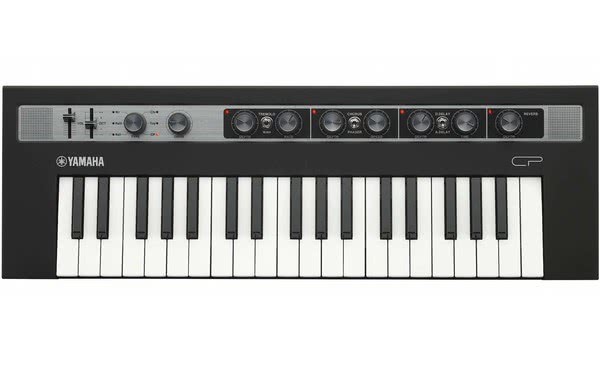
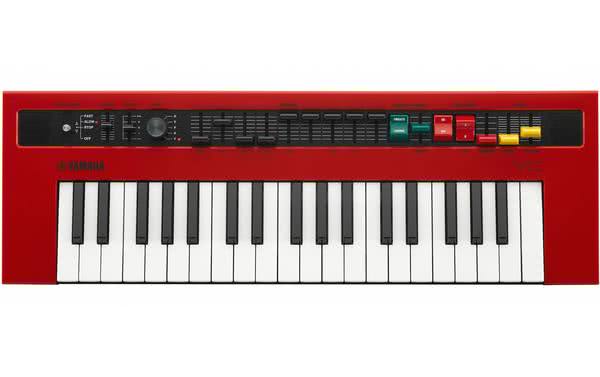
Vintage E-Piano sounds, direct operation and a format that you can take along without detours: the Yamaha Reface CP combines the character of classic keyboard instruments with a modern, clearly structured workflow. Six distinctive keyboard sounds, an effect section that’s instantly accessible, and the high-quality 37-key mini keyboard make this compact model a flexible tool for production, rehearsal, and spontaneous playing. Klassiker auf Abruf Six distinctive sounds are built into the housing, based on well-known vintage instruments. From warm Tine pianos to punchy reed sounds and on to Clavi and Toy piano character, you get exactly the timbres that cut through in the mix quickly and feel instantly familiar when you play.What’s particularly practical is the clear selection without an overloaded menu structure. You can switch quickly between different sound types, giving you an instrument that doesn’t just provide a typical E-Piano sound, but cleanly covers multiple musical directions. Effekte mit direktem Zugriff The integrated stompbox-style section is designed to work deliberately and immediately. Drive, Tremolo, Chorus, Delay and Reverb can be set directly without you having to work through submenus. This keeps the focus on playing rather than editing.Especially with a compact keyboard, that’s a major advantage: you can add more depth, movement, or grit right away to a dry basic sound. In just a few hand movements, you can create broad pads, rhythmic modulation, or compact, punchy sounds for recording and live setups. Klein gebaut, gut spielbar The 37-key HQ mini keyboard is designed for mobility without feeling cheap. The keyboard action responds pleasantly and directly and, despite its compact design, delivers a controlled playing feel that works well for melodies, chords, and rhythmic parts.There’s also the high polyphony with 128 voices. This ensures clean, smooth playing, even when you use sustain or play dense harmonies. With a compatible pedal, you can also use sustain including half-damping functionality, making the playing even more nuanced. Bereit für unterwegs This Yamaha E-Piano isn’t tied to a fixed location. Its low weight, built-in speakers, and battery operation make it a solution you can set up quickly and use anywhere. Up to 5 hours of battery operation give you extra playing time when there isn’t a power outlet nearby. built-in stereo speaker system mains operation or operation with six AA batteries compact format for desk, rehearsal, or travel luggage ready to use quickly without additional accessories Connections with practical relevance Even the connections reflect a well-thought-out design. Through the Aux input, you can connect external sources such as a smartphone or tablet. There are also line outputs for a mixing desk, audio interface, or DI box, a USB-to-Host port for connecting to computers and mobile devices, and MIDI via mini-DIN.That means the instrument fits both into a simple home setup and into an expanded production environment. You can rehearse right away, record, integrate MIDI, or pass the signal to a PA without any hassle. Für wen passt das Yamaha Reface CP? This model is just right for you if you’re looking for classic E-Piano sounds, but don’t want to transport a large, heavy vintage solution. It’s suitable for beginners who appreciate a clearly accessible setup, as well as for experienced keyboard players, producers, and songwriters who want to integrate a compact sound module with its own character into their setup. ideal for mobile setups and small studios useful for live performers with limited space interesting for producers focused on retro keyboard sounds practical for anyone who wants to work directly without a long learning curve If you value quick operation, selected sounds, and flexible connection options, this compact vintage keyboard is a solid choice. It’s aimed at musicians who would rather play and shape the sound than work through complex menus. Features Yamaha Reface CP Compact mobile E-Piano with six characterful vintage keyboard sounds and a direct control interface Six carefully modelled sound types with influences from Tine, Reed, Clavi, Toy, and CP E-Pianos Stompbox-style effects section with Drive, Tremolo or Wah, Chorus or Phaser, Delay and Reverb 37 HQ mini keys with a natural playing feel and high-quality workmanship 128-voice polyphony for smooth playing even with dense chords and sustain Sustain pedal support with half-damping function when using a compatible optional pedal Built-in stereo speaker system for direct use without external monitoring Power via power adapter or six AA batteries for mobile use up to 5 hours Aux In for external audio devices and USB-to-Host for connecting to computers and mobile devices Line outputs and MIDI connectivity for studio, stage, and integration into existing setups Technical specifications Keyboard 37 keys in HQ mini format Polyphony 128 voices Sound generation SCM + AWM2 Amplifier output 2 x 2 W Speakers 2 x 30 mm Effects Drive | Tremolo/Wah | Chorus/Phaser | Digital Delay/Analog Delay | Reverb Power supply Power adapter PA-130 or comparable | 6 x AA batteries | Ni-MH rechargeable batteries Connections DC In | Headphones 6.3 mm stereo | MIDI mini-DIN in/out | Aux In 3.5 mm stereo | L/MONO and R line outputs 6.3 mm | USB-to-Host Pedal options Sustain pedal compatible with FC3(A) | FC4(A) | FC5 | Half-damping function with FC3(A) Weight 1.9 kg Dimensions (W x D x H) 530 x 175 x 60 mm Included in delivery Yamaha Reface CP E-Piano Power adapter MIDI breakout cable Owner’s manual
Average rating of 4.6 out of 5 stars
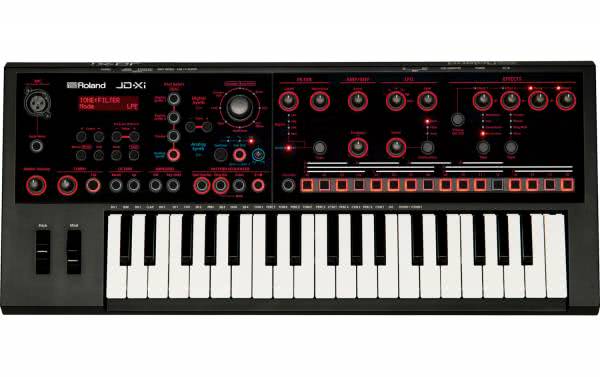
A musical idea often only becomes tangible when bass, pads, beats, and a voice interact directly. The Roland JD-Xi combines exactly these layers in one compact keyboard: analogue sound generation, digital synthesizer parts, drums, and a sequencer for patterns and loops. Analogue core and digital timbres The monophonic analogue synthesizer section creates basses and leads with sawtooth, triangle, or square waves. Pulse width modulation, an analogue filter, and an independent sub-oscillator provide a solid foundation for deeper sound programs and can be shaped directly on the device. Two digital parts complement it with SuperNATURAL sounds such as pads, string sections, electric pianos, and effects. This allows for the combination of a punchy analogue bass and expansive digital soundscapes in one arrangement. Four tracks for patterns and song ideas The 4-track pattern sequencer manages two digital synthesizer parts, the analogue synthesizer, and the drums separately. Real-time and step recording are available for different working styles; with TR-REC, you can program beats in the style of classic Roland drum machines. The PCM drum section brings electronic and acoustic kits to the device. Individual drum sounds can be adapted to your own pattern via filter, envelope, pitch, and pan. Vocoder and gooseneck microphone The included gooseneck microphone connects voice and synthesizer without additional accessories. The vocoder transfers the pitch and sound character of the played notes to speech or singing, while AutoPitch is intended for clearly processed electronic vocal sounds. With Auto Note, a synthesizer sound can be triggered via the voice. This is suitable for rough ideas, short vocal hooks, and performative passages where your hands are busy working on knobs or the sequencer. Effects and integration into your setup Four simultaneously usable effect sections process the sounds: Effect 1, Effect 2, Delay, and Reverb. Bit Crusher, Slicer, or Ring Mod significantly alter individual parts, while Delay and Reverb provide spatial depth. Via USB, the synthesizer transmits audio and MIDI to the computer. MIDI In and Out, stereo outputs, a headphone jack, as well as an XLR microphone input and jack audio input make it highly compatible with other equipment. When does the Roland JD-Xi fit into your musical setup? The Roland JD-Xi is suitable for producers, live performers, and beginners in sound synthesis who want to capture ideas without needing a massive collection of equipment. 37 velocity-sensitive mini keys, the clearly separated parts, and 256 memory slots for your own programs give you a compact foundation for electronic music, beat sketches, and supplementary keyboard tracks. The instrument also integrates well as a second keyboard in the studio or as a mobile sound source. If you want to combine analogue bass and lead sounds with digital pads, drums, and vocal effects in one workflow, the JD-Xi provides these tools directly on the device. Features Roland JD-Xi Compact crossover synthesizer with analogue and digital sound generation Monophonic analogue synthesizer with sub-oscillator and analogue filter Two digital synthesizer parts with SuperNATURAL sounds 37 velocity-sensitive mini keys PCM drum section with editable drum sounds 4-track pattern sequencer with real-time, step, and TR-REC recording Vocoder, AutoPitch, and Auto Note for vocal effects Gooseneck microphone included Four effect sections with Effect 1, Effect 2, Delay, and Reverb USB audio and USB MIDI for connection to the computer MIDI In and MIDI Out for external equipment 256 memory slots for your own programs Technical specifications Sound generationMonophonic analogue synthesizer | 2 digital SuperNATURAL synthesizer parts | PCM drum section Keyboard37 mini keys with velocity sensitivity Sequencer4 tracks | Real-time recording | Step recording | TR-REC Vocal effectsVocoder | AutoPitch | Auto Note EffectsEffect 1 | Effect 2 | Delay | Reverb Audio inputsXLR microphone input | 6.3 mm jack audio input Audio outputsStereo output, 6.3 mm jack Headphone connection6.3 mm stereo jack MIDIIn | Out | USB-MIDI USBType B for audio and MIDI User programs256 Power supplyAC adaptor Weight2.2 kg Dimensions (W x D x H)575 x 245 x 85 mm Included in delivery Roland JD-Xi synthesizer Gooseneck microphone AC adaptor Owner's manual
Average rating of 4.58 out of 5 stars
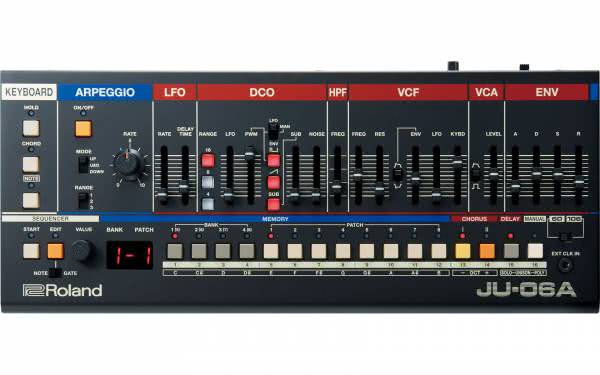
A JUNO sound thrives on direct sound shaping: one slider for the filter, another for the envelope, plus chorus and arpeggio. The Roland JU-06A brings this workflow into a compact Boutique module, combining the two sound modes of the historic JUNO-60 and JUNO-106 synthesizers. Two JUNO modes with unique filter characteristics Using the switch on the front panel, you can toggle between 60 and 106 modes. This gives you access to the two distinct filter behaviours of the original models: in 106 mode, the high-pass filter works continuously, while 60 mode features pulse width modulation controllable via the envelope. Four voices of polyphony are sufficient for chords, pads, and compact hooklines. The sound generation follows the familiar architecture with DCO, sub-oscillator, noise, high-pass filter, resonant VCF, VCA, and ADSR envelope. All important parameters are laid out as knobs and switches in front of you. This allows you to modify sounds while playing without having to navigate through menus. Chorus, delay, and musical performance aids The integrated chorus is a defining characteristic of the JUNO series. The JU-06A features two chorus variants; a delay complements the range of effects. For held chords, there is a hold function and chord memory with 16 storage slots, allowing a played chord to be triggered via the performance buttons. The arpeggiator operates in Up, Up&Down, and Down modes and offers three octave ranges. This is practical for sequenced bass lines, rhythmic chords, or a quick idea between two takes. The 16-step sequencer stores 16 patterns and records monophonic note sequences. Synchronised in a hardware or computer setup For integration, MIDI In and Out as well as USB for audio and MIDI are available. This allows the sound module to be played and synchronised from a master keyboard, a DAW, or an external sequencer. Via the external clock input, an analogue or modular setup can also clock the internal sequencer. A MIX-IN, a stereo output, and a separate headphone output are provided as mini-jack sockets. Operation is possible via USB bus power or four AA batteries. With Ni-MH batteries, the continuous operating time is about six hours; this depends on the capacity, battery type, and usage conditions. The built-in speaker makes it easy to preview sounds without a separate monitoring system. Roland Boutique format for on the go and at the desk With a width of 300 mm, the module fits on a small workspace or into a mobile bag. The 16 performance buttons allow for the direct playing of simple melodies and chords; when connected to an external keyboard, the JU-06A becomes a fully playable sound source. For a standalone Boutique unit, the optional K-25m Keyboard Unit can be attached. The separately available DK-01 Boutique Dock also matches the format and allows for three tilt angles. Those who organise patches will find 64 storage slots each for 60 and 106 modes. This keeps various basic sounds for production, live sets, or sound design available directly within the device. Who is the Roland JU-06A for? The Roland JU-06A is for you if you want to combine the clear layout of classic JUNO sounds with modern MIDI and USB connectivity. Electronic musicians, producers, and live acts get a small module for chords, pads, bass lines, and arpeggios that fits quickly into existing hardware or a DAW. The format is also useful for mobile idea generation: battery operation, built-in speakers, and storable sequences make the synthesiser independent of a fixed studio location. With a master keyboard or the optional K-25m, it becomes a directly playable instrument for sketches, arrangements, and use on stage. Features Roland JU-06A Digital Roland Boutique sound module with sound modes for JUNO-60 and JUNO-106 Four-voice polyphony for chords, pads, and melodies Switchable filter characteristics for both JUNO modes DCO section with sawtooth, square, sub-oscillator, pulse width modulation, and noise Two chorus variants and integrated delay Arpeggiator with Up, Up&Down, and Down modes as well as three octave ranges 16-step sequencer for monophonic note sequences with 16 pattern storage slots 16 chord memory slots MIDI In/Out, Micro-B-USB for audio/MIDI, and external clock input Operates via USB bus or four AA batteries Integrated speaker as well as headphones, output, and MIX-IN jack Compatible with optional K-25m Keyboard Unit and DK-01 Boutique Dock Technical specifications Sound generationDigital Sound modes60 | 106 Polyphony4 voices Patch memory64 for 60 mode | 64 for 106 mode Chord memory16 storage slots Sequencer16 steps | monophonic | 16 patterns Effects2 chorus variants | delay ArpeggiatorUp | Up&Down | Down | 3 octave ranges ConnectionsEXT CLOCK IN | PHONES | OUTPUT | MIX IN | MIDI In/Out | Micro-B-USB USBAudio | MIDI Power supplyUSB bus | 4 x AA Ni-MH batteries | 4 x AA alkaline batteries Power consumption500 mA via USB bus Battery lifeapprox. 6 hours with Ni-MH batteries during continuous operation Weight0.995 kg Dimensions (W x D x H)300 x 128 x 49 mm Included in delivery Roland JU-06A sound module 4 x AA alkaline batteries Owner's manual Safety leaflet
Average rating of 4.6 out of 5 stars
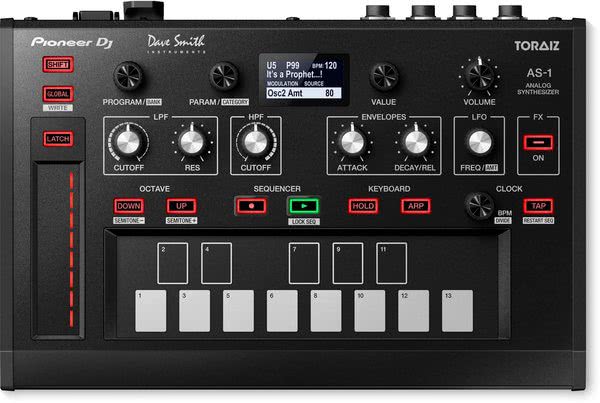
Pioneer DJ Toraiz AS-1 combines true analogue mono synth sound with a modern, direct way to control it for studio, live setups, and DJ environments. Sound generation is based on the discrete analogue circuitry of the Dave Smith Instruments Prophet-6 and gives you a compact synthesiser solution with two VCOs, analogue filters, a 64-step sequencer, an arpeggiator, and extensive preset management. You get a standalone sound generator that can be played quickly, programmed cleanly, and integrated flexibly into existing setups. Analogue core with Prophet DNA Inside, a fully programmable analogue synthesis engine works together with Dave Smith Instruments. Two voltage-controlled oscillators provide continuously adjustable triangle, sawtooth, and pulse waveforms. This creates punchy basses, distinctive leads, and clear electronic sequences with an unmistakable character.The filter section is based on the Prophet-6 and offers you two VCFs: a resonant 4-pole low-pass filter as well as a resonant 2-pole high-pass filter. This lets you shape sounds not only broadly, but also very precisely—compressing, opening up, or thinning them out as needed. This is particularly useful when placing short sequences in the mix or bringing individual synth lines more clearly forward. Quick to play, cleanly controlled The 13-note touchpad keyboard allows the synthesiser to be played directly even without an external keyboard. Using the keyboard and scale mode, you can quickly create, test, and further develop musical ideas. The touch slider expands performance with dynamic adjustments to parameters such as pitch, effect amount, or other movements in the sound.For direct work on the sound, controls are available for filters, LFO, and envelope generators. The bright OLED display shows you important values clearly, without slowing down your workflow. This keeps the focus on the sound—not on nested menus. Presets as a starting point, storage for your own ideas With 495 factory presets, you get an immediate large selection of finished programmes. Each preset has its own sound and a separately editable 64-step sequence. When you build your own sounds, you can store them in the user banks and call them up again directly later.The arrangement with 99 programmes across 10 banks ensures a clear structure. Five factory banks provide ready-made sounds, while five user banks are there for your own programmes. So the synthesiser is suitable not only for experimentation, but also for prepared live sets and recurring production workflows. Movement through sequencer, arp, and effects The integrated 64-step sequencer turns simple sound ideas into rhythmic patterns quickly. Together with the arpeggiator, it creates repeatable lines that you can change live or further develop in the studio. Especially for electronic music, basslines, and melodic sequences, this is a very direct way of working.The effects section comes from the Prophet-6 ecosystem and offers seven built-in effects. These include Bucket Brigade Delay, Distortion, Ring Modulation, Chorus, as well as various Phaser variants. You can use effects individually or in combination, giving your sounds extra depth, sharpness, or movement. Compactly built for fixed setups and live use The robust metal housing fits well into setups where space is limited. With audio output, headphone connection, MIDI In, MIDI Out/Thru, and USB Type B, the Pioneer DJ synthesiser can be connected flexibly. It works as a standalone unit, but can also be integrated into a larger MIDI setup.Thanks to its compact dimensions and weight of 1.4 kg, the unit is easy to transport. At the same time, the control surface is clear enough to react quickly even in a live situation. Does the Pioneer DJ Toraiz AS-1 suit you? This mono synth is just right for you if you’re looking for analogue sound, but you don’t want to do without storage slots, MIDI, USB, and performance-ready control. It’s suitable for ambitious beginners, experienced producers, and live performers who need a compact synthesiser for basslines, leads, sequences, and characterful effect sounds. It’s a good fit if you want real analogue mono synth sound Ideal for electronic music, studio production, and live sequences Worth it if you want to use presets and save your own sounds Strong for setups with MIDI, USB, and external sequencing Features Pioneer DJ Toraiz AS-1 Monophonic analogue synthesiser with discrete sound engine based on the Dave Smith Instruments Prophet-6 Developed in collaboration with Dave Smith Instruments for classic analogue sound in a compact design Two voltage-controlled oscillators with continuously adjustable triangle, sawtooth, and pulse waveforms Analogue filter section with 4-pole low-pass filter and 2-pole high-pass filter for precise sound shaping Fully programmable signal path with 2 VCOs, 2 VCFs, VCA, 2 envelope generators, and 1 LFO 495 factory presets, each with its own sound and a separately editable 64-step sequence 495 storage slots for your own preset programmes in five user banks Built-in 64-step sequencer and arpeggiator for rhythmic patterns and melodic ideas Dual-FX engine with seven effects including Bucket Brigade Delay, Distortion, Ring Modulation, Chorus, and Phaser 13-note touchpad keyboard with keyboard and scale mode for direct playing without an external keyboard Touch slider for dynamic control of up to seven parameters during performance Robust metal housing with bright OLED display for clear parameter readout Technical specifications Synthesiser type Monophonic analogue synthesiser Maximum polyphony 1 voice Sound generation Fully analogue synthesiser architecture based on the Dave Smith Instruments Prophet-6 Oscillators 2 VCOs with triangle | sawtooth | pulse waveform Filters 2 VCFs | 4-pole resonant low-pass filter | 2-pole resonant high-pass filter Additional sound building blocks VCA | 2 EGs | 1 LFO Programmes 99 programmes in 10 banks | 5 factory banks | 5 user banks Factory presets 495 preset programmes User presets 495 storage slots for your own sounds Sequencer 64-step sequencer Effects 7 built-in effects | Bucket Brigade Delay | Distortion | Ring Modulation | Chorus | High-Resonance Phaser | Low-Resonance Phaser | Maestro Phaser Performance functions 13-note touchpad keyboard | touch slider | keyboard mode | scale mode | arpeggiator Display OLED display Audio outputs 1x Audio L/R 3.5 mm jack | 1x Headphone 6.3 mm jack MIDI 1x MIDI In 5-pin DIN | 1x MIDI Out/Thru 5-pin DIN USB 1x USB Type B Housing Metal housing Weight 1.4 kg Dimensions (W x D x H) 267 x 178 x 68 mm What’s in the box Pioneer DJ Toraiz AS-1 monosynthesiser Power adapter Power cable Quick start guide Warranty card
Average rating of 4.64 out of 5 stars
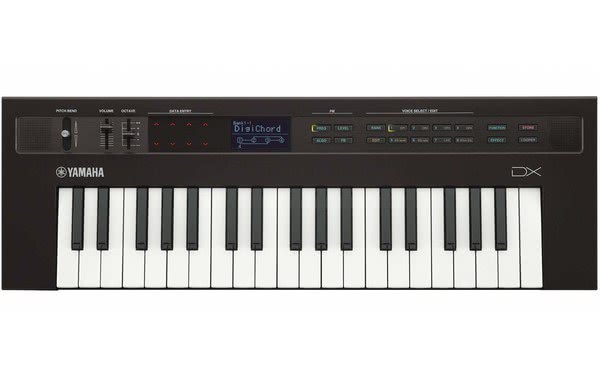
The compact synthesizer model from Yamaha offers a playful approach to FM sound generation and combines classic sounds with modern ease of use. With an intuitive interface and innovative multi-touch sliders, the instrument provides immediate and creative control over sounds. Especially impressive is the ability to create dynamic soundscapes that appeal to both beginners and experienced musicians. With roots in the legendary DX synthesizers of the 80s, the model brings back the classic FM sound and enhances it with new possibilities, such as individually configurable feedback circuits and a variety of effect options. The integrated effects add depth and character to the sounds. Additionally, custom patches can be easily saved and recalled, significantly improving the creative workflow. The versatility of the small synthesizer makes it a flexible companion. Thanks to its robust build, high-quality mini keyboard with 37 keys, and integrated speaker system, the device is ready to use at all times. The optional battery operation enhances its mobility, allowing musical ideas to be captured anywhere. Another highlight is the connection to the digital world. The easy connection to computers and mobile devices opens up a wide range of applications and makes online collaboration with other musicians worldwide an exciting option. In this way, not only sounds but also ideas can be shared and developed further. This instrument combines the traditional sound of the 80s with modern operation in a thoughtful design that offers creative freedom and practical features. Features Yamaha Reface DX Intuitive FM sound generation with innovative multi-touch sliders for dynamic sound design Compact and portable design with high-quality build Built-in stereo speakers with impressive sound quality Battery operation for up to 5 hours of musical freedom on the go Integrated dual-effect section with effects like reverb, chorus, and distortion Save and recall up to 32 custom presets Loop sequencer for creating sound layers and song ideas Seamless integration with computers and mobile devices via USB and MIDI Online access to the Yamaha Soundmondo community for sound sharing and collaboration Versatile connections, including headphone output, AUX input, and USB-to-host Technical Specifications Amplifier and Speakers Amplifier: 2 x 2 W Speakers: 2 x 30 mm Keyboard Number of keys: 37 | HQ Mini-action keyboard Sound Generation Polyphony: 8 voices Engine: FM (4 operators, 12 algorithms) Effects: Reverb, Delay, Chorus, Distortion, Flanger, Phaser, Touch Wah Memory Memory slots: 32 Connections DC input: 12 V Headphone output: 6.3 mm stereo jack AUX input: 3.5 mm stereo mini-jack Audio outputs: L/Mono and R, 6.3 mm TS jack MIDI: Mini-DIN (IN/OUT) USB: USB-to-host Power Supply Power adapter: PA-130 or equivalent Batteries: 6 x AA or rechargeable Ni-MH batteries (not included) Battery life: Up to 5 hours Additional Features Phrase looper for sound overdubs Display: LCD (128 x 64 dots) Auto power-off function Weight: 1.9 kg Dimensions (W x D x H): 530 x 175 x 60 mm Included Items Yamaha Reface DX Power adapter MIDI breakout cable Owner's manual
Average rating of 5 out of 5 stars
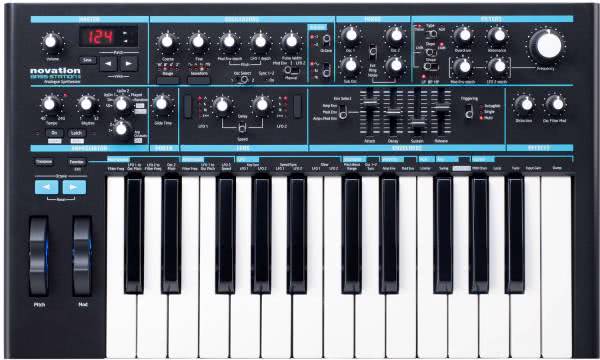
With clearly structured controls and a variety of sound options, the Novation Bass Station II is aimed at musicians looking for a versatile analog mono synthesizer with thoughtful performance features. Two oscillators, a sub-oscillator, noise generator, and ring modulation give you a wide range of sounds – from earthy basses to expressive leads. Two independently controllable filter types, including a 24 dB/octave acid filter, provide the typical analog character with a powerful fundamental tone. The interface is designed so you can deeply shape your sound with just a few steps. Filter modulation, distortion, and a paraphonic mode that lets you play both oscillators independently open up new sonic possibilities. Two ADSR envelopes and two LFOs provide flexible modulation sources that make your sound lively and dynamic. The internal mixer lets you control the levels of each sound source, including an external signal path. For rhythmic ideas, a step sequencer with arpeggiator is available. You can play patterns in real time, save them, and link them to any patch. Especially practical: synchronization with your DAW or external hardware happens automatically via MIDI – including an adjustable swing factor for more groove. This lets you turn spontaneous musical ideas directly into performance-ready patterns. With a total of 128 preset memory slots, 64 of which are preloaded from the factory, you can save your own sounds or download new artist patches from the Novation website. Thanks to the free "Components" software, you can easily manage your sounds on your computer. The Bass Station II is highly connectable – whether via USB, MIDI, or analog audio output. As a fully USB-powered synthesizer, the device is compatible with Windows, macOS, and all common music software. At the same time, you can connect external equipment via classic MIDI ports. This compact analog synth integrates seamlessly into your setup. Features Novation Bass Station II Powerful analog mono synthesizer with 2 oscillators, sub-oscillator, ring modulation, and noise generator Classic multimode filter and additional 24 dB/octave acid filter with darker sound character Paraphonic mode for separate pitch control of both oscillators 25-key keyboard with synth action and intuitive user interface Pattern-based step sequencer with real-time recording and saveable sequences Arpeggiator with various modes, synchronizable via MIDI or USB Distortion effect and oscillator-controlled filter modulation for dynamic sound 64 factory presets and 64 memory slots for your own patches Management and backup via free Components software Compatible with macOS, Windows, and all common DAWs Technical Data Power supply: USB | 9V DC 300 mA Connections: USB MIDI | 6.3 mm mono jack out | 6.3 mm headphone output | 6.3 mm jack external input | sustain pedal input | MIDI IN/OUT 5-pin DIN | DC power connector Memory slots: 64 factory presets | 64 user patches Controls: 25-key keyboard | octave switch | pitch wheel LFOs: 2 Envelopes: 2 ADSR Effects: distortion | filter modulation Weight: 2.5 kg Dimensions (W x D x H): 457 x 273 x 76 mm Scope of Delivery Novation Bass Station II synthesizer DC power supply USB cable Ableton Live Lite software bundle Included software: Ableton Live Lite | 4 GB Loopmasters | XLN Audio Addictive Keys
Average rating of 5 out of 5 stars
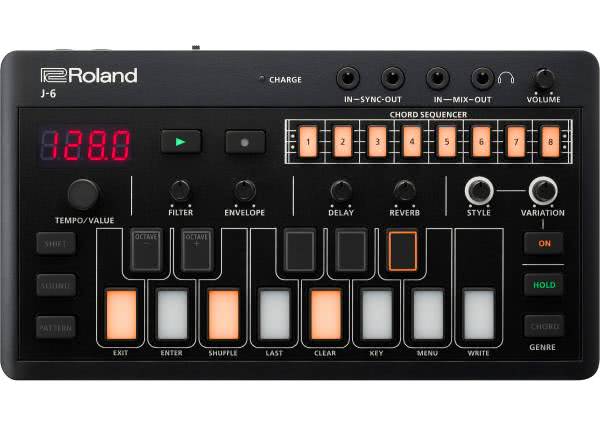
A chord progression can carry a track, but on a small keyboard, it often emerges from an idea faster than from theory. The Roland AIRA Compact J-6 combines a chord sequencer with the sound architecture of the JUNO-60 and keeps both ready in a handy instrument. Chords, rhythmic movements, and synthesizer sounds can be merged directly on the device. Enter chord progressions without music theory A hundred chord sets cover classic and contemporary styles. You select a set and play the corresponding chords via the keys. This is suitable for initial song sketches, backing pads, and spontaneous ideas when you need a harmonic foundation quickly. Nine styles with twelve variations each add arpeggios and rhythmic phrases to sustained chords. The hold function keeps the pattern running while you prepare the next sound or variation. 108 style variations provide simple progressions with different movements. Chord sequencer for your own patterns The sequencer saves 64 user patterns, each with up to 64 steps. You can define chords, style variations, individual notes, and tempo changes within the steps. This allows the J-6 to play a prepared accompaniment or serve as a starting point for other instruments. The compact keyboard also plays the internal sound directly. The engine can also be controlled from an external controller via MIDI. This allows the chord synthesizer to work independently in a small desktop setup while simultaneously serving as a sound module. Four-voice JUNO-60 sound The four-voice synthesizer engine is based on Roland's ACB technology and replicates the sound character of the JUNO-60. 64 preset patches are immediately available. Filter and envelope controls adjust the sound directly without needing to open a menu. Delay and reverb complement the sound design. This allows you to shape the spatial characteristics of chord pads, rhythmic figures, and lead lines directly on the device. 64 presets provide a practical basis for various musical sketches and running patterns. Audio, MIDI and sync in the AIRA Compact setup The J-6 features a stereo mix-in, stereo mix-out/headphones, MIDI-in, and MIDI-out, as well as separate sync-in and sync-out jacks in minijack format. This allows it to be connected to other AIRA Compact devices, hardware instruments, and an external clock signal. Via USB-C, the instrument works as a class-compliant audio/MIDI interface and requires no drivers. The connection simultaneously charges the integrated lithium-ion battery. One charge lasts for up to 4.5 hours of continuous operation. When does the Roland AIRA Compact J-6 meaningfully complement your setup? The Roland AIRA Compact J-6 is suitable for producers, live acts, and beginners who want to develop chord progressions quickly and capture them as patterns. Its operation brings chord sets, variations, and sequencing close together. This is particularly practical for song ideas on the go, compact desktop rigs, and performances with recurring harmonic structures. Combined with drum machines, bass synthesizers, or a DAW, the small synthesizer provides chords, arpeggios, and its own JUNO-inspired sound. It is also easily integrated as an externally controlled sound module. The battery and low weight make it easy to take the instrument between your workspace, rehearsals, and sessions. Features Roland AIRA Compact J-6 Compact chord synthesizer with four-voice JUNO-60 synthesizer engine 100 chord sets covering classic and contemporary music styles Nine styles with twelve variations each for arpeggios and rhythmic phrases Chord sequencer with 64 user patterns and up to 64 steps per pattern 64 preset patches based on the JUNO-60 sound architecture with ACB technology Direct controls for filter and envelope Integrated delay and reverb effects Stereo mix-in as well as stereo mix-out/headphone connection MIDI and sync inputs/outputs in minijack format Class-compliant USB-C audio/MIDI interface with battery power Technical specifications Sound engineFour-voice JUNO-60 engine with ACB technology Preset patches64 User patterns64 SequencerUp to 64 steps Styles9 | 12 variations per style EffectsDelay | Reverb Display7-segment LED | 4 characters ConnectionsSync In | Sync Out | Mix In | Mix Out/Phones | MIDI In | MIDI Out | USB-C USBUSB-C Audio | MIDI | Bus Power Power supplyIntegrated lithium-ion battery | USB bus power Current draw500 mA Battery lifeUp to 4.5 hours Charging timeApprox. 3 hours Weight0.295 kg Dimensions (W x D x H)188 x 106 x 36.2 mm Included in delivery Roland AIRA Compact J-6 Chord Synthesizer USB-C to USB-A cable "Read Me First" leaflet
Average rating of 4.83 out of 5 stars
With three flexible oscillators per voice, an extensive modulation matrix, and a distinctively powerful sound, this desktop synthesizer offers a wide creative scope. The combination of numerically controlled oscillators and digital wavetables allows you to produce classic analog tones as well as modern, digitally inspired sounds. Each of the eight voices features its own analog multimode filter, which together with three separately controllable distortion stages enables diverse sound evolutions. With the integrated wavetable editor, you can create your own oscillators, modify existing waveforms, or even use audio files as a base. Editing happens in real time, providing immediate feedback on your sound design. Particularly interesting: The editor offers exclusive access to sounds from the NASA sound library as well as audio content from Noisia – perfect for experimental tracks or cross-genre productions. The modulation matrix includes 16 slots and 16 direct assignments, which you can conveniently control via the front panel. Together with three ADSR envelope generators and two LFOs per voice, a highly flexible system emerges that is easy to operate not only in the studio but also live. With the animate buttons, you can make targeted interventions during play, such as dramatic filter sweeps or modulation jumps. A robust build and extensive connectivity options, including MIDI, USB, and a CV input, ensure seamless integration into existing setups – whether modular, digital, or hybrid. The compact format saves space without sacrificing professional features. Through the Novation Components platform, you receive regular firmware updates and access to additional content and presets. The latest firmware update adds 43 new wavetables, additional LFOs, extended envelope functions, and a separate FX modulation matrix. This turns the already versatile desktop synthesizer into a real tool for sound designers who value precision and expression. Features Novation Peak Compact desktop synthesizer with eight voices and three oscillators per voice New Oxford oscillators with analog waveform generation and 17 digital wavetables Analog multimode filters with separate distortion before and after the filter as well as global overdrive Modulation matrix with 16 slots and 16 direct assignments on the front panel Two LFOs and three envelope generators per voice for detailed modulation Animate buttons for expressive interventions during play Wavetable editor with live preview, NASA and Noisia sounds via Novation Components CV modulation input for connection with modular synthesizers USB, MIDI In/Out/Thru ports and 6.3 mm jack outputs as well as stereo headphone output Delivery includes USB cable, power supply, and software access to Ableton Live Lite, Loopmasters, and Melodics Technical Data Sound generation: 8-voice polyphonic, monotimbral, 5 voice modes Waveforms: sine | triangle | sawtooth | square/pulse | 17 digital wavetables with five waveforms per series Outputs: 2x 6.3 mm jack line out Headphone output: 6.3 mm stereo jack MIDI: In | Out | Thru USB: Type-B Pedal inputs: 2 Footswitch inputs: 2 Weight: 4.9 kg Dimensions (W x D x H): 464 x 233 x 70.5 mm Scope of Delivery Novation Peak polyphonic synthesizer USB cable Power supply Included software: Ableton Live Lite 9 | Loopmasters samples | Melodics lessons
Average rating of 4.67 out of 5 stars
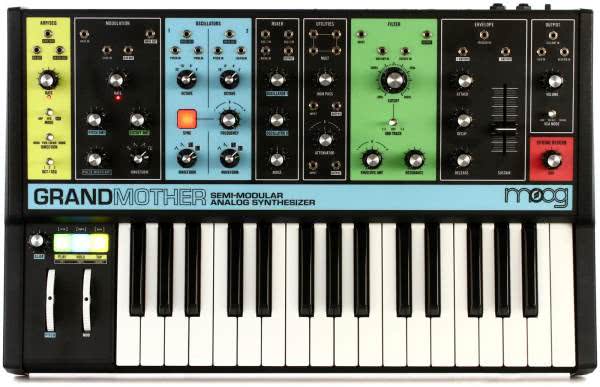
The Moog Grandmother is a semi-modular, analog synthesizer that stands out not only for its sound variety but also for its user-friendliness and versatility. With an intuitive, colorful interface, it allows for easy handling and quick sound creation – all without complicated wiring. The heart of the instrument consists of the two analog oscillators, which offer classic waveforms such as triangle, sawtooth, and square, and are equipped with an integrated noise generator for even more creative possibilities. A particularly striking feature of the Grandmother is the built-in spring reverb, which gives the sound a unique depth and liveliness. Anyone who has played with a real spring reverb knows how difficult it is to digitally replicate its warm, organic tone. However, Moog has integrated the authentic character of an analog spring reverb into the device – a real enrichment for sound designers. Thanks to the extensive patch points, the Moog Grandmother can easily be integrated into any modular setup. It not only provides space for connecting external devices but also comes equipped with DIN MIDI and USB MIDI, making it easy to integrate into modern production environments. The arpeggiator and sequencer allow for creating complex sound patterns and storing up to three sequences that can be recalled at any time. Whether in the studio or on stage, the Moog Grandmother delivers a fresh interpretation of the classic Moog sound while remaining flexible enough to meet any creative challenge. If you're looking for a synthesizer that combines both traditional and innovative elements, the Moog Grandmother is an exceptional instrument – naturally with the legendary Moog sound. Features of the Moog Grandmother Semi-modular, monophonic analog synthesizer with classic rich Moog sound 32-key Fatar keyboard, velocity-sensitive for dynamic playing Built-in spring reverb for unique sound shaping (with internal and external routing) Two analog oscillators with various waveforms: triangle, sawtooth, square, and pulse wave Noise generator for additional sound expansion Classic 4-pole ladder filter with a wide frequency range High-pass filter (1-pole) for sound processing Analog ADSR envelope generator with dedicated fader for the sustain range Analog LFO (Low-Frequency Oscillator) that can also reach audio frequencies Flexible arpeggiator and sequencer with up to 3 storeable sequences 41 patch points for extensive modular integration (21 inputs, 16 outputs, 4x passive mult) MIDI connection via DIN (In/Out/Thru) and USB for seamless integration into production environments 1/4" audio input for external signals and 1/8" for reverb-in and Eurorack-out Robust and user-friendly control interface, clearly visible even in low light No patching required – ready to use immediately, but also fully modularly expandable Technical Specifications Polyphony: Monophonic Keys: 32 keys (Fatar keyboard, velocity-sensitive) Oscillators: 2 x analog VCOs, noise generator LFO: 1 x analog LFO, can reach audio frequencies Filter: 4-pole 24 dB/octave ladder filter, variable high-pass filter Envelope Generator: 1 x ADSR Effects: Spring reverb (analog) Arpeggiator: Yes Sequencer: Up to 256 steps per sequence, storing up to 3 sequences Audio Inputs: 1 x 1/4" (instrument input), 1 x 1/8" (reverb-in) Audio Outputs: 1 x 1/4" (main out/headphones), 1 x 1/8" (reverb-out), 1 x 1/8" (Eurorack-out) MIDI: In/Out/Thru via DIN, USB MIDI Other I/O: Clock-In, Clock-Out, Reset-In, On/Off-In, 41 patch points Power Supply: 12V DC, 2A (power supply included) Weight: 7.25 kg Dimensions: (W x D x H): 548 x 362 x 140 mm Scope of Delivery Moog Grandmother Semi-Modular Analog Synthesizer Patch Cables Power Supply Registration Card
Average rating of 4.53 out of 5 stars
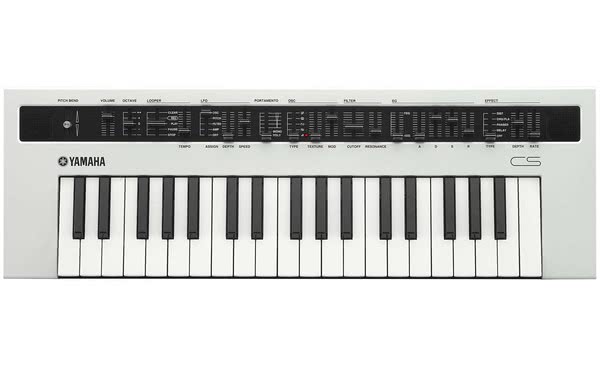
With its compact design and clear focus on creative sound design, this mobile mini keyboard offers a modern interpretation of classic synthesizer tradition. The sound generation is based on an Analog Physical Modeling Engine that combines various synthesis types such as pulse, multi-saw, oscillator sync, ring modulation, and FM. This allows you to create versatile sound colors – from warm pads to distinctive basslines and striking leads. Each synthesis type has its own texture and mod controls that deeply influence the sound shaping. This way, you can turn simple oscillator waves into complex sonic landscapes or deliberately experiment to create unusual sound textures. This creative process is supported by the integrated effects, including chorus, flanger, phaser, delay, and distortion, which can be used flexibly to give your sound additional character. With 8-voice polyphony, the instrument is suitable for harmonic chord progressions as well as lush pads. In mono mode, you can create powerful basslines or expressive solos. The integrated phrase looper allows you to record and overdub up to 10 minutes of audio – perfect for capturing ideas or live performances. Thanks to the built-in stereo speaker system with bass reflex port, the sound is present and balanced even without external amplification. For mobile use, the device can be powered either via an AC adapter or up to 5 hours with batteries. The USB-to-Host port allows for a direct MIDI connection to computers or iOS devices. Additional connections such as AUX-in, stereo outputs, headphone jack, and a pedal input expand its use both in the studio and on the go. Features Yamaha Reface CS Compact mobile synthesizer with 37 HQ mini keys and high-quality playing feel Analog Physical Modeling Engine with five oscillator types: Pulse | Multi-Saw | Oscillator Sync | Ring Modulation | FM Individual texture and mod controls for each synthesis type for direct sound shaping Integrated effects processor with Chorus | Flanger | Phaser | Delay | Distortion 8-voice polyphony for chords and pads | Mono mode for bass or lead Phrase looper with up to 10 minutes recording time for overdubs and song ideas Stereo speaker system with bass reflex port for rich sound without external speakers USB-to-Host port for MIDI connection with computer or iOS devices AUX input for playing along with external audio sources Dual line outputs for connection to mixers or audio interfaces Pedal input for volume control with FC7 controller Battery operation with 6 x AA cells for up to 5 hours of playtime Technical Data Keyboard: 37 mini keys Keyboard type: mini synth keys Velocity sensitivity: Yes Polyphony: 8 voices Oscillator types: Pulse | Multi-Saw | Oscillator Sync | Ring Modulation | FM Effects: Chorus | Flanger | Phaser | Delay | Distortion Sampler: Phrase looper up to 10 minutes Audio inputs: 1 x 3.5 mm TRS (AUX-In) Audio outputs: 2 x 6.3 mm TS (Left | Right) Headphone output: 1 x 6.3 mm USB: USB Type B MIDI I/O: 1 x MIDI socket with breakout cable Pedal input: 1 x 6.3 mm (FC7 volume controller) Power supply: 12V DC adapter | 6 x AA batteries (approx. 5 hours runtime) Weight: 1.9 kg Dimensions (W x D x H) 530 x 175 x 60 mm Included Items Yamaha Reface CS synthesizer Power adapter MIDI breakout cable User manual
Average rating of 4.55 out of 5 stars
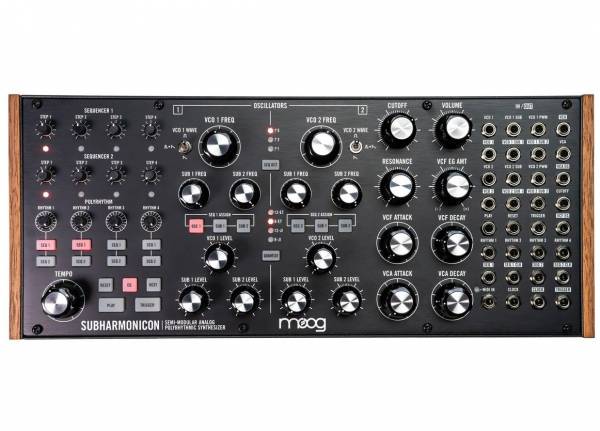
Moog is now releasing the Subharmonicon, expanding its family of semi-modular analog synthesizers (Matriarch, Grandmother, Mother-32, and DFAM). The Subharmonicon is a semi-modular synthesizer, hand-built in the Moog workshop in the USA, capable of creating complex sounds and patterns while being extremely easy to use. With two VCOs, four subharmonic oscillators, two 4-step sequencers, and four rhythm generators, the possibilities for sound generation are nearly endless, both in standalone mode and in combination with other members of the semi-modular Moog Mother-32 family, DFAM, or any other external Eurorack-compatible hardware. The six powerful sound sources (the two analog VCOs and four subharmonic oscillators) form the foundation of this new semi-modular analog synthesizer, designed for exploring sequences that evolve and develop over time. The Moog Subharmonicon is a powerful, versatile, and innovative instrument that allows you to create unique and impressive soundscapes as well as the most complex polyrhythms, all with an extreme immediacy ensured by a very simple and intuitive approach to synthesis. Features Moog Subharmonicon Semi-modular analog synthesizer Classic Moog sound Handcrafted - Made in USA 2 analog VCOs (oscillators) with 2 sub-oscillators each 4-pole resonant low-pass filter and VCA (amplifier) with adjustable attack and decay controls Two 4-step sequencers and a polyrhythm generator for complex sequences Stackable oscillators for pseudo-polyphonic 6-note chords Manual and clock-synchronizable tempo controls Extensive 32-point patchbay for unlimited customization options Complete 60HP Eurorack synthesizer that can be easily integrated into a Eurorack case Patchbay with 17 inputs and 15 outputs (3.5 mm) Technical Specifications Polyphony: Monophonic Presets: 6-tone subharmonic chords, 4 x rhythm generators Oscillators: 2 x VCO, 4 x subharmonic Waveforms: Sawtooth, square Envelope generator: VCA (attack, decay), VCF (attack, decay) Filter: Self-oscillating ladder filter, low-pass, 4-pole (24 dB/octave) Sequencer: 2 x sequencers, 4 steps per sequencer, selectable quantization Headphones: Split jack MIDI I/O: 1 x 1/8" TRS Type A (input) Additional I/O: 32 x patch points Power supply: 12V DC power supply (included) Eurorack specifications: Width: 60 TE / HP, Depth: 26 mm Weight: 1.59 kg Dimensions (W x D x H): 319 x 133 x 107 mm Delivery Contents 1x Moog Subharmonicon 6x patch cables 1x power supply (12V / DC)
Average rating of 4.4 out of 5 stars
The Moog Mother-32 is a semi-modular monosynthesizer that combines classic analog soundscapes with modern features. With its distinctive Moog sound, it offers a sonic variety ranging from deep, rumbling basses to sharp, metallic tones. Thanks to its flexible design, the synthesizer can be used directly without patch cables or integrated into a larger Eurorack system to fully exploit the potential of analog sound generation. The architecture of the Mother-32 includes a classic Moog oscillator that can generate both sawtooth and pulse waveforms, complemented by a noise source for additional textures. The legendary Moog Ladder Filter, which can operate in both low-pass and high-pass modes, provides the typical tonal character that sets the Mother-32 apart from other synthesizers. The filter’s resonance can even transition into self-oscillation, opening up new creative possibilities for sound design. Another highlight of the synthesizer is the 32-step sequencer, which not only allows for simple pattern programming but also offers the flexibility to manipulate sequences in real-time. With features like ties, glides, and accents, each step in the sequencer becomes vibrant and expressive. The ability to mute, transpose, or add effects like ratchets to the sequencer opens up creative possibilities that are suitable both in the studio and on stage. The Moog Mother-32 is a powerful desktop synthesizer and also an ideal entry-level solution for musicians who want to dive into the world of Eurorack synthesis. With its intuitive controls and versatile expandability, it can be integrated into any music setup and guarantees an endless variety of creative sound possibilities. Features Moog Mother-32 Semi-modular monosynth for desktop use and Eurorack compatible Classic Moog sound with thick basses and metallic tones 32-step sequencer with 64 memory slots for custom patterns Two sequencer modes: KB Mode for direct note input and Step Mode for manual programming Moog Ladder Filter in low-pass and high-pass mode with adjustable resonance Noise generator for additional sound effects 32-point patchbay for expansion and modulation with other Eurorack modules Integrated MIDI-to-CV converter and MIDI input for connecting to other synthesizers 13-key, 1-octave keyboard for easy control and sequence editing Audio input for processing external sound sources Onboard 2-input voltage-controlled mixer for combining CV signals Wide sound palette from percussive effects to long, evolving soundscapes Ideal for musicians who work with both analog and modular synthesis Technical Specifications Polyphony: Monophonic Oscillator: 1 x Analog VCO Waveforms: Sawtooth, Pulse Noise generator: White noise Envelope generator: Attack, Decay, Sustain LFO: Square and Triangle wave VCA: Yes Filter: Low-pass/High-pass 4-pole Moog Ladder Filter Sequencer: 32-step, 64 sequences storable Analog inputs: 3 x 1/8" (ext. audio input, Mix 1, Mix 2) Analog outputs: 1 x 1/4" TRS (headphone/output), 5 x 1/8" TS (VCA output, VCF output, VCO saw output, VCO pulse output, VC-microphone output) MIDI I/O: Input Other I/O: 32 x 1/8" patch points Expandability: Semi-modular, Eurorack compatible Power supply: 12V DC power adapter included Weight: 1.59 kg Dimensions (W x D x H): 319 x 133 x 107 mm
Average rating of 4.67 out of 5 stars
Compact analogue synthesis, three oscillators and a hands-on 16-step sequencer make the Korg Volca Bass a versatile bass machine for electronic music. You can create punchy unison sounds
Average rating of 4.57 out of 5 stars
If you prefer not to start a musical idea at the computer, you need an instrument that brings sounds, accompaniment, and direct control together in one place. The Roland JUPITER-Xm consolidates this workflow into a compact 37-key synthesiser, combining the ZEN-Core sound engine with internal speakers, battery power options, and wireless communication. Roland sound worlds in one instrument Various Roland models and sound types work together inside. You can use classic synthesisers such as the JUPITER-8, JUNO-106, SH-101, and JX-8P, call up digital sounds from the XV-5080, or incorporate RD-pianos and drum sounds. This allows you to create setups that are just as suitable for electronic productions as they are for keyboard pads, leads, and rhythmic parts. Up to five parts simultaneously form a Scene: four for synthesisers and one for drums. A bass split with the SH-101 and JUNO-106, a piano with a string layer, or multiple stacked synth sounds can be assembled directly in the device. This creates room for dense arrangements without needing every voice to come from a separate sound engine. I-Arpeggio for accompaniment and pattern ideas The I-Arpeggio processes played notes, rhythms, and phrases, supplementing them with matching drum parts, basslines, chords, and arpeggios. It works across all five parts, allowing an idea to quickly evolve into a more complete musical context. The generated patterns can be adjusted and exported to a DAW for further production. Knobs, layers, and effects directly accessible The display is accompanied by large knobs, sliders, and buttons. These allow you to manipulate sound parameters, switch between synth layers, and control the effects section without complex workflows. The direct user interface is particularly practical when you need to change a sound during performance or adjust a layer spontaneously. Work mobile with speakers, batteries, and Bluetooth The 37 slim keys keep the instrument portable while providing three octaves for musical ideas on the go. Two integrated speakers often make a separate monitor for sketches and rehearsals unnecessary. You can stream audio via Bluetooth and control software instruments on your Mac or iPad using Bluetooth MIDI. For mobile use, the synthesiser can also be powered by batteries. In the studio, the balanced outputs, MIDI sockets, and pedal connections connect the device to other equipment. The metal-reinforced construction is designed for regular playing, rehearsals, and live performances. Software workflow and expansions With ZENOLOGY Pro, you can design sounds on your computer and subsequently use them in the hardware instrument. Conversely, JUPITER-Xm sounds are also available for DAW projects. Compatible Model Expansions and further ZEN-Core content expand the sound library, allowing the instrument to be updated with new models and sounds. Is the Roland JUPITER-Xm the right sound hub for you? The Roland JUPITER-Xm is right for you if you want to bundle multiple Roland sound characters into one compact instrument and shape sounds directly while playing. Keyboardists, producers, and live musicians gain an independent sound engine for layers, splits, and rhythmic ideas. Thanks to speakers, battery operation, and Bluetooth, the device remains highly usable for writing sessions away from your fixed studio setup. Features Roland JUPITER-Xm Compact synthesiser with 37 slim keys and ZEN-Core synthesis system Up to five parts simultaneously: four synth parts and one drum part Roland models such as JUPITER-8, JUNO-106, SH-101, and JX-8P Digital sounds from the XV-5080 as well as RD-pianos and drum sounds I-Arpeggio creates supplemental drum, bass, chord, and arpeggio parts I-Arpeggio patterns are adjustable and exportable to DAW Display, knobs, sliders, buttons, and dedicated effects section Integrated speakers for playing without external monitoring Bluetooth audio and Bluetooth MIDI for Mac and iPad Balanced connections, MIDI sockets, and pedal connections Compatible with ZENOLOGY Pro and ZEN-Core content Supports Model Expansions for additional sound models Technical specifications Keyboard37 slim keys Sound engineZEN-Core synthesis system Parts4 synth parts | 1 drum part PresetsOver 4000 instruments | Over 90 drum kits | 512 user presets DisplayLCD | 128 x 64 px Multi-effects4 systems | 93 types Effects5x part EQ | Overdrive | 8x Reverb | 5x Chorus | 5x Delay | Mic NS / Comp | Master EQ / Comp Speakers2 x 4 W BluetoothVersion 4.2 | A2DP | GATT Power supplyAC adapter | Battery operation possible Weight4.4 kg Dimensions (W x D x H)576 x 308 x 93 mm Included items Roland JUPITER-Xm synthesiser AC adapter Power cord Owner's manual
Average rating of 5 out of 5 stars
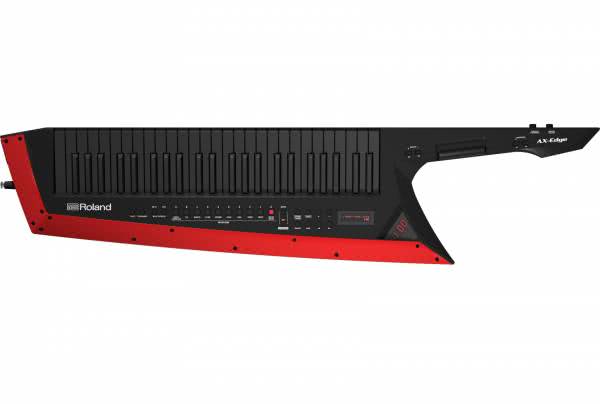
The Roland AX-Edge opens up a new dimension in live performance. This versatile keytar synthesizer from Roland combines excellent sound quality with innovative design and exceptional mobility. Thanks to its durable housing and optimized ergonomics, the instrument feels comfortable in your hands even during long performances, providing you with a high level of playing comfort. With over 500 built-in patches and the ability to connect to software instruments and sound modules via USB, no creative limits are set for you. For unrestricted freedom during performance, you can power the Roland AX-Edge either with mains power or with batteries. With a battery life of up to five hours, you are completely free and can perform your shows wirelessly at any time. The dual display is specially optimized for live use, allowing you to quickly select and adjust sounds and effects. In addition to the impressive sounds, the Roland instrument also offers numerous expression options. The ribbon controller, modulation bar, and assignable controller give you full control over your performance, making each presentation unique and dynamic. Whether as a standalone instrument or as a MIDI controller, the AX-Edge always provides the right sound palette for any musical situation. This keytar is not only a highlight for synthesizer fans but also for anyone looking to stand out on stage. The combination of high-quality sounds, flexible operation, and the ability to use it wirelessly makes the Roland AX-Edge an ideal companion for creative live performances. Features Roland AX-Edge Keytar synthesizer specifically developed for live performances Over 500 preset sounds for versatile sound design Built-in MIDI controller for controlling sound modules and virtual instruments 49 full-size keys with velocity sensitivity and aftertouch for precise playing feel Dual display system for easy operation and quick selection of sounds and effects during performance Ribbon controller and modulation bar for expressiveness and dynamic performance Up to 5 hours of wireless operation with battery power for maximum flexibility on stage Bluetooth MIDI and editor app for wireless sound adjustment and expansion Interchangeable edge blade for a personalized look of the instrument Built-in vocoder and versatile effects for creative sound design USB connection for audio file playback and connection to a computer Compact and robust build for stage or studio use Technical Specifications Sound engine: ZEN-Core Number of keys: 49 full-size keys Aftertouch: Yes Velocity sensitivity: Yes Polyphony: 256 voices Effect types: 79 multi-effects, EQ, vocoder, 8 x chorus, 6 x reverb, master compressor Arpeggiator: Yes Audio inputs: 1 x 6.3 mm (microphone) Audio outputs: 2 x 6.3 mm (main out) Headphone jack: 1 x 6.3 mm (with switching or expression) USB ports: 1 x Type A, 1 x Type B MIDI I/O: In/Out/Bluetooth Pedal inputs: 1 x 6.3 mm Software: AX-Edge Editor App (iOS 11 or later, Android 6.0 or later) Power supply: 9V DC adapter (included) or 8 x AA Ni-MH rechargeable batteries Weight: 4.2 kg (without batteries) Dimensions (W x D x H): 1252 x 291 x 85 mm Included in the package Roland AX-Edge User manual Fact sheet AC adapter Power cable Strap Interchangeable panel (including hex key, screws)
Average rating of 3.67 out of 5 stars
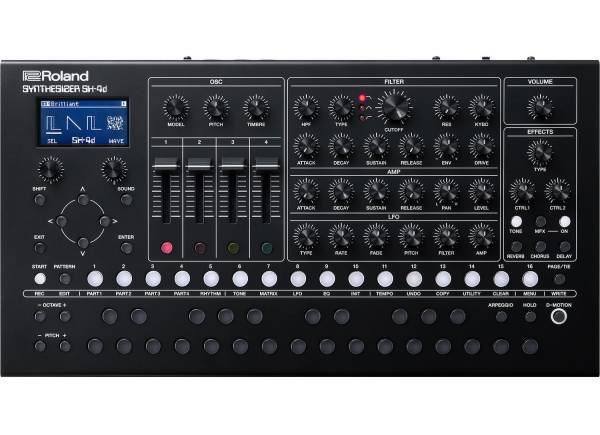
What if we could combine the power of wavetable synthesis, cross-FM, the Juno-106, the SH-101, and the tradition-rich sound architecture of Roland's lauded synthesizers and drum machines into a single instrument designed specifically for modern musicians? Roland's SH-4d is the answer to that question. This desktop synthesizer module is packed with in-depth sound design tools that combine vintage analog sounds with cutting-edge digital synthesis, making it a flexible instrument that will delight groovebox players and synthesizer specialists alike. The SH-4d's 5-voice architecture includes four independent synth parts and a dedicated rhythm part, culminating in an impressive 60-voice summing polyphony. Each of these five parts can be assigned its own effect, with more than 90 built-in effect presets, from iconic Juno chorus to fast-paced delays and spacious reverbs. Eleven oscillator models range from analog and vintage sample-based PCM synthesizers to futuristic morphing wavetables and cross-FM synthesis, paired with a versatile drum synthesizer and a Drawing mode that lets you design entirely new waveforms. Each drum kit accommodates up to 26 instruments, with 49 preset kits available and another 64 slots for creating your own kits. In addition, each kit features dedicated LFOs as well as two overlaid waveforms that can be further shaped and refined to personalize percussive sounds. A multimode ladder filter is deeply woven into the SH-4d's sound, interacting with the pre-filter's Drive and Resonance controls to create rich harmonics and flexible filter textures. The SH-4d is equipped with a highly detailed user interface, yet remains remarkably accessible. Each section is carefully divided to provide direct control without being so cluttered as to hinder creativity, yet dense enough to avoid endless menu diving. In addition to the extensive input/output section, which quickly fits the SD-4D into any setup, this synthesizer can be powered by USB-C power supply, as well as 4x AA batteries or rechargeable batteries, offering the ultimate in mobility. Features Roland SH-4D Eleven OSC models cover everything from vintage analog and classic PCM sounds to cutting-edge digital textures OSC models include the new native SH-4d engine, wavetable, Cross FM, JUNO-106, SH-101 and more Four independent synthesizer parts + standalone rhythm part with up to 60-note polyphony Rhythm part with selectable waveforms, powerful synthesis parameters, layering options and more for individual sound designs per instrument Comprehensive and intuitive user interface with 32 knobs, four sliders and numerous buttons Top-level workflow adapts to the model's screen and controls. Performance mode eliminates the need to navigate menus to speed the creative process Dedicated filter, amp, and LFO sections with comprehensive control Advanced matrix for modulating multiple assignable parameters Button keyboard with a range of more than two octaves for independent musical creations Multitimbral sequencer with 128 patterns, real-time recording, two modes for step input and motion recording Probability and sub-step settings per note for sounds and rhythm parts in pattern sequences Unique D-Motion and Visual Arpeggio function for creating performance effects by physically moving the SH-4d Extensive built-in sound processing with MFX for each sound + global MFX, reverb, chorus, delay and more USB-C audio/MIDI interface and MIDI in/out (5-pin) Clock input for syncing with modular synthesizers and other Roland gear Rugged, portable design with battery or USB-C power options Technical specifications User presets: 256 sounds | 128 patterns Polyphony: max 60 voices (varies by engine and sounds) Parts: 4 Tone Parts | 1 Rhythm Part Effects: Multi-effects: 5 systems, 93 types Reverb: 9 types Chorus: 5 types Delay: 5 types Master effect: 93 types Master EQ/Compressor Arpeggiator: 5 types Sequencer: 5 Parts | 64 Steps | Sub Steps | Flam | Probability Display: LCD | 128 x 64 px Power supply: USB | 4x AA batteries/rechargeable batteries Battery runtime: approx. 4-5 hours Weight: 1.78 kg Dimensions (W x D x H): 360 x 195 x 66 mm Scope of delivery Roland SH-4D Quick start guide 4x AA batteries USB-C to USB-A cable Warranty and safety instructions
Average rating of 4.57 out of 5 stars
Korg Volca Drum is a compact digital percussion synthesiser for standalone drum sound design and flexible rhythm programming. Instead of playing back finished PCM drums, the six-part polyphonic DSP engine creates its sounds through digital synthesis with two layers per part. Wave folder, overdrive, bit reduction, and a physical modeling resonator give you significantly more creative freedom than a classic drum machine with fixed kick, snare, and hi-hat slots. Six parts without fixed roles The six parts each have two layers and are technically identical in construction. You decide for yourself which part becomes the kick, snare, hi-hat, or a completely different percussion sound. Various oscillator waveforms are available for each layer, along with matched pitch modulators and amp envelopes. This allows you to individually shape twelve sound layers within one kit or combine two layers in a targeted manner to build a denser sound. After the basic sound generation, the signal can be further processed. Bit reduction creates deliberately coarser textures, the wave folder adds additional harmonics, and overdrive provides controlled distortion. Parameters such as timing, panning, gain, and effect depth can also be adjusted for the individual parts. In total, 16 kits can be saved, ten of which are already pre-programmed at the factory. Resonances instead of ordinary drum effects The waveguide resonator with physical modeling plays a central role. It simulates the resonance characteristics of physical objects and offers the modes Tube and Strings for this purpose. Tube is sonically reminiscent of the resonance of a cylindrical body, while Strings creates more metallic, string-like structures. Using decay, body, and tune, you can determine how strongly this effect alters the basic sound. Especially with synthetic percussion, metallic strikes, or unusual electronic timbres, the resonator significantly expands the possibilities. Low tune settings can also create delay-like structures. The three centrally arranged knobs are therefore suitable not only for preparing your own kits but also for direct intervention during a running sequence. 16 steps with lots of movement The integrated sequencer works with 16 steps and supports step and real-time recording. Using motion sequence, you can automate knob movements and parameter changes. Up to 69 parameters can be included in sequences in this way. With pattern chain, up to 16 patterns can be linked together, resulting in sequences with a maximum of 256 steps. Active step and step jump allow direct intervention in running rhythms. In addition, there is step slice for rolls, accent with 16 intensity levels, and a choke function for parts that should cut each other off. Two randomize functions can vary either sound parameters or elements of a sequence such as steps, slices, and accents. This allows you to quickly change existing patterns without having to reprogram them completely. Compact and easy to integrate With MIDI In as well as Sync In and Sync Out, the drum synth can be integrated into existing setups. You can control it via MIDI from a DAW or an external sequencer, for example, and synchronise it with other devices in the Volca series or compatible grooveboxes via the sync jacks. Battery operation and an integrated speaker also make it independent of a fixed workstation. About ten hours of operation are possible with six AA batteries; alternatively, the separately available Korg KA-350 power adapter can be used. Who is the Korg Volca Drum suitable for? The Korg Volca Drum is for you if you not only want to program percussion but also synthesise it yourself. Beginners can start with the available kits and adjust individual parameters step by step. For experienced producers and live musicians, the deeper layer structure, motion sequence, and the waveguide resonator offer sufficient possibilities for detailed sound design. The device is particularly interesting if you are looking for synthetic drums, unusual percussion, and dynamic electronic rhythms and prefer a compact instrument with its own sequencer. Features Korg Volca Drum Compact digital percussion synthesiser with six parts and two independently editable layers per part DSP-based sound generation with various oscillator waveforms, pitch modulation, and amp envelopes Waveguide resonator based on physical modeling with the resonance types Tube and Strings Sound processing with bit reduction, wave folder, and overdrive for complex harmonics and distorted sound structures 16-step sequencer with step recording, real-time recording, motion sequence, and pattern chain Active step, step jump, step slice, accent, and choke for detailed rhythmic processing Two randomize functions for random modification of sound parameters and sequence components 16 storable kits and 16 programmes for sequences, motion data, and kit assignments MIDI In as well as Sync In and Sync Out for integration into DAWs and synchronised hardware setups Integrated speaker and battery operation for mobile use Technical data Product typeDigital percussion synthesiser SynthesisDigital synthesis Polyphony6 voices Structure6 parts | 2 oscillators per part | Pitch modulator | Amp EG | Waveguide resonator User interfaceMultitouch trigger pads | Step buttons | LCD Kits16 | of which 10 are factory presets Programmes16 | of which 10 are factory presets Sequencer16 steps | 6 parts | Pattern chain Recording patterns16 Maximum pattern chain length256 steps Motion sequenceUp to 69 storable parameters Waveguide resonatorTube | Strings Sequencer functionsMotion sequence | Active step | Step jump | Step slice | Accent | Choke | Randomize Audio output3.5 mm stereo mini jack Sync connectionsSync In 3.5 mm mono | Sync Out 3.5 mm mono Maximum sync input level20 V Maximum sync output level5 V MIDIMIDI In SpeakerIntegrated Power supply6 x AA alkaline batteries | 6 x AA NiMH batteries | Korg KA-350 power adapter sold separately Battery lifeApprox. 10 hours with alkaline batteries Weight0.37 kg Dimensions (W x D x H)193 x 115 x 39 mm Included in delivery Korg Volca Drum digital percussion synthesiser Sync cable
Compact desktop design meets versatile hybrid sound generation: The Korg Minilogue xd Module combines four-voice analog synthesis with a freely expandable digital multi-engine, integrated stereo effects, and a powerful step sequencer. You have the controls of the keyboard version at your disposal in a space-saving format. This allows you to integrate the synthesizer directly into an existing MIDI, DAW, or hardware setup without the need for additional keyboard surface area. Analog foundation with digital expansion The sound engine combines two analog VCOs with a digital multi-engine as a third oscillator. The architecture is completed by filters, envelopes, a VCA, and an LFO. This allows you to create classic synthesizer sounds as well as significantly more complex textures. Wave shaping, cross modulation, sync, ring modulation, and drive further expand your direct access to overtones and tonal character. The digital multi-engine offers three areas: Noise, VPM, and user oscillators. Particularly interesting is the open structure for custom or separately available oscillators. A total of 16 user oscillator slots are available for this purpose. Analog and digital sound sources can be combined within a single program. Effects directly in the sound program For further processing, digital modulation, reverb, and delay effects are available. The effect section operates with 32-bit floating-point DSP processing and allows for the simultaneous use of the three effect areas. Chorus, ensemble, delay, and various reverb types can thus be integrated directly into your sound design. The effect section is also expandable. In addition to the integrated algorithms, the module offers 16 memory slots for user effects. Compatible expansions can be transferred to the instrument using the appropriate librarian software. Sequences with motion The integrated polyphonic 16-step sequencer is suitable for more than just programming note sequences. Using motion sequencing for up to four parameters, you can record knob movements and automate them within a sequence. This enables rhythmic filter sweeps, changing timbres, or targeted alterations to individual steps. The 16 step buttons also serve as a way to directly edit individual steps. In keyboard mode, they can also be used to play notes. This allows you to audition sounds directly on the device without a connected MIDI keyboard. Four voices – expandable to eight By default, the desktop module operates with four voices. If you require more polyphony, you can connect two compatible devices from the Minilogue xd series using the poly-chain function. The master and slave devices then share the voices, together enabling up to eight-voice polyphony. For integration into various production environments, the unit features MIDI In and Out, USB-B, two CV inputs, Sync In and Out, as well as stereo outputs. This makes the device suitable for both classic MIDI systems and setups involving modular or semi-modular components. Who is the Korg Minilogue xd Module for? The module is interesting for you if you are looking for a directly controllable polyphonic synthesizer without an integrated keyboard and already work with a MIDI keyboard, sequencer, or DAW. Thanks to its clear layout, it is also suitable for getting started with hybrid synthesis, while simultaneously offering enough depth for sophisticated sound design through user oscillators, custom effects, motion sequencing, and poly chain. For desktop and DAW-based production stations For hardware setups with MIDI, Sync, or CV For sound designers with an interest in analog and digital synthesis For existing Minilogue xd setups that need to be expanded to eight voices Features Korg Minilogue xd Module Four-voice desktop synthesizer module with analog sound generation and digital multi-engine Two analog VCOs and digital multi-engine with Noise, VPM, and user oscillators Expandable open-source structure with 16 slots for user oscillators and 16 slots for user effects Digital modulation, reverb, and delay effects with 32-bit floating-point DSP Polyphonic 16-step sequencer with real-time recording, step recording, and motion sequencing for up to four parameters Poly-chain function for expansion to up to eight voices with a second compatible Minilogue xd device Wave shaping, cross modulation, sync, ring modulation, and drive for extensive sound shaping MIDI, USB, CV, and sync connections for integration into hardware, modular, and DAW setups Keyboard mode for direct playing via the 16 step buttons without a connected keyboard 500 program memory slots with more than 200 factory programs and 300 memory slots for your own sounds Technical specifications Sound generationAnalog sound generator + digital multi-sound generator Multi-engineNoise | VPM | User Voice architecture2 VCOs + multi-engine | VCF | 2 EGs | VCA | LFO Maximum polyphony4 voices Poly chainUp to 8 voices with two compatible Minilogue xd devices Programs500 | More than 200 factory programs | 300 user memory slots User slots16 user oscillators | 16 user effects Sequencer16 steps | Polyphonic | Real-time recording | Step recording | Motion sequencing for up to 4 parameters EffectsModulation | Reverb | Delay Effect processing32-bit floating-point DSP ControllerJoystick | Portamento knob | Keyboard switch Headphone connectionStereo jack Audio outputsOUTPUT L/Mono | OUTPUT R | Unbalanced mono jack CV inputsCV IN 1 | CV IN 2 | 3.5 mm CV range-5 V to +5 V mod | -3 V to +5 V CV/gate Sync connectionsSYNC IN | SYNC OUT Sync levelsSYNC IN maximum 20 V | SYNC OUT 5 V MIDIMIDI IN | MIDI OUT USBUSB-B Power supplyAC adapter DC 9 V Power consumption8 W Weight2.6 kg Dimensions (W x D x H)500 x 179 x 85 mm Included in delivery Korg Minilogue xd Module synthesizer AC adapter DC 9 V
Average rating of 5 out of 5 stars
With the Korg Volca Kick, you can shape analogue kick drums and tonally playable kick basses directly on the device. Instead of samples, the self-oscillating filter of the MS-20 serves as the sound source. Resonance, attack, decay, drive, and filter provide direct control over the sound, keeping operation intuitive. From impulse to tuned kick bass The MS-20 resonator forms the body of the sound. With pitch/octave, bend, and time, you determine the pitch and envelope, while pulse colour and level shape the attack. Attack and decay control the time progression. Drive and the 12 dB tone filter complement the sound generation when you need more saturation or a more muted high-frequency response. Sequences with direct access The 16-step sequencer stores 16 patterns, each with its own sound program. Motion sequence records knob movements, while pattern chain connects multiple sequences together. Active step, accent, slide, bend reverse, and swing alter the timing and contour of the pattern. Touch FX with roll, octave, and sustain, along with the multi-touch keyboard, give you direct access for step input and playing pitches. Integrated into hardware setups Via MIDI In, the Volca Kick receives notes from a controller or DAW. Sync In and Sync Out couple it with other hardware, and the 3.5 mm stereo headphone output carries the audio signal. For mobile ideas, the device operates on six AA batteries. Alternatively, it can be powered by an optional 9 V DC power supply; a built-in speaker allows for monitoring without an additional system. Is the Korg Volca Kick right for you? This compact synthesizer is right for you if a kick drum should be part of your sound design and you want to shape kicks, sub-basses, and transitions directly via knobs and the sequencer. MIDI and analogue sync jacks make it easy to integrate into Volca setups, grooveboxes, or DAW and controller environments. However, the monophonic sound generation is not intended for producing several independent drum sounds simultaneously. Features Korg Volca Kick Analogue kick generator with self-oscillating MS-20 Rev.1 filter as a resonator Monophonic sound generation for kick drums and tonally playable kick basses Sound generation from VCF, pulse generator, VCA, analogue drive, and tone low-pass filter 16-step sequencer with 16 storable patterns, including individual sound programs Motion sequence, pattern chain, active step, accent, slide, bend reverse, and swing Touch FX with roll, octave, and sustain for direct performance control Multi-touch keyboard for step input and playing pitches MIDI In as well as Sync In/Out for connecting to DAWs, controllers, and hardware Technical specifications Synthesis typeAnalogue synthesis Polyphony1 voice Sound generationVCF as MS-20 Rev.1 resonator | Pulse generator | VCA | Analogue drive | Analogue tone FilterTone low pass filter | 12 dB/octave Sequencer16 steps | 16 patterns ConnectionsHeadphone output 3.5 mm stereo | Sync In 3.5 mm mono | Sync Out 3.5 mm mono | MIDI In Power supply6 x AA alkaline or NiMH batteries | optional 9 V DC power supply Battery lifeapprox. 10 hours with alkaline batteries Weight0.377 kg without batteries Dimensions (W x D x H)193 x 115 x 46 mm Included items Korg Volca Kick analogue kick generator Quick start guide
Average rating of 4.5 out of 5 stars
A synthesizer with the character of the eighties does not have to be large to take on a clear role in the arrangement. The Roland JX-08 brings the sound architecture of the JX-8P to the table as a compact Boutique module and combines it with direct access to the most important parameters, memory locations, and a polyphonic sequencer. JX-8P sound with direct access The sound engine is based on the Roland JX-8P from 1985. Two DCOs, high and low-pass filters, two envelopes, and cross-modulation form the basis for pads, textures, basses, and distinctive digital-analogue timbres. The controls follow the layout of the original PG-800 programmer, allowing you to implement sound changes without navigating through nested menus. 20 voices and two parts With up to 20 voices of polyphony, the module has significantly more reserves for chords and long releases compared to the original. The dual multitimbral operation works with dual and split modes; this allows you to play two patches in parallel or split them across a master keyboard. For your own sounds, there are 256 patch memories available, complemented by 32 JX-8P presets and 111 new presets. Effects for pads, leads and rhythmic sounds The effects section includes 17 types. These include three chorus variants, including the JUNO-106 chorus, delay, phaser, reverb modelled on the SDD-320, overdrive, fuzz, bit crusher, LoFi compressor, filter, and pitch shifter. Effects and filters shape the basic sound directly in the module without the need for additional equipment for initial sound ideas. Sequences with movement and external clock The integrated sequencer manages two parts, each with 64 steps and up to eight notes per step. Motion recording captures parameter movements along with the pattern, while the arpeggiator and pattern randomiser provide new rhythmic approaches. Via the external clock input, you can also synchronise the sequencer with analogue instruments or Eurorack systems. USB-C, MIDI and mobile operation USB-C transfers audio and MIDI to your computer, plus there is full-size DIN MIDI In and Out, as well as headphone, output, and mix-in jacks. The built-in mini speaker is suitable for quick checks on the go. Four AA batteries or USB-C power the module; with Ni-MH rechargeable batteries, the specified runtime for continuous operation is approximately six hours. When is the Roland JX-08 a useful addition to your setup? The Roland JX-08 is suitable for producers, keyboardists, and live acts who want to integrate characterful pads, chorused chords, or compact sequences into a MIDI setup. It can be played via a master keyboard, DAW, or hardware sequencer and takes up little space on your desk, in a rack case, or on the move. If you enjoy sound design using knobs and faders, you get a small module with an authentic JX-8P voice and extensive memory and connectivity options. Features Roland JX-08 Compact sound module with the sound and behaviour of the Roland JX-8P Two DCOs, high and low-pass filters, two envelopes and cross-modulation Up to 20 voices of polyphony and dual multitimbral operation Dual and split modes for two patches that can be used simultaneously 256 patch memories with 32 JX-8P presets and 111 new presets 17 effect types with JUNO-106 chorus, SDD-320 reverb, phaser and pitch shifter Two-part 64-step sequencer with up to eight notes per step Motion recording, arpeggiator and pattern randomiser USB-C audio/MIDI interface, MIDI In/Out and external clock input Headphone, output and mix-in jacks in mini-jack format Integrated mini speaker and power supply via USB-C or four AA batteries Compatible with the optional K-25m keyboard unit and DK-01 Boutique dock Technical specifications User memory256 sound patches | 128 patterns PolyphonyUp to 20 voices Multitimbrality2 parts | dual and split mode EffectsChorus: 3 | Delay: 4 | Overdrive | Fuzz | Drive | Bit Crusher | LoFi Comp | Phaser: 2 | Filter | Pitch Shifter: 2 Step sequencer2 parts | 64 steps | 8 notes per step and part Display7 segments | 4 characters | LED ConnectionsEXT CLOCK IN | PHONES | OUTPUT | MIX IN | MIDI IN | MIDI OUT | USB-C for audio and MIDI Power supply4 x AA Ni-MH rechargeable batteries or alkaline batteries | USB bus power Power consumption500 mA via USB Battery lifeApprox. 6 hours with Ni-MH batteries with 1,900 mAh Weight0.895 kg Dimensions (W x D x H)300 x 128 x 47 mm Scope of delivery Roland JX-08 sound module 4 x AA alkaline batteries Quick start guide Safety instructions
Average rating of 4.5 out of 5 stars
A beat with just a few instruments can develop an astonishing amount of movement if every step is perfectly placed and subtle variations are intentionally added. The Roland TR-06 adopts exactly this working method of the classic TR-606 and expands it with sound design, effects, and a significantly more versatile sequencer. TR-606 sounds with direct sound design The compact rhythm machine replicates the bass drum, snare, low tom, hi tom, cymbal, and open/closed hi-hat of the TR-606 using ACB modeling. Variations are available for the bass drum, snare, both toms, and cymbal, allowing you to tailor a pattern more closely to your desired character. Each instrument has dedicated parameters for tuning, decay, pan, and gain. This allows you to control pitch and decay directly on the unit, pan sounds in the stereo field, or increase the level for more saturation. The compressor as well as delay and drive effects can be incorporated into your pattern work. 32 steps, substeps, and probabilities The sequencer manages eight tracks and works with up to 32 steps. In total, the TR-06 saves 128 patterns across eight banks, allowing you to store different grooves, variations, and song sections directly on the device. Substeps create fast repetitions within a single step, while step loop repeats a selected range. Flam, intro/fill-in, and probability functions introduce targeted deviations into repeating sequences. Operation is handled via the 16 step buttons, the instrument selector, and the function controls on the surface. Effects for rhythm and character In addition to the compressor, delay, pan delay, tape echo, reverb, flanger, and side band filter are available. For more radical processing, there is a saturator, bit crusher, distortion, and low/high-pass filters. This allows you to add space, repetitions, or a deliberately rougher texture to individual patterns. The effect section is located directly on the control panel and is operated via drive, time, and depth. This keeps the path from the programmed pattern to the audible change short, without the need for a computer or external effects unit. Trigger, MIDI, and USB audio Five trigger outputs for accent, bass drum, snare drum, and low and high tom connect the TR-06 to modular or other trigger-capable devices. A trigger input receives external impulses. MIDI is available via 5-pin DIN and USB, allowing the rhythm machine to be integrated into hardware setups or computer-based productions. The Boutique module also transmits audio and MIDI via the micro-B USB port. A stereo output, a stereo mix-in, and a 3.5 mm headphone jack round off the connectivity. The built-in speaker helps with quick programming without the need for separate monitoring. Does the Roland TR-06 fit into your setup? The Roland TR-06 is suitable for producers who use the clear structure of the TR-606 and still want to shape their rhythms in detail. It combines familiar step input with functions for variations, fill-ins, and trigger-based expansions. The DK-01 dock can be set up at three different angles, while the metal top and compact housing support use on a desk, in a mobile setup, or alongside other Boutique equipment. Anyone who develops beats directly on the hardware gets a small rhythm center for electronic productions, live setups, and modular additions with the combination of 128 patterns, effects, and trigger outputs. Powering via USB or four AA batteries makes integration into various workspaces uncomplicated. Features Roland TR-06 Compact Roland Boutique rhythm machine with ACB modeling of the TR-606 Seven drum instruments with variations for bass drum, snare, toms, and cymbal Individual sound design with tuning, decay, pan, and gain 128 storable patterns across eight banks, each with 16 patterns 32-step sequencer with substep, step loop, flam, intro/fill-in, and probability Compressor as well as delay, reverb, flanger, filter, and drive effects Five trigger outputs and one trigger input for external devices MIDI In/Out via 5-pin DIN and audio/MIDI via USB Micro-B Stereo output, stereo mix-in, and 3.5 mm headphone jack Built-in speaker and DK-01 dock with three tilt angles Power via four AA batteries or USB bus Metal top panel in compact Roland Boutique format Technical data TypeRhythm Composer with ACB modeling of the TR-606 InstrumentsBass Drum | Snare Drum | Low Tom | Hi Tom | Cymbal | Open Hi-Hat | Closed Hi-Hat Tracks8 Pattern memory128 patterns | 8 banks with 16 patterns each SequencerUp to 32 steps | Step Loop | Substep | Flam | Intro/Fill-In | Probability EffectsCompressor | Delay | Pan Delay | Tape Echo | Reverb | Flanger | Side Band Filter | Saturator | Bit Crusher | Distortion | LPF/HPF Trigger1 x Trigger In | 5 x Trigger Out MIDIMIDI In | MIDI Out | USB-MIDI USBMicro-B | Audio and MIDI Audio connectionsStereo Output | Stereo Mix In | Stereo Phones, all 3.5 mm Power supply4 x AA batteries | USB bus Weight1.2 kg including batteries and Boutique Dock Dimensions (W x D x H)308 x 130 x 52 mm Included in delivery Roland TR-06 Rhythm Composer DK-01 Boutique Dock in silver 4 x AA alkaline batteries TR-06 owner's manual DK-01 owner's manual Safety information
Synthesizer
A synthesizer generates and shapes electronic sounds. This can be a compact desktop synth for a bassline, a keyboard for chords and pads, or a device with a sequencer for a live setup. For the selection, what counts is less a general "better" and more the question of which part the synth should take on: bass, lead, pads, drums, sound effects, or the centre of a small hardware setup.
In this category, you will find instruments with analogue, digital, and hybrid sound generation, models with keys as well as desktop devices without a keyboard. The filters help to narrow down your search based on sound generation, number of keys, and polyphony. If you already own a setup, MIDI inputs and outputs, an integrated sequencer, and, for some devices, CV/Gate are often more important than a long preset list.
Article overview
Which synthesizer suits your music?
A monophonic synthesizer plays only one note at a time. This is not a disadvantage for basslines, sequences, and many lead sounds, but part of the concept. For chords and broad pads, however, you need a polyphonic synthesizer that processes multiple voices simultaneously. Multitimbrality goes one step further: the instrument can then address several different sound parts separately via MIDI channels.
A keyboard synth can be played directly and is obvious for melodies, chords, or live parts. A desktop synth saves space and works well next to a MIDI keyboard, sequencer, or DJ mixer. These small devices are not automatically entry-level gear: the user interface, voice count, and connection concept are decisive. For a first hardware synth, direct access to sound parameters is usually more helpful than a device with many menu pages.
Analogue, digital, and hybrid sound generation
Analogue, digital, and hybrid describe different methods of sound generation. They are not a ranking. Analogue circuits are particularly suitable if you want to quickly shape a bass, lead, or percussive sound with a few knobs. Digital synthesizers often cover several methods, such as virtual analogue synthesis, FM, or wavetable, and often offer many voices as well as storable sounds. Hybrid concepts combine digital oscillators or control with analogue filters or amplifiers.
| Design | Typical practical result | Useful if you ... |
|---|---|---|
| Analogue | Direct sound shaping, often with a clear signal path | want to shape bass, leads, or lively modulations yourself |
| Digital | Many sound methods, voices, and storage locations possible | need chords, complex sounds, or recallable presets |
| Hybrid | Digital flexibility meets analogue parts in the signal path | want to use both approaches in one device |
| Semi-modular / modular | Signal paths can be expanded with patch cables | want to experiment and expand a system step by step |
With semi-modular synthesizers, a basic signal path is already internally connected. You can play immediately and try out additional paths later with patch cables. A fully modular system requires more planning: modules, power supply, case, and patch cables are part of the concept. In return, you determine the signal flow very freely. CV/Gate is not the same as MIDI; it transmits analogue control voltages and only fits accordingly equipped devices.
Operation, sequencer, and storage locations
Many sounds are only created through movement. LFOs, envelopes, modulation matrix, and effects determine whether a tone remains static or develops. A device with many knobs invites you to experiment; a display and storage locations help to manage complex patches. Anyone who needs to return to the same sound quickly on stage or in a project should evaluate preset storage and recallability early on.
An integrated sequencer makes a synthesizer more independent of the computer. It can record notes, patterns, and, depending on the model, parameter movements. This is practical for a compact hardware setup. If you want to organise beats, synth tracks, and samples in one device, grooveboxes are often the more suitable category than a pure synthesizer.
Connections and integration into the setup
MIDI via DIN sockets or USB connects synthesizers with keyboards, hardware sequencers, and DAWs. MIDI transmits notes, tempo, and control commands, but no audio signal. For the sound path, you need the audio output of the synthesizer and a free input on the mixer, interface, or external sound processing unit. You should check individually in the technical data whether a model transmits audio via USB.
If you only have a small keyboard on your computer, a desktop synth with a MIDI input is a useful addition. For additional knobs, faders, or pads, you will find suitable MIDI controllers. If the synth is to be recorded directly, you will often need a suitable audio interface with enough inputs for a computer setup.
Narrowing down brands and designs effectively
The category bundles several approaches. Among Arturia synthesizers, you will find compact and hybrid concepts with an experimental orientation, among others. Moog synthesizers in our visible assortment stand for monophonic and semi-modular instruments. Roland covers various digital and hybrid formats with Roland synthesizers. Yamaha and KORG complement the range with keyboard, desktop, and compact models.
A compact synth with few voices fits well as a second sound source or for specific tasks like bass and sequences. For harmonic parts, check polyphony and the keyboard. If you want to keep multiple external devices in sync, additionally look out for MIDI clock, inputs and outputs, as well as the sequencer. The number of functions alone says little if they do not suit your workflow.
How to avoid typical bad buys
- Define whether you want to play chords, basslines, drums, or sound effects before purchasing. Polyphony and design depend on this.
- For desktop devices, check whether you already have a MIDI keyboard or sequencer.
- Do not confuse MIDI with audio and count the required audio inputs in your existing setup.
- For modular ideas, pay attention to CV/Gate compatibility, power supply, and space for expansions first.
- An extensive preset memory does not replace a user interface that works well for your own sound design.
Frequently asked questions about synthesizers
What does a synthesizer do?
A synthesizer generates or processes electronic signals into sounds. Oscillators, samples, or digital algorithms provide the starting material. Filters, envelopes, and modulations shape these into, for example, bass, lead, pad, or effect.
Which synthesizer is suitable for beginners?
For beginners, a device that is clearly operated and whose sound path you can understand makes sense. If you want to play chords, choose a polyphonic model or combine a desktop synth with a keyboard. For basslines and sequences, a monophonic synth can be the more suitable and simpler choice.
Can I use a synthesizer without a computer?
Yes. A synthesizer works fundamentally independently. You need a power supply, a way to listen, and, in the case of a keyboard model, no further control. A sequencer, mixer, or computer expands the setup but is not mandatory.
Is a software synthesizer an alternative?
Software synthesizers are a useful alternative or supplement for productions inside the computer. Hardware offers its own user interface and can be played without an open project. Which solution fits better depends on whether haptic sound design, mobility, and an independent instrument are important to you.
What do I need for a live setup?
Plan for power supply, audio connection to the mixer or PA, as well as clock and note control. With several devices, the MIDI clock and audio levels must match. A stable stand, short cable runs, and pre-tested routing are more important in live operation than additional functions.