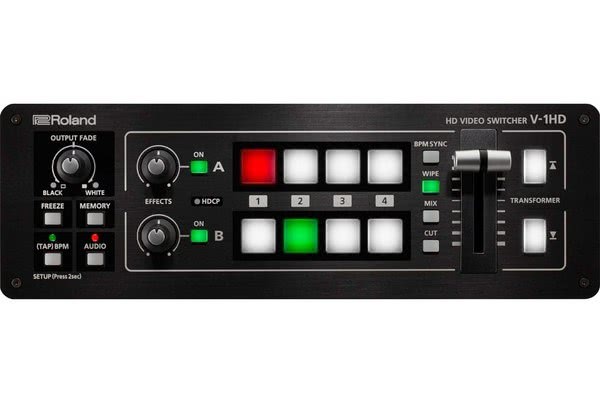
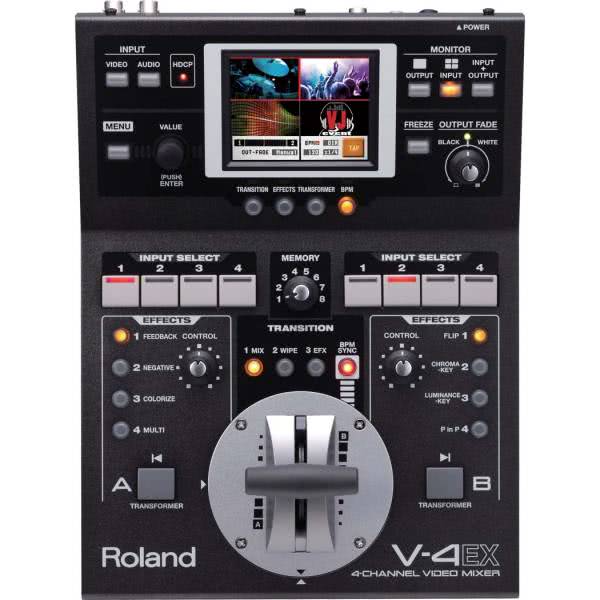
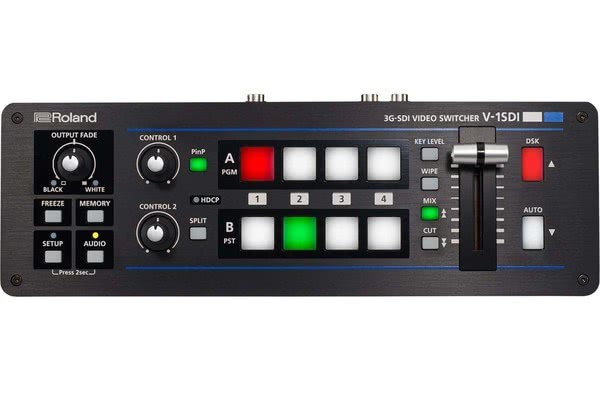
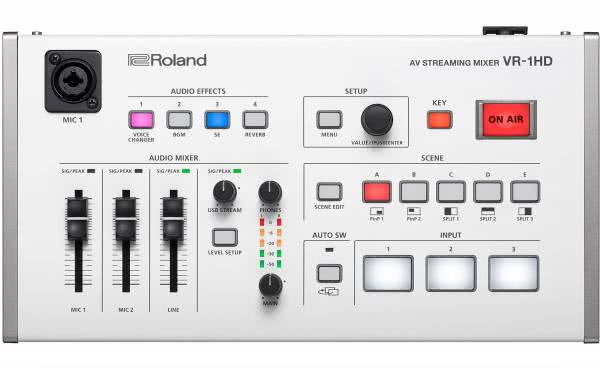
The Roland V-1HD is a powerful HD video switcher designed for demanding live productions and streaming events. With its four HDMI inputs, which enable automatic frame rate conversion and scaling, it ensures that every video is transmitted in the best quality, no matter which source is used. The compact device not only offers user-friendly control but also a wide range of visual effects to enrich your broadcast. This includes the Picture-in-Picture feature, allowing you to display multiple video sources simultaneously, as well as a 4-layer effect engine for stunning graphics and transitions. Another highlight of the V-1HD is the built-in 14-channel audio mixer. This enables precise control of audio quality, so your live event will impress both visually and acoustically. Each channel features a 3-band equalizer, high-pass filter, compression, and noise gate. For professional audio applications, the device ensures precise latency control and a handy sync-delay function to keep audio and video perfectly synchronized. The user-friendly design of the Roland V-1HD also includes a 10-window multiviewer, allowing you to monitor all inputs and oversee your production in real-time. Additionally, you can store up to eight still images directly on the device for quick access when needed – perfect for unexpected situations or additional graphic elements. Thanks to its compact design and flexible input options, this video switcher is particularly portable and can be easily integrated into various production environments. The Roland V-1HD is the perfect choice for anyone who doesn't want to compromise on their live broadcasts and streams. Features Roland V-1HD Versatile HD video switcher for live events and streaming applications 4 HDMI inputs with automatic frame rate conversion and scaling for various video sources Built-in 14-channel audio mixer for simultaneous processing of analog and digital audio Each audio channel equipped with a 3-band equalizer, high-pass filter, compression, and noise gate Sync delay function for perfect audio-video synchronization 4-layer effect engine for stunning visual effects and transitions Picture-in-Picture (PinP) function for displaying multiple video sources simultaneously Storage for up to 8 still images for quick retrieval during production 10-window multiviewer to monitor all inputs and check production in real-time USB ports for remote control and update functions Compact design for easy integration into various production environments Easy operation thanks to intuitive interface and user-friendly layout Technical Specifications Channels: 4 video, 14 audio Video Format: 1080p/60fps Video Inputs: 4 x HDMI Video Outputs: 2 x HDMI Audio Inputs: 1 x Dual RCA Stereo, 2 x XLR, 1 x 1/8" TRS Audio Outputs: 2 x 1/4" TRS Headphone Jack: 1 x 1/8" TRS USB Ports: 1 x Type B (for remote control), 1 x Type A (for remote control) Other I/O: 1 x DB-9 Male (for remote control), 1 x DB-9 Female (TALLY output) Effects: Transitions, compositions, keyer Software: V-1HD+ System software Power Supply: AC adapter (included) Dimensions: Height 6.5 cm, Width 31.6 cm, Depth 12.1 cm Weight: 1.4 kg Dimensions (W x D x H): 313 x 102 x 59 mm Included Items Roland V-1HD AC Adapter Power Cable Cable Hook User Manual
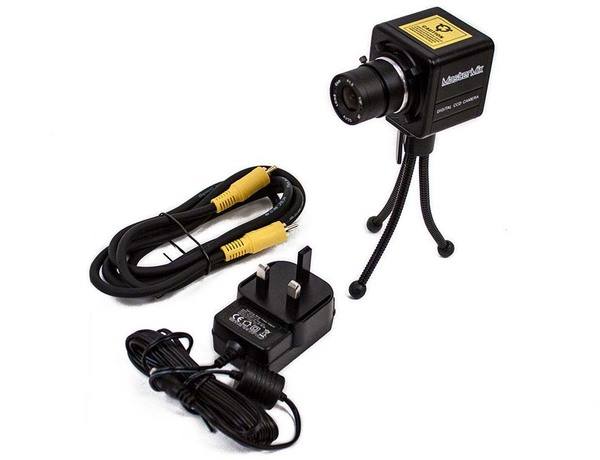
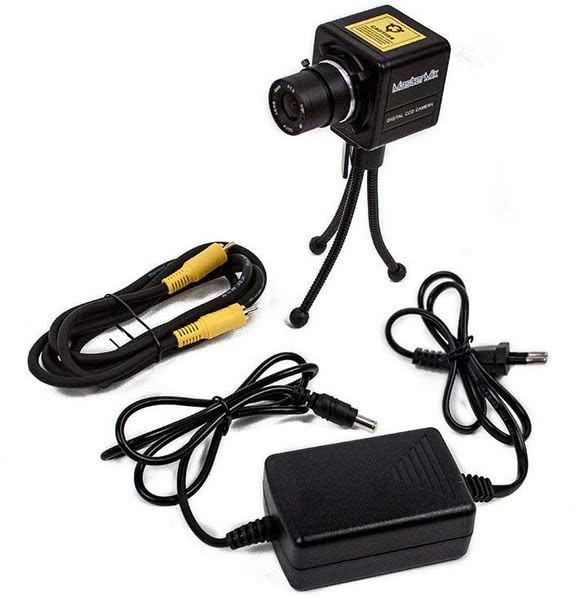
Vestax MBC-420 PAL Camera EU 512 (H) x 482 (V) pixels Resolution: 420TVL internal synchronization Minimum illumination: 1.0Lux / F1.2 Video output: BNC (BNC / RCA converter included) Dimensions: 52 (W) x 58 (H) x 60 (D) mm Weight: 190 grams
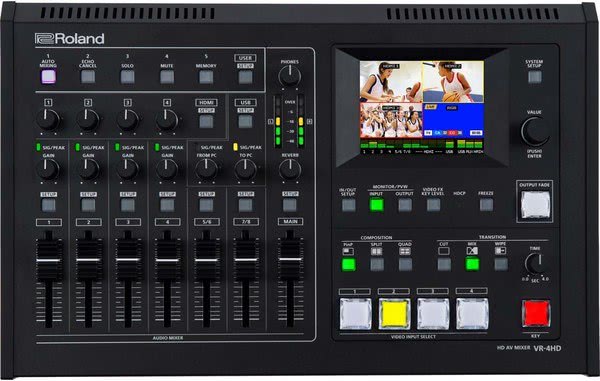
For everyone engaged in the world of livestreaming, the VR-1HD by Roland offers a comprehensive all-in-one solution. This device is designed to create professional content in a simple and effective way. Whether you are a gamer, host, musician, or content creator, this compact studio combines video mixing, audio processing, and effects into a single device that meets your needs. The device allows you to use multiple cameras simultaneously and create seamless transitions between various perspectives and scenes. With integrated features like chroma keying, you can enhance your stream with impressive backgrounds. Whether you want to appear virtually on another planet or in a studio, the possibilities are endless. The intuitive operation enables you to produce creative content even without additional operators. Audio quality is not compromised. Thanks to automatic audio mixing functions, you can focus entirely on your stream while the device ensures the balance and clarity of your sound. Numerous effects, such as equalizers, reverb, or Roland’s famous voice changers, are available to make your stream acoustically unique. You are also well-prepared for spontaneous streams. The plug-and-play functionality allows you to quickly and easily connect the device to your computer. Whether it’s YouTube, Twitch, or Facebook – with just one click, you are live and ready to impress your audience. This versatile all-in-one device gives you the freedom to unleash your creativity while taking care of the technical challenges. The result: professional livestreams that stand out and captivate your community. Features Roland VR-1HD Create professional livestreams with multiple cameras and impressive image quality Integrated chroma key function for creative backgrounds like virtual sets Scene presets for seamless transitions and personalized video compositions Three auto-switching modes: camera switching based on sound, beat, or schedule Integrated audio mixer with automatic sound balance and high-quality signal processing Voice changer function for creative real-time voice modifications Triggerable jingles and sound effects via dedicated buttons Plug-and-play via USB 3.0 for direct connection with popular platforms like Twitch, YouTube, and Facebook Supports up to three HDMI sources with different resolutions User-friendly control directly on the device or via software (VR-1HD RCS) Durable and compact design for flexible use on the go or in the studio Technical Specifications Video Video processing: 4:4:4 (Y/Pb/Pr), 10-bit Input connectors: 3x HDMI Type A (supports HDCP and multi-format) Output connectors: MAIN: HDMI Type A (supports HDCP) MONITOR: HDMI Type A (supports HDCP) THRU: HDMI Type A (supports HDCP) USB STREAM: USB Type B Supported input formats: 480/59.94i, 576/50i, 480/59.94p, 576/50p 720/59.94p, 720/50p 1080/59.94i, 1080/50i, 1080/59.94p, 1080/50p PC resolutions: VGA (640 x 480/60 Hz) to WUXGA (1920 x 1200/60 Hz) Output formats: MAIN, MONITOR: 720/59.94p, 720/50p, 1080/59.94i, 1080/50i, 1080/59.94p, 1080/50p PC resolutions: XGA (1024 x 768/60 Hz) to WUXGA (1920 x 1200/60 Hz) USB STREAM: 854 x 480/29.97p to 1080/29.97p Still images: Maximum size: 1920 x 1200 pixels Format: Windows Bitmap (.bmp), 24-bit per pixel, uncompressed Audio Audio processing: 48 kHz, 24-bit Audio formats: HDMI inputs: Linear PCM, 48 kHz, 24-bit, stereo USB STREAM: Linear PCM, 48 kHz, 16-bit, stereo Input connectors: VIDEO INPUT 1–3: HDMI Type A MIC IN 1–2: Combo jack (XLR, 6.35 mm TRS), phantom power (DC 48 V, 10 mA max.) LINE IN: RCA (phono) USB STREAM: USB Type B Output connectors: MAIN: HDMI Type A MONITOR: HDMI Type A LINE OUT: RCA (phono) USB STREAM: USB Type B PHONES: Stereo mini-jack Audio effects: Auto mixing, echo canceller, howling canceller, EQ, delay, compressor, HPF, gate, reverb, limiter, voice changer Audio player: Number of players: 4 Data format: WAV (Linear PCM, 48 kHz, 16-bit stereo / 44.1 kHz, 16-bit stereo) General Connectors: USB MEMORY (HOST): USB Type A (for USB flash drive, still images, audio player) USB STREAM (DEVICE): USB Type B (for USB video (USB 3.0), USB audio (USB 2.0): stereo 1 IN/1 OUT, remote control) DC IN Functions: Scene memory: 5 Panel lock function EDID emulator Auto switching (auto scan, beat sync switching, video follow audio) Power supply: AC adapter Current draw: 2 A Power consumption: 24 W Weight: 1.6 kg Dimensions (W x D x H): 314 x 169 x 66 mm Included Accessories Roland VR-1HD AC adapter Power cable Quick start guide Warranty and safety instructions
Features Vestax MBC-420 PAL Camera UK 512 (H) x 482 (V) pixels Resolution: 420 TVL internal synchronization Minimum illumination: 1.0Lux / F1.2 Video output: BNC (BNC / RCA converter included) Dimensions: 52 (W) x 58 (H) x 60 (D) mm Weight: 190 g Power supply: Connection suitable for UK
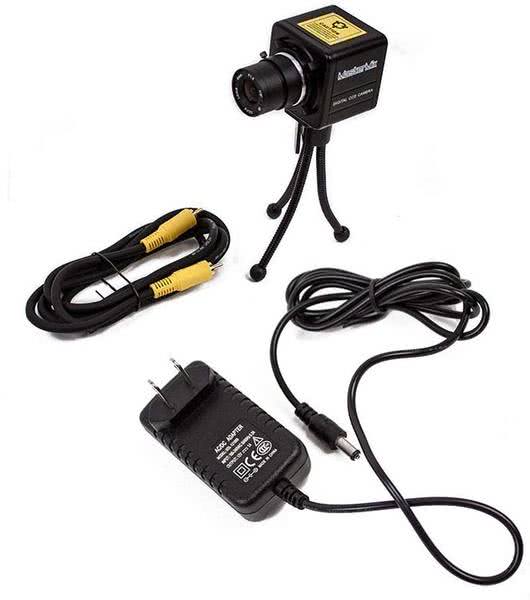
Features Vestax MBC-420 NTSC Camera US 512 (H) x 482 (V) Pixel Resolution: 420 TVL internal synchronization Minimum illumination: 1.0Lux / F1.2 Video output: BNC (BNC / RCA converter included) Dimensions: 52 (W) x 58 (H) x 60 (D) mm Weight: 190 g
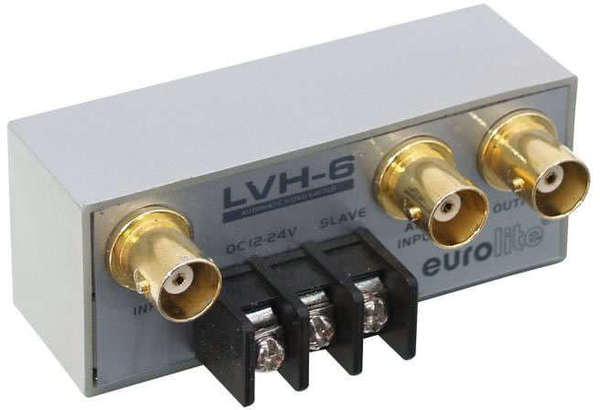
The compact video switch ensures that your signal remains stable and continues to run without interruption, even if one source fails. It works with two inputs and one output and automatically switches as soon as the active video signal is lost. This makes the device suitable for installations where uninterrupted video operation is important. Reliable automatic switching The device reacts immediately to signal loss and automatically switches to the second source. This allows you to maintain continuous operation without manual intervention. The internal logic detects both NTSC and PAL signals, enabling flexible use in different setups. The use of a high-quality RF relay ensures clean and stable switching. Compact design for tight installations The very small dimensions support you when space is limited. The robust housing integrates well into existing environments while remaining discreet. A BNC output and two video inputs with a uniform impedance structure provide a reliable connection with existing video equipment. Expandable control options Through the slave output, you can control additional devices that should respond to the same switching process. This allows you to build a chain of components that react simultaneously to the change of signal source. Power is supplied via screw terminals with a wide DC range between 12 and 24 volts, making integration into different system environments easier. Flexible use in various applications The video levels of the inputs are designed for standard 0.5–1 Vpp/75 Ohm. This allows the device to be easily integrated into existing cabling paths. The clear connector layout leads to quick understanding and straightforward installation, even when you combine different video sources. Features Eurolite LVH-6 Automatic Video Switch Compact automatic 2:1 video switch for reliable switching between two sources Automatic activation of the second source in case of signal loss Detection of NTSC and PAL video signals Two video inputs via BNC with defined impedance Video output via BNC for stable transmission Slave output for controlling additional devices RF relay for clean and reliable switching Operation with 12–24 V DC via screw terminals Very small device size for tight installation environments Technical data Power supply: 12–24 V DC 30 mA Connections: Output screw terminal | Video output 1 x BNC (F) | 2 x video inputs 0.5–1 Vpp/75 Ohm BNC grounded Weight: 0.07 kg Dimensions (W x D x H): 76 x 41 x 31 mm
A versatile video switcher that meets the highest demands for quality and ease of use: With this model from Roland, controlling and processing video signals becomes an intuitive experience. Its compact design and thoughtful layout make it the ideal solution for professional video applications where flexibility and reliability are required. The device impresses with the ability to seamlessly integrate both SDI and HDMI sources. This makes it suitable for a wide range of applications – from live events and corporate presentations to broadcast-format transmissions. The robust construction and precise tuning of functions ensure that even demanding tasks can be easily handled. Thanks to the user-friendly hardware interface with T-fader and illuminated buttons, the operation remains clear at all times. Smooth transitions and creative effects such as picture-in-picture or split-screen compositions can be easily implemented. This is complemented by the multi-viewer function, which clearly displays all input sources and output signals in a structured manner. The integrated digital mixer allows precise control of audio signals and adapts them to the respective application. Both SDI and HDMI audio tracks are supported. Functions like delay and equalizer ensure optimal synchronization and sound quality. With this switcher, Roland demonstrates that professional technology does not need to be complicated. Whether for mobile production or stationary use – the device delivers reliable performance at the highest level while remaining as flexible as the needs of its users. Features Roland V-1SDI Flexible video switcher for professional SDI and HDMI sources Supports up to 1080p resolution for sharp video Compact and portable design for easy transport User-friendly hardware control with T-fader and illuminated buttons Multi-viewer function for overview of all inputs and outputs on one screen Integration of picture-in-picture, split-screen, and other video effects DSK function for inserting titles, logos, or lyrics Scaling function for versatile configurations with different sources Built-in 14-channel audio mixer with delay and equalizer Audio-follow function for seamless synchronization of video and audio Compatible with V-1SDI RCS software for remote control and still image transfer SDI and HDMI outputs for flexible display options Robust construction and reliable performance for professional use Technical Specifications Video Processing: 4:2:2 (Y/Pb/Pr), 8-bit Inputs: 3G-SDI: 3 x BNC HDMI: 2 x Type A Supported Formats: 1080p, 1080i, 720p, various VESA resolutions Outputs: 3G-SDI: 2 x BNC HDMI: 1 x Type A Supported Formats: 1080p, 1080i, 720p Audio Inputs: SDI and HDMI (Stereo, 24-bit/48 kHz) Analog Inputs: Stereo RCA, Microphone (Mini-jack) Audio Outputs: SDI and HDMI (Stereo, 24-bit/48 kHz) Analog Outputs: Stereo RCA, Headphones (Mini-jack) Effects: EQ, Delay, Compressor, Reverb, Gate, Mastering Connections: USB Type B (Remote Control) RS-232 (DB-9, Industrial Standard) Power Supply: Power Adapter PSB-7U (included) Alternatively: Battery Operation Power Consumption: 25 W Video Effects: Transitions (CUT, MIX, WIPE), Compositions (Picture-in-Picture, DSK, Split, Quad) Additional Functions: Still image capture Fade transition (white/black) 8 memory slots for presets Weight: 1.2 kg Dimensions (W x D x H): 313 x 108 x 59 mm Package Contents Roland V-1SDI AC Adapter Power Cable Cable Hook Manual
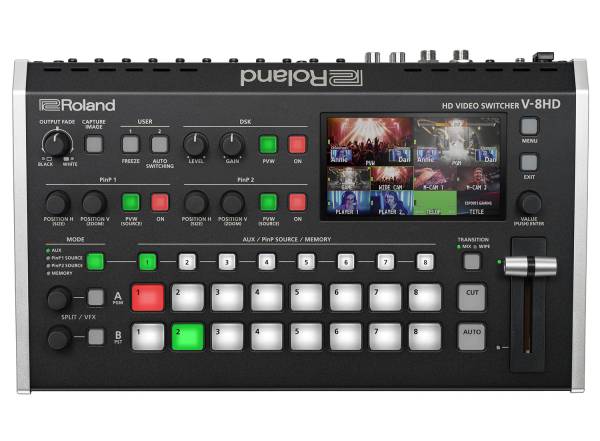
The Roland V-8HD represents a revolution in the field of live event production by combining user-friendliness, versatility, and a high level of reliability in a compact device. Designed as an all-in-one hardware solution, this video switcher eliminates the need for complicated computer setups and minimizes the risk of software issues, ensuring smooth and stress-free operation. Its extensive connectivity via HDMI makes it the ideal tool for modern production environments. Whether it's cameras, computers, or even gaming consoles, the V-8HD can seamlessly combine a variety of different sources. Thanks to its integrated scaler, even older devices can be easily integrated, increasing compatibility and expanding creative possibilities. In a world where the demands for visual presentations are constantly rising, the V-8HD offers an impressive range of options for creating layers, effects, and keys with its five composition layers. This allows you to create highly complex, visually appealing content that impresses both in the business and creative sectors. The mobility and efficiency of the V-8HD are another significant advantage. Its compact design fits into almost any live production environment, and with its lightweight of only 2 kg, it can be easily transported. The robust T-bar and controller make the V-8HD not only versatile but also exceptionally efficient and reliable. Equally impressive are the automation features. With the powerful sequencer and macros, even the most complex events can be controlled with a precision that seemed unreachable before. In addition, the free Remote Control Software for iPad provides an intuitive graphical interface that further simplifies the workflow. The integrated audio solution is another aspect that sets the V-8HD apart from other products. The 18-channel audio mixer allows for perfectly tuned sound mixes that enhance the visual experience. The extensive preset library and special effects also provide solutions for various acoustic challenges. The Roland V-8HD is a comprehensive production solution that combines user-friendliness, versatility, and the highest reliability in an elegant and compact design. Whether for small events or larger, complex productions, the V-8HD sets new standards in the field of live event technology. Features Roland V-8HD Easy HDMI Workflow: Control the entire workflow through HDMI interfaces. Multilayered Effects: A processor for effects and keying with up to five layers. Integrated Multiviewer: Preview screen for simultaneous viewing of multiple video sources. Separate Aux Output: For independent video feeds. Smooth Transitions: Use the T-fader for seamless video transitions. Smart Video Switching: Technology-driven automatic switching between videos. Powerful Live Automation: With sequencing, macros, and savable presets (Version 2.0). Wide Output Formats: Supports a variety of frame rates (Version 2.0). Still Image Functionality: Ability to store still images in various formats. Comprehensive Audio Mixer: 18-channel digital audio mixer with sync delay and other effects. Atomos Recorder Integration: Control start and stop on Atomos recorders. Remote Control: New software for iPad, macOS, and Windows for remote device control. Technical Specifications Video Video Processing: 4:2:2 (Y/Pb/Pr), 8-bit Input Ports: 8x HDMI (Type A), HDCP and multi-format supported Output Ports: 3x HDMI (Type A), HDCP supported Supported Video Input Formats: Multiple formats including 720p, 1080i, 1080p Supported Video Output Formats: Multiple formats including 720p, 1080i, 1080p Images Supported Formats: BMP, PNG, JPEG (up to 1920 x 1080 pixels) Audio Audio Processing: 24 bits/48 kHz, Linear PCM Audio Effects: Delay, High-Pass Filter, Compressor, etc. Connections Audio In: RCA phono type Audio Out: RCA phono type, PHONES: Stereo miniature type Other Connections: USB (Type A and B), CTL/EXP: 1/4-inch TRS phone type Other Features Macro and Sequencer Control, Panel Lock, EDID Emulator, etc. Audio Input/Output Characteristics Input Level and Impedance, Output Level and Impedance specified Others Display: 4.3-inch TFT color LCD Power Supply: AC adapter Power Consumption: 39.6 W Dimensions: 317 (W) x 193 (D) x 70 (H) mm
Bridge Cast X from Roland is a powerful streaming mixer for demanding audio and video setups that gives you precise control over image, sound, and interaction. With four channels, integrated 32-bit DSP processing, and extensive connectivity options, you control your entire livestreaming setup centrally and in real time. Whether console, PC, or mobile device – this interface clearly combines all signals and gives you the freedom to design your stream exactly the way you need it. Four channels with separate mix buses The 4-channel structure allows you to manage all audio sources in detail. Thanks to two independent mix buses (Stream Mix and Personal Mix), you separately control what your audience hears and what you hear yourself. This lets you customize your monitoring without affecting the stream sound. Each channel features its own rotary control with mute function for direct access. The internal 32-bit floating-point processes combined with 24-bit AD/DA converters ensure clean signal processing. The result is a clear, detailed sound – even in complex setups with multiple USB and HDMI sources. Integrated effects and voice tools You have extensive tools available for your voice transmission. The XLR microphone input with switchable 48-volt phantom power provides a solid foundation for high-quality microphones. In addition, compressor, de-esser, noise suppressor, low cut, equalizer, and reverb are available to shape your voice precisely. The system also includes a voice changer as well as separate processing options for chat and HDMI signals. Virtual surround and game EQ functions expand your sonic possibilities. An integrated delay function helps you synchronize audio and video precisely. Flexible video integration up to 4K With two HDMI inputs and one HDMI thru connection, you integrate your video setup without detours. Resolutions up to 3840 x 2160 at up to 60p as well as high refresh rates such as 120 Hz or 240 Hz depending on resolution are supported. HDR is also supported, ensuring your video signal is transmitted with rich detail and strong contrast. Via USB-C, you also have a video output with up to 1080p at 60 fps available. You can choose between uncompressed YUY2 format and Motion JPEG – depending on the requirements of your streaming software. Thoughtful control surface with control pad Despite the extensive technology, operation remains clearly structured. The surface combines dedicated controls for stream, headphone, and line-out volume with individually selectable microphone and video sources. Particularly practical is the control pad with six freely assignable buttons, which lets you trigger effects, game EQ presets, or OBS functions directly. All pads and rotary controls feature customizable LED lighting. Using the Bridge Cast app, you can conveniently save and load your configurations. In addition, royalty-free music and sound effects are available to you via Roland Cloud. Extensive connectivity options Three USB-C ports allow parallel setups for PC, console, and mobile devices. Depending on the configuration, audio, video, MIDI, and HID functions are available. The connection panel is complemented by line out, headset, TRRS aux, and a professional XLR microphone input. Even the power supply is flexible via USB bus or an optional USB PD power adapter. Features Roland Bridge Cast X Professional 4-channel streaming mixer with 32-bit floating-point DSP and 24-bit AD/DA conversion for high-quality audio processing Two independent mix buses for separate control of stream and personal mix Six freely assignable control pad buttons for effects, game EQ, OBS shortcuts, and other functions Customizable LED lighting for pads and rotary controls XLR microphone input with switchable 48-volt phantom power Extensive microphone effects such as compressor, de-esser, noise suppressor, EQ, reverb, and low cut Integrated voice changer for creative or discreet voice processing HDMI with two inputs and one thru connection with HDR support Supports resolutions up to 3840 x 2160 and high refresh rates up to 240 Hz depending on format USB video output in YUY2 or Motion JPEG with a maximum of 1080p at 60 fps Delay function for synchronizing audio and video Three USB-C ports for PC, console, and mobile devices with audio, video, MIDI, and HID support Compatible with Windows 10, Windows 11, macOS from version 12, and iOS from version 16 Integrated audio file player with two WAV tracks and up to 5 seconds length per track Technical Data HDMI resolutions: 1280 x 720 to 3840 x 2160 with various frame rates up to 240 Hz depending on format USB video output format: YUY2 uncompressed | Motion JPEG compressed USB video resolution: 1920 x 1080 | 1280 x 720 | 640 x 480 at a maximum of 60 fps Sampling frequency: 44.1 kHz | 48 kHz | 96 kHz Windows | 48 kHz macOS iOS Signal processing: AD/DA 24 bit | Internal 32-bit floating point Audio mixing bus: 2 STREAM MIX | PERSONAL MIX Input level MIC: -87 to -12 dBu Max 0 dBu Input impedance MIC: 8 kOhm Output level LINE OUT: -4 dBu Max +8 dBu Output power PHONES 32 ohm: 78 mW + 78 mW Connections: XLR MIC with 48 V phantom | Stereo mini headset CTIA | TRRS AUX | TRS LINE OUT | HDMI Type A IN 1-2 | HDMI THRU | USB-C I | USB-C II | USB-C POWER IN Power supply: USB bus power 5 V 3 A | USB PD power adapter 5 V 3 A or 9 V 3 A Power consumption: 5 V 3 A | 9 V 3 A Weight: 1.35 kg Dimensions (W x D x H): 269 x 130 x 70 mm Scope of Delivery Roland Bridge Cast X streaming mixer USB 3.2 Type-C to Type-C cable USB 2.0 Type-C to Type-C cable for power supply Leaflet Read Me First
Video-Equipment

Visuals are no longer an optional extra – they belong to a modern DJ appearance just as much as the sound itself. If you want to bring cameras, media players and streaming software together properly, you need the right video equipment at the centre of your setup. Here you’ll find everything you need for that: from compact solutions for the mobile gig to multi-channel video mixers for professional stage productions. If you want to further enhance the visual impact, you’ll find the right complement in our category lighting technology.
Contents
- Types of equipment at a glance
- Understanding technical features
- How to choose the right one
- Practical applications
- Common sources of errors
- The right device for your application
Types of equipment at a glance
Video switchers & video mixers
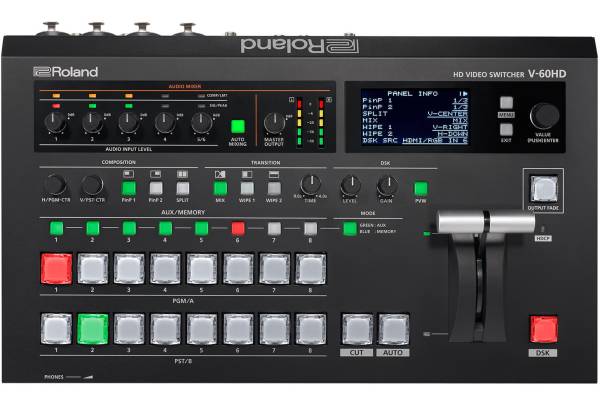
A video mixer is the control centre of your visual setup. It takes multiple sources – cameras, laptops, media players – and lets you switch between them in real time, create transitions and overlay content. Depending on the model, you may also get functions such as audio embedding, built-in streaming over USB or Ethernet, and multiview monitoring.
Typical functions you should look out for:
- Multiple HDMI or SDI inputs with freely assignable outputs
- Transition effects: hard cut, fade, picture-in-picture, keying
- Multiview monitor for controlling all sources at the same time
- Integrated audio processing with delay and level adjustment
- Direct streaming via RTMP without an additional computer
Video switchers
A video switcher is the streamlined solution when you don’t need elaborate mixing, but you do need reliable source switching. Typical use case: redundancy in live operation. If a source fails, a good switcher automatically switches to a backup signal – without any visible interruption on the screen.
Key criteria for selection here are: fast switching time, automatic failover and a robust build for everyday touring use.
Hardware vs. software switcher
If you’re just getting started, you often wonder: should you buy a dedicated device or use software? Both approaches have their merits.
| Hardware switcher | Software switcher (e.g. OBS) | |
| Operation | Physical buttons, instantly within reach | Mouse & keyboard, steep learning curve |
| Reliability | Independent of the PC, stable in live use | Dependent on the computer’s CPU/GPU load |
| Cost | One-time investment | Often free (OBS) or cheaper to get started |
| Ideal for | Stage, clubs, live events | Home studio, occasional streams |
For professional performances, a hardware switcher is almost always the recommended choice. It relieves your DJ laptop, runs independently and responds to button presses without delay.

Understanding technical features
Connections & signal types
The choice of interface determines cable length, interference resistance and compatibility with your devices:
- HDMI – widely used, compact, ideal for short runs and consumer hardware such as cameras or laptops
- SDI – lockable connector, long cable lengths, a professional broadcast standard for stage and studio
- Composite / Component – older formats, relevant today only for legacy hardware or special installations
In day-to-day club use, HDMI is fully sufficient in most cases. Once you need cable lengths of over 10 m or you work in professional broadcast environments, SDI is worth it.
Resolution & frame rate
1080p at 50/60 fps is the current standard for live events and streams – smooth, compatible and sharp enough for most displays. 4K is particularly worthwhile for large projection areas or if the stream will later be used as high-quality VOD. Important: the entire signal path – camera, switcher, cables, output device – must support the same resolution and frame rate; otherwise you may experience picture artefacts or forced scaling losses.
Audio integration & synchronisation
An image without the right sound is nothing. Many video mixers integrate the audio directly into the video stream (audio embedding), so you only need to run one cable to the output device. Even more important: synchronisation. Even a few milliseconds of offset between picture and sound are noticeable. The following functions help with this:
- Audio delay – compensates for differing signal path times when the picture and audio take different routes
- Genlock / frame lock – ensures stable shared timing in complex multi-device setups
- Level control – prevents overloading and keeps the audio at a consistent level
Scaling, multiview & effects
Different sources provide different resolutions. Automatic scaling in the switcher prevents signals from falling apart when the camera and laptop send different formats. The multiview output shows all active sources simultaneously on a monitor – essential when you’re working alone and there’s no additional technical direction behind you.
Creative extras that modern devices offer include: picture-in-picture for overlays and moderation, chroma keying for green-screen effects, DSK/USK for logos and branding, and animated stinger transitions between scenes.

How to choose the right one
Clarify requirements
Before you buy, it’s worth answering a few questions honestly:
- How many sources do you want to connect at the same time – today and in a year?
- Should the device output locally only or stream directly as well?
- Do you work alone or with a technical team?
- How often will the location change – a one-off club gig or a weekly tour?
If you plan for one extra input from the start, you rarely regret it. If you calculate too tightly, you usually end up buying twice.
Ease of operation & workflow
In live operation, every second counts. A physical T-bar, clearly labelled cut buttons and an easy-to-read tally status make the difference between a confident show and frantic searching. Saveable scene presets are invaluable: once set up, complex configurations can be called up at the push of a button.
If your setup includes MIDI devices, you’ll benefit from a switcher with a MIDI input – so scene changes can be triggered directly from the DJ controller or drum pad, fully synchronised to the beat.
Mobile or stationary?
For mobile use, a compact format matters, a power supply with a wide voltage range and lockable connectors – the cables must not come loose during transport. Many DJs supplement their mobile video setup with PA speakers, which meet similar requirements for transportability.
For fixed installations, other priorities come to the fore: expandable I/O options, easy integration into existing control rooms and suitability for continuous operation without overheating.

Practical applications
DJ performance with visuals
Live visuals have fundamentally changed the club stage. Instead of static background projections, audiences now expect dynamic images that move with the sound. A video mixer gives you control over this: visuals can be switched in time with the beat, camera angles blend elegantly into one another, and branding elements appear exactly when they make an impact. If you want to integrate additional lighting effects, you’ll find them in our category effect lighting and the right lighting controllers.
Stream DJ sets
If you bring your set to YouTube, Twitch or Instagram, you need more than a single webcam. A hardware switcher with an integrated streaming output takes the video processing load off your DJ laptop – you DJ, the device streams. Platforms such as YouTube and Twitch are addressed directly via RTMP, without any extra streaming software on the laptop.
For the audio, a clean line-out from your DJ mixer into the switcher is recommended. Wireless microphones for announcements can be integrated without any problem – suitable systems can be found under wireless microphones.
Three things that make every stream look more professional immediately:
- A second camera aimed at the DJ setup – perspective changes keep viewers engaged longer
- Scene presets for intro, set and outro – no improvised fiddling around while live
- Test beforehand: run through resolution, frame rate and latency completely before going live
Smaller events & mobile setups
Not every gig is a large-scale production. In bars, community halls or corporate events, a compact switcher with two to four inputs is often enough – one camera on the DJ, one laptop with visuals, done. Set-up takes minutes instead of hours, and the manageable operation means: fewer sources of errors, more focus on the music.
| Use case | Recommended solution | Core functions |
| Club visuals / stage | Multi-channel video mixer | Transitions, multiview, keying, audio embedding |
| Live streaming | Switcher with RTMP / USB out | Direct streaming, scene presets, OBS integration |
| Redundancy / backup | Video switcher | Fast switching, automatic failover |
| Small events / mobile | Compact 2–4-channel switcher | Easy operation, lightweight format, quick set-up |
Common sources of errors
Most problems when using video equipment live don’t come from poor devices, but from avoidable planning mistakes. Here are the most common:
- Incompatible resolutions – the camera and switcher send different formats, causing the picture to break up. Solution: force all sources to the same resolution and frame rate in advance, or choose a switcher with automatic scaling.
- Audio trails behind the picture – this happens when audio and video take different processing path lengths. The audio-delay function in the switcher corrects this down to the millisecond.
- Cables as a weak point – cheap HDMI cables over longer runs, shaky connectors during transport. High-quality lockable connections and having some extra cable length on hand save the day in case of doubt.
- No test run – measure the entire signal once from source to output; it only takes 20 minutes and prevents nasty surprises on stage.

The right device for your application
At Recordcase.de, you’ll find video equipment tailored to DJ and event workflows – from compact entry-level solutions to professional multi-channel switchers. If you’re unsure which device fits your setup: our team will be happy to advise you – online or by phone. We know the setups because we’re right at home in the scene.